


 English
 中文简体
中文简体 русский
Industry news
 Home / News / Industry news / How to Choose and Install HDPE Electrofusion Fittings for Leak-Free Pipe Joints
 How to Choose and Install HDPE Electrofusion Fittings for Leak-Free Pipe Joints
 2026.03.23
 Industry news
1. Fundamentals of HDPE Piping and Thermal Fusion
Material Properties: Why is HDPE the industry standard for industrial applications, municipal water supply, gas transmission, and chemical transport? High-Density Polyethylene (HDPE) possesses exceptional corrosion resistance, high toughness, a smooth inner wall (minimizing head loss), and a service life exceeding 50 years.
The Science of Fusion: Core question: Can an HDPE pipe be fused together? The answer is a definitive yes. In fact, "fusion" is the greatest advantage of HDPE piping systems over others. Unlike mechanical joints that rely on seals or threads, HDPE pipes are joined at the molecular level through a thermal fusion process. When the polyethylene material is heated to a molten state (typically between 200°C and 230°C), the polymer molecular chains undergo vigorous Brownian motion, diffusing and entangling with one another. Once cooled, the interface disappears, and the pipe and fitting become a single, monolithic unit. This "integrated" characteristic ensures that the joint strength is often higher than the pipe itself, achieving a truly "zero-leakage" system.
Longevity and Durability: Fused joints eliminate potential leak points in infrastructure. Because the fusion zone shares the same flexibility and chemical properties as the pipe material, it can withstand geological settling, seismic activity, and instantaneous pressure changes caused by water hammer effects.
2. Defining the Electrofusion Joint in HDPE (What is the electrofusion joint in HDPE?)
What is the electrofusion joint in HDPE? Simply put, this is a connection method that utilizes embedded electrical resistance wires to generate heat, thereby fusing the pipe and the fitting into one. It is a sophisticated application of localized melting technology.
2.1 The Internal Mechanism
During the electrofusion process, a specialized electrofusion processor outputs a controlled voltage (usually between 8V and 48V) to the heating coils embedded within the HDPE Electrofusion Fitting. The resistance wires generate heat, melting the inner surface of the fitting first, followed by the heat transfer to the outer surface of the pipe. As the material expands under heat, immense pressure is generated within the confined space, forcing a deep molecular fusion of the molten materials.
2.2 Comparison to Butt Fusion
Electrofusion is the preferred choice over traditional Butt Fusion when space is restricted (such as in narrow trenches), when vertical alignment is required, or during pipe network emergency repairs and live-line branching (tapping). While butt fusion requires moving large segments of pipe to accommodate a heating plate, electrofusion only requires the fitting to be sleeved over the pipe ends.
3. High-Performance HDPE Electrofusion Fitting
3.1 Anatomy of an HDPE Electrofusion Fitting
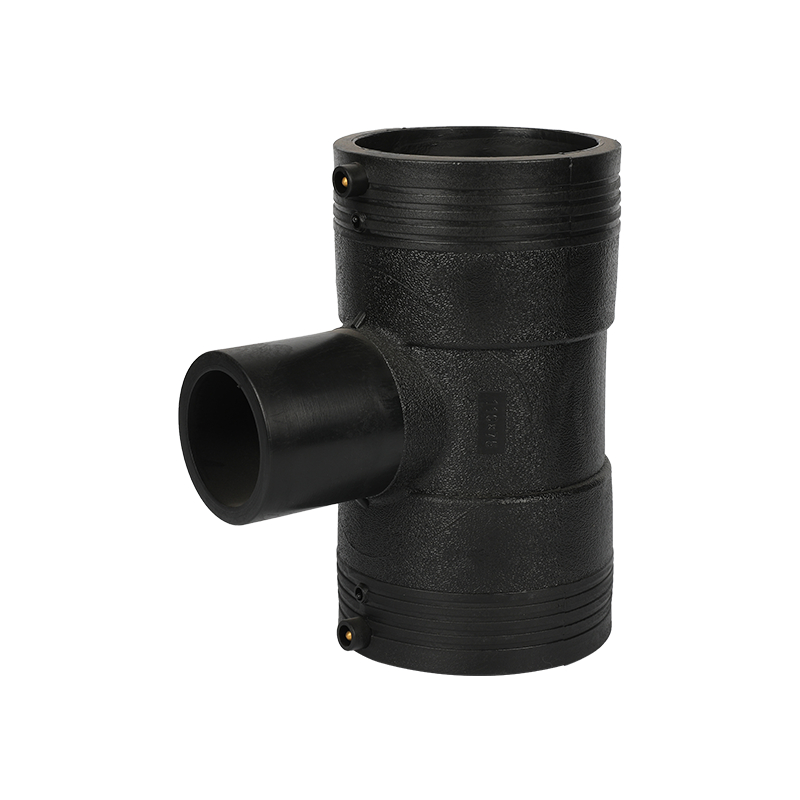
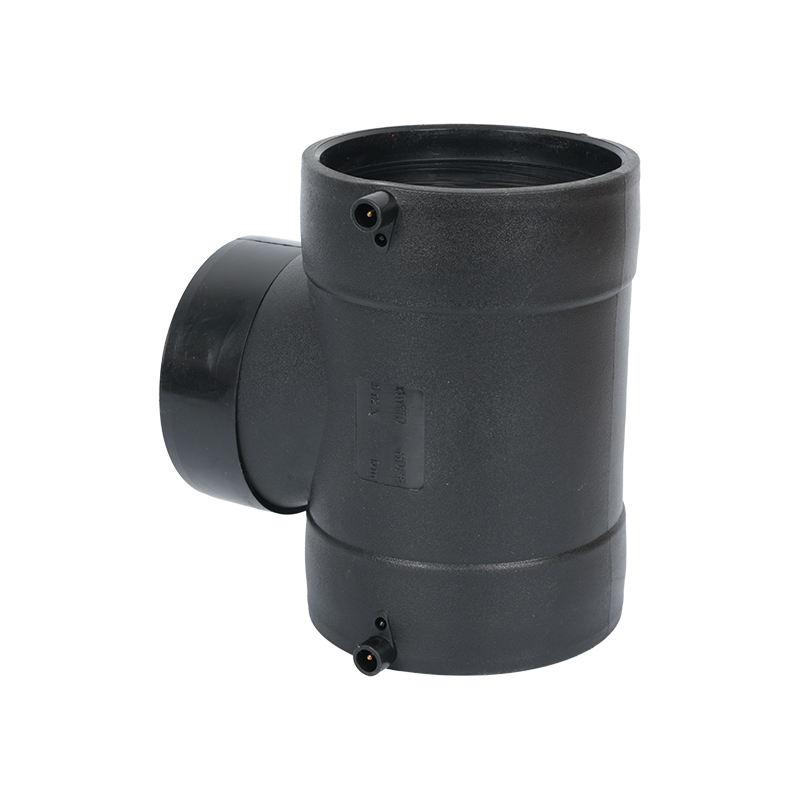
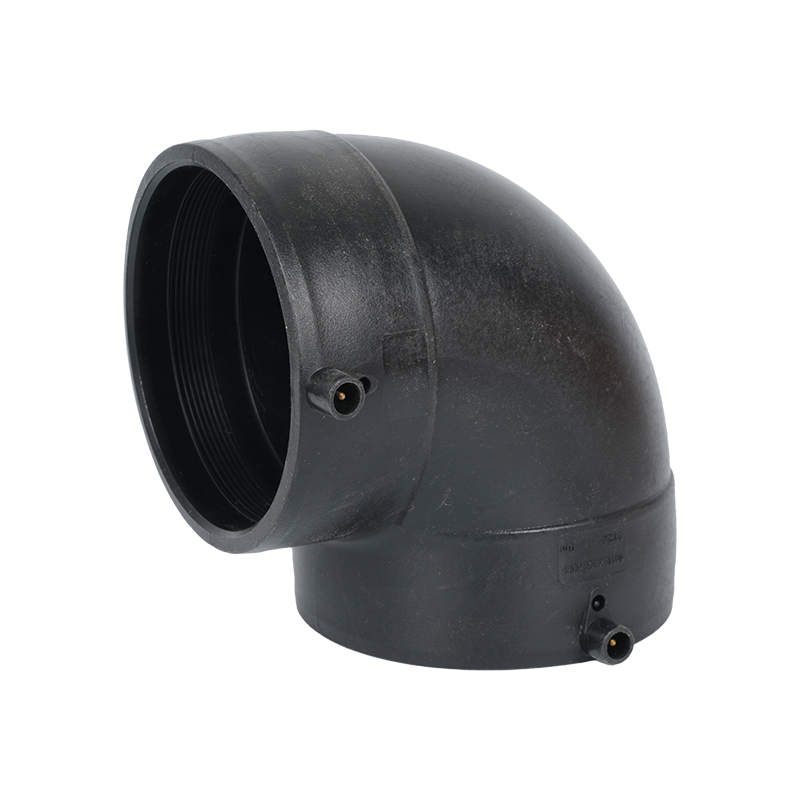
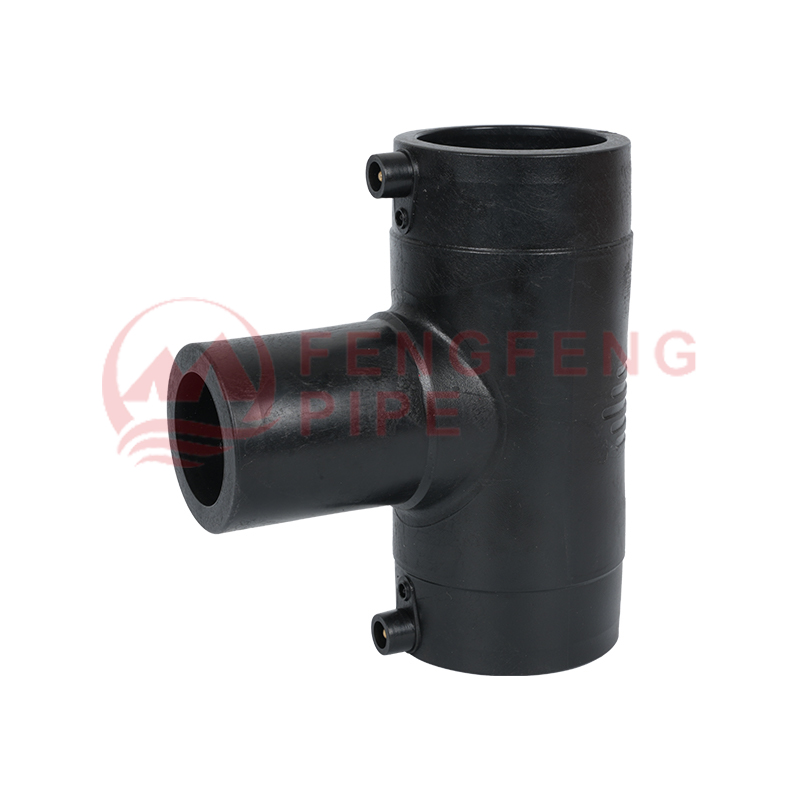
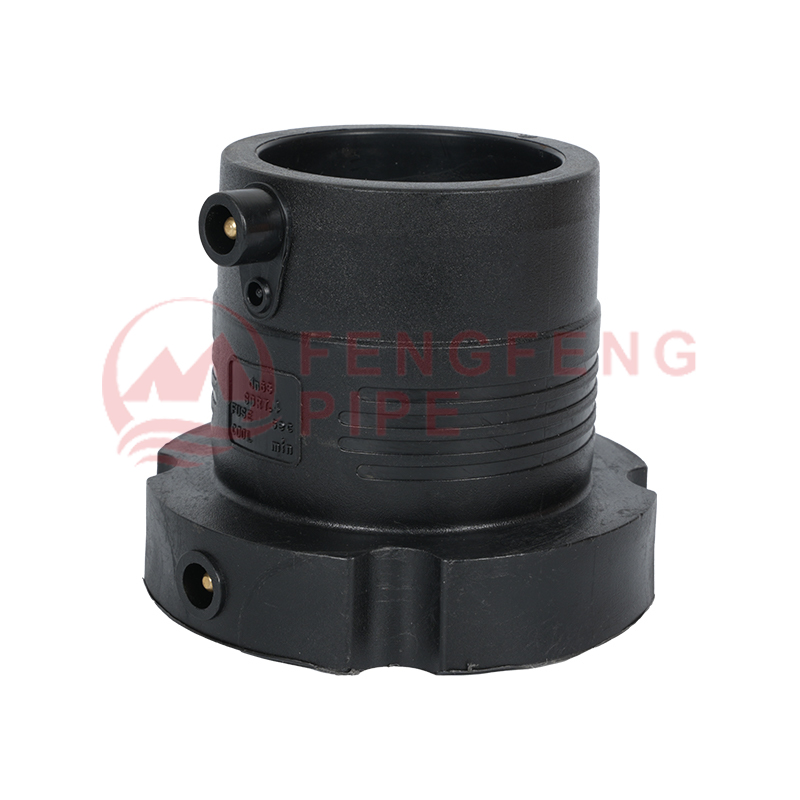
A high-quality HDPE Electrofusion Fitting (including couplers, elbows, tees, and reducers) consists of several critical components:
Terminal Pins: The interface for connecting the fusion machine's output cables, with standard sizes usually being 4.0mm or 4.7mm.
Heating Coils: Evenly distributed throughout the fusion zone to ensure balanced heat distribution and prevent localized overheating that could lead to material degradation.
Cold Zones: Areas at the ends and the center of the fitting that do not contain coils. These prevent molten plastic from flowing out, maintaining the necessary fusion pressure.
Indicator Lugs (Observation Holes): After fusion is complete, molten plastic extrudes through these holes, serving as a visual confirmation that the fusion pressure has been reached.
3.2 The Role of the Processor & Barcode Technology
Modern HDPE Electrofusion Fittings feature a barcode on their surface. This barcode contains critical parameters such as fitting specifications, fusion voltage, heating time, and cooling time. The electrofusion processor automatically inputs this data via a scanner, eliminating human setup errors.
4. Comprehensive Guide: What Fittings to Use for HDPE?
To answer the question "What fittings to use for HDPE?", choices must be made based on application scenarios and pressure requirements:
4.1 Application-Based Selection
Gas Systems: High-density, high-grade electrofusion fittings (usually SDR11) certified for gas use must be used.
Water Systems: Either electrofusion or butt fusion fittings can be selected based on the Pressure Nominal (PN) rating.
Drainage/Sewage: Lower pressure-rated fittings are typically utilized for these gravity-fed systems.
4.2 Mechanical vs. Fusion Fittings
Fusion Fittings: Permanent, non-removable, and high-strength. Suitable for buried, high-pressure, and long-term operations.
Mechanical Compression Fittings: Rely on a split ring and an O-ring. Suitable for temporary water supply, agricultural irrigation, or above-ground small-diameter pipes where maintenance is easy; not recommended for buried gas lines.
4.3 Specialty Fittings
Tapping Tees: Used to draw a branch line from a main line, whether under pressure or not.
Branch Saddles: Suitable for lateral connections on large-diameter pipes.
5. What Type of Fittings for HDPE Pipe?
When identifying "What type of fittings for HDPE pipe?", physical parameters and connection methods must be considered:
5.1 Butt Fusion Fittings
Applicable for large diameters (typically DN110 and above) and long-distance pipelines. The fitting end and pipe end have the same thickness and are welded by pressing them against a heating plate. The advantage lies in the relatively lower material cost.
5.2 Electrofusion Fittings
Ideal for tight spaces, vertical alignments, and trenchless technology applications. This is currently the most reliable connection method with the least amount of human interference.
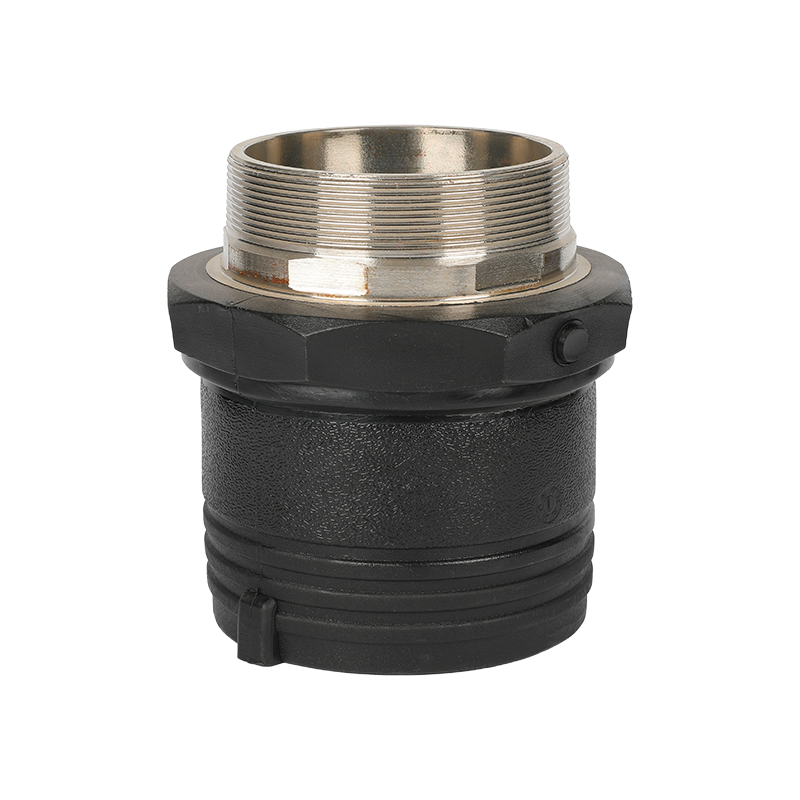
5.3 Transition Fittings
Used to connect HDPE pipes to pipes of different materials, such as:
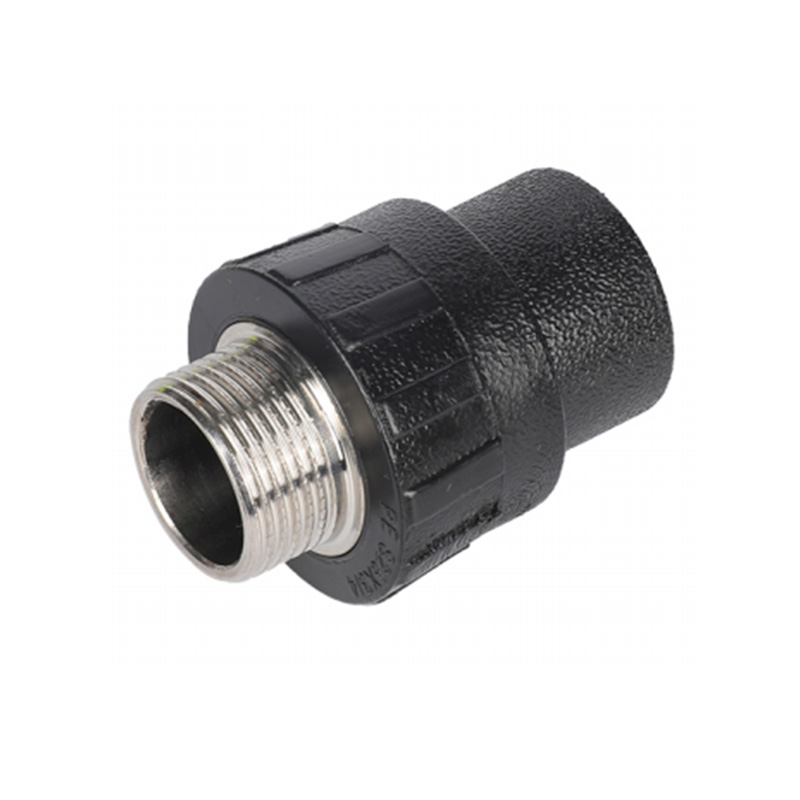
Steel-to-Plastic Transitions: Used to join HDPE with metal valves or steel pipes.
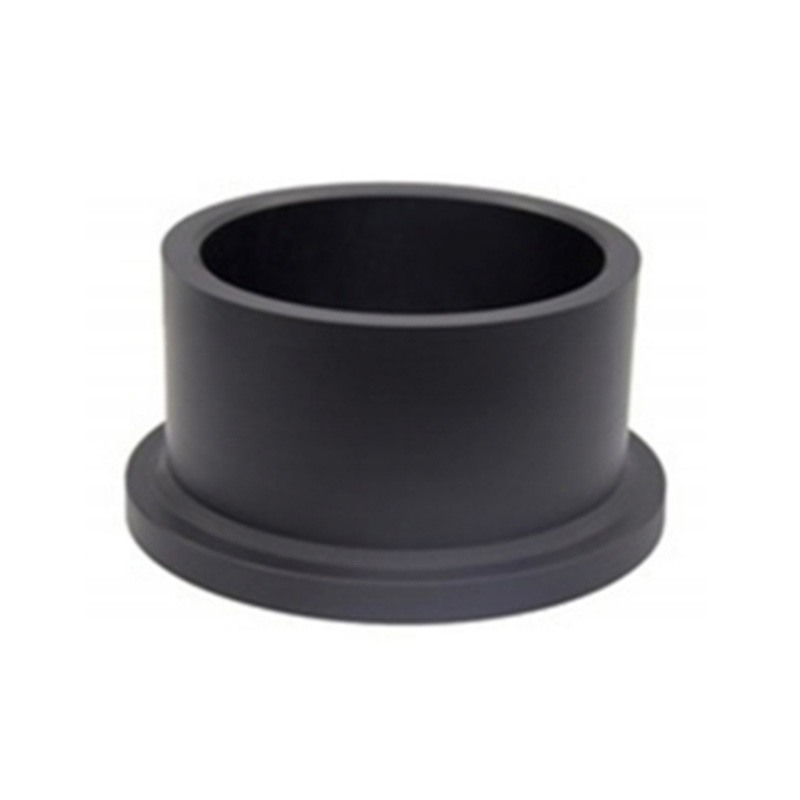
Flange Connections: Using an HDPE flange adapter (Stub End) with a metal back-up flange.
5.4 Parameter Comparison Table
| Pressure Rating (PN) | PE100 SDR Rating | Typical Application Scenario |
| PN16 | SDR11 | High-pressure gas, high-rise water supply, industrial pressure lines |
| PN10 | SDR17 | Municipal main water supply, medium-pressure industrial fluids |
| PN6 | SDR26 | Agricultural irrigation, gravity drainage |
6. The Step-by-Step Electrofusion Process
To ensure the quality of the electrofusion joint in HDPE, the following procedures must be strictly followed:
6.1 Preparation is Key
Cutting: Ensure the pipe ends are square and perpendicular to the axis.
Scraping (Critical): The oxidation layer on the pipe surface must be removed using a specialized scraper. Oxidation is the leading cause of fusion failure.
Cleaning: Wipe the fusion zone with isopropyl alcohol (95% concentration or higher) to ensure it is free of grease and dust.
Marking: Mark the insertion depth of the fitting on the pipe.
6.2 The Fusion Cycle
Clamping: Use a re-rounding clamp to fix the pipes and prevent movement during the fusion process.
Powering: Start the processor and follow the pre-set parameters to complete the heating.
6.3 Cooling Requirements
Natural Cooling: After fusion, the joint must undergo natural cooling while still protected by the clamps. Forced cooling with water is strictly prohibited. Moving the pipe during this phase can cause voids in the molten zone or micro-cracks, severely compromising the structural integrity of the HDPE electrofusion fitting.
7. Quality Control and Testing Procedures
7.1 Visual Inspection
Check if the indicator lugs have popped up. If they haven't, it indicates insufficient heat. If a large amount of molten material has spewed out around the fitting, it suggests excessive heat or an oversized gap between the pipe and fitting.
7.2 Pressure Testing
Conducted according to ASTM or ISO standards:
Hydrostatic Testing: Typically tested at 1.5 times the system's design working pressure.
Pneumatic Testing: Often used for gas pipelines; requires strict adherence to safety protocols.
8. Maintenance and Repair Strategies
8.1 Emergency Repairs
The HDPE electrofusion fitting is the fastest way to repair a ruptured pipe. Using electrofusion couplers allows repairs to be completed within a small excavation pit without the need for large-scale digging.
8.2 Material Compatibility
When performing repairs, the material grade (e.g., PE80 vs. PE100) must be confirmed. While they can generally be fused together, fusion parameters applicable to both must be used, and the pressure rating of the system must be based on the lower-grade material.
9. FAQ: Professional Insights and Technical Knowledge
9.1 Can an electrofusion fitting be re-heated if the first weld fails?
No. Most standards specify that electrofusion fittings are single-use. The resistance wires may shift after the initial heating, and a second heating can easily lead to short circuits or material carbonization. If a weld fails, the fitting must be cut out and replaced with a new one.
9.2 How long is the lifespan of an HDPE fused joint?
Under correct installation, the design life typically exceeds 50 years and can even reach 100 years, primarily due to its excellent chemical stability and fatigue resistance.
9.3 Why is scraping the pipe surface mandatory?
Polyethylene forms a microscopic oxidation layer when exposed to air. This layer has a different melting point than pure PE and prevents molecular diffusion. Failure to scrape will result in a "cold weld" where the joint only has physical contact but no molecular fusion.
9.4 Does the weather affect the fusion process?
Yes. In extremely cold or windy weather, heat dissipates too quickly, and the processor usually requires ambient temperature compensation. In rainy weather, moisture turning into steam creates bubbles (voids) that lead to leaks; therefore, work must be done in a dry environment.
9.5 Why is cooling time so important?
Even after the power stops, the inside of the fitting remains in a high-temperature molten state. Applying stress too early can cause deformation or micro-cracks in the fusion zone. Cooling times are typically printed on the fitting label and must be strictly observed.
KEEP IN TOUCH

About Us
Zhejiang Fengfeng Pipe Industry Co., Ltd. uses efficient single screw injection molding machines for high productivity and low energy use.
Products link
Contact
-

+86-19858193396
+86-13735359894 -

+86-0574-63555288
-

-

No. 21, Market Road, Diankou Town, Zhuji City, Shaoxing City, Zhejiang Province, China