


 English
 中文简体
中文简体 русский
Industry news

What Are Electrofusion Fittings and How Do They Work
 2026.07.27
 Industry news
Electrofusion fittings form the backbone of modern polyethylene pipeline networks, providing a jointing method that produces a permanent, homogeneous connection between the fitting and the pipe wall. As pressure pipeline systems for water distribution, gas conveyance, mining slurry transport, and industrial fluid handling continue to expand underground and across difficult terrain, the reliability of every joint becomes a matter of long-term operational safety. This section examines the construction, technique, standards, and selection criteria surrounding electrofusion fitting products, along with the practical differences between electrofusion and other jointing methods commonly used on polyethylene pipe networks.
What Are Electrofusion Fittings
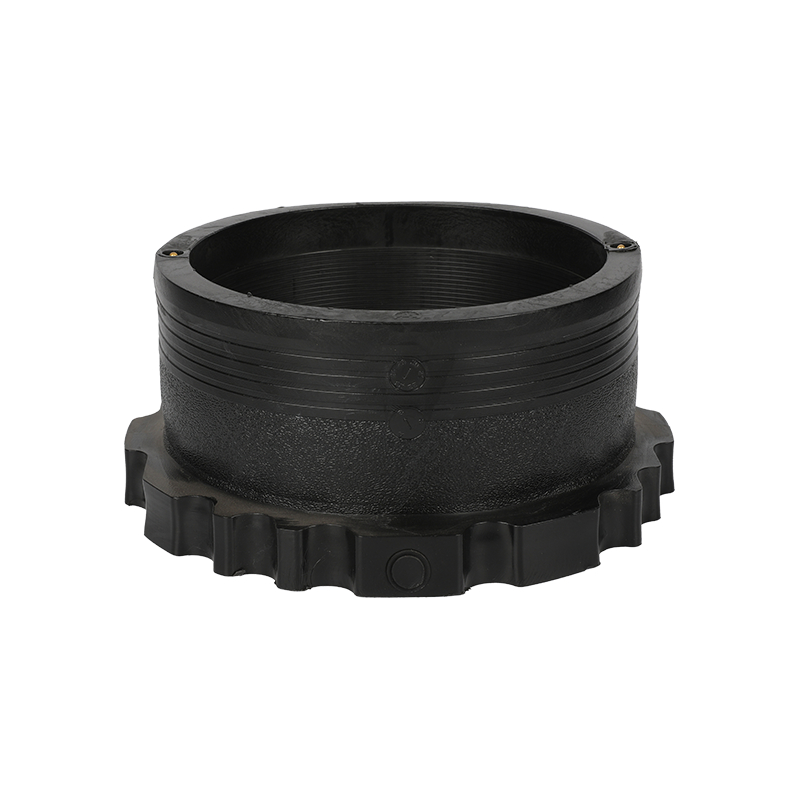
What are electrofusion fittings, in practical terms? They are polyethylene pipeline connection components manufactured with an integrated resistance wire coil embedded within the inner wall of the fitting socket. When the fitting is slid over a prepared pipe end and connected to a purpose-built electrofusion control unit, an electrical current passes through the coil, generating localized heat. This heat melts both the interior surface of the fitting and the exterior surface of the pipe simultaneously, allowing the two polyethylene surfaces to fuse into a single continuous material layer as they cool.
Because the connection is achieved through material fusion rather than mechanical compression, the resulting joint does not rely on rubber seals, gaskets, or threaded engagement to prevent leakage. Once cooled, the fitting and the pipe effectively become one continuous piece of polyethylene at the joint location, carrying the same fundamental integrity as the pipe body itself.
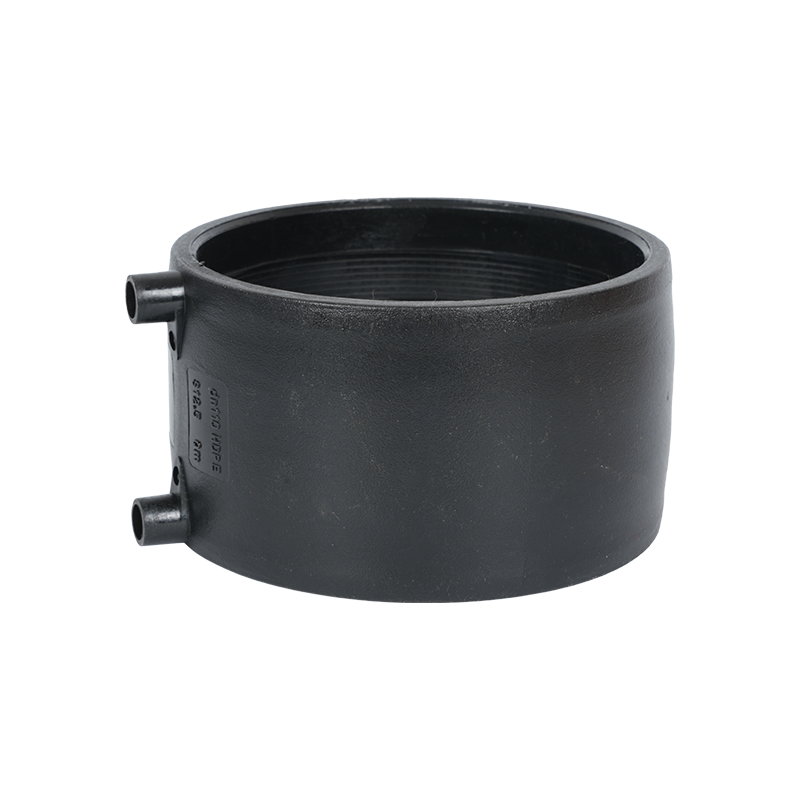
Electrofusion Couplers
Straight couplers join two pipe sections of the same diameter in a single, uninterrupted run, commonly used in long-distance transmission mains.
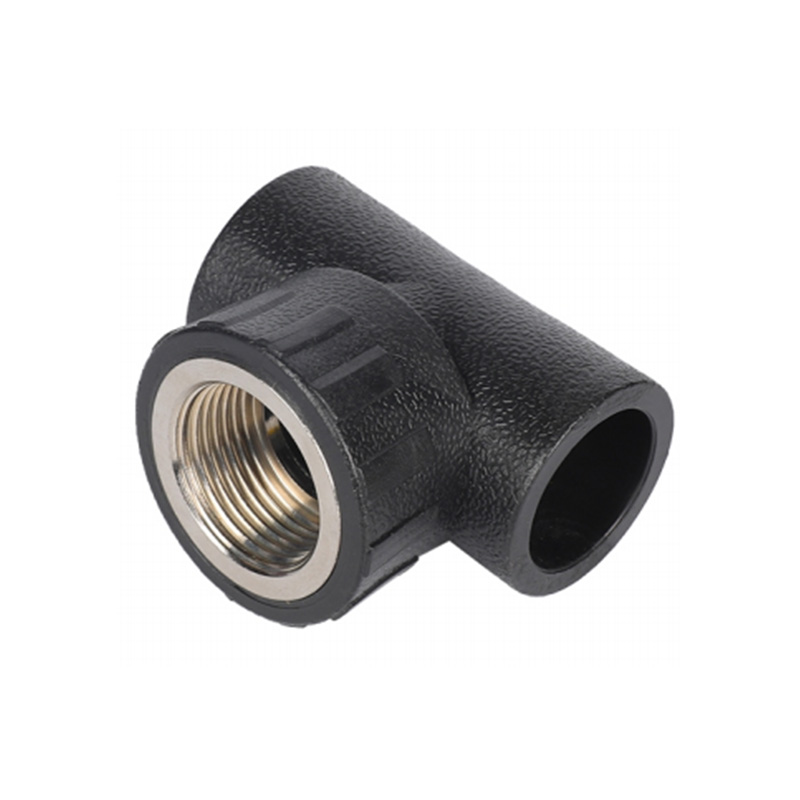
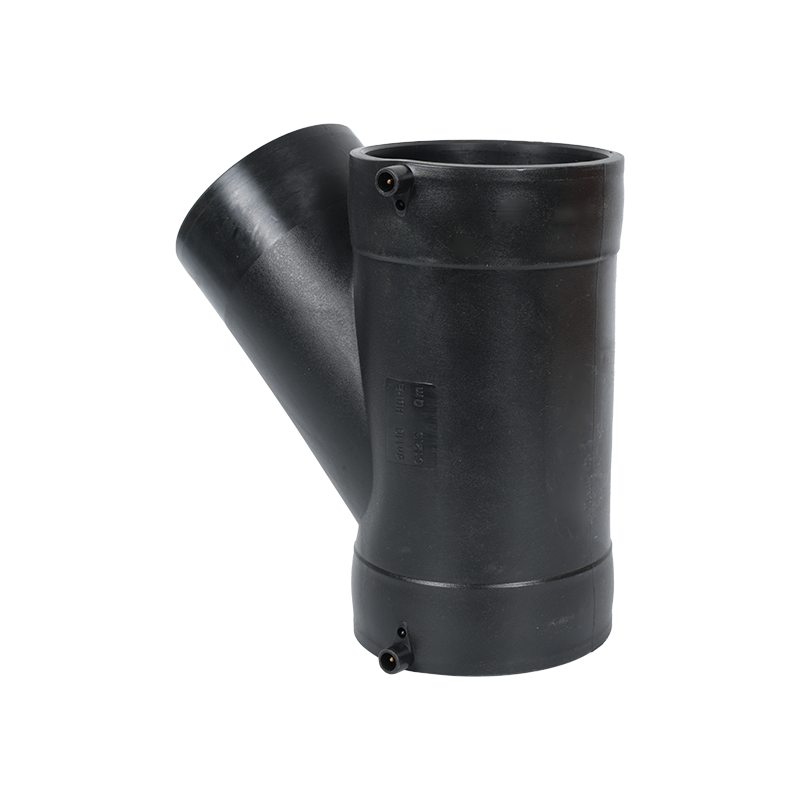
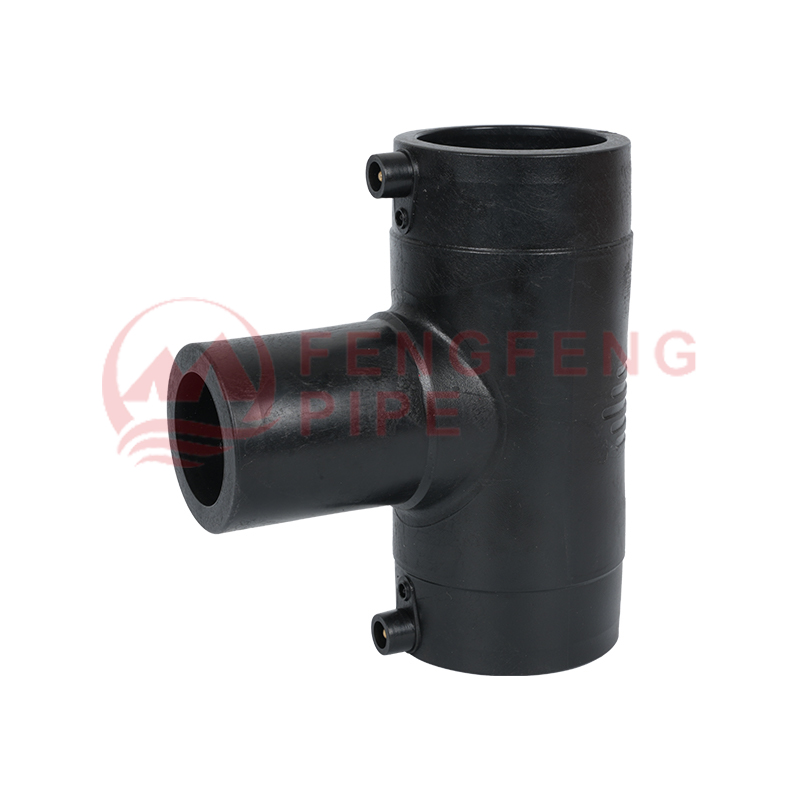
Electrofusion Tees
Branch connections allow a secondary line to be introduced into an existing main without disturbing the flow path of the primary pipeline.
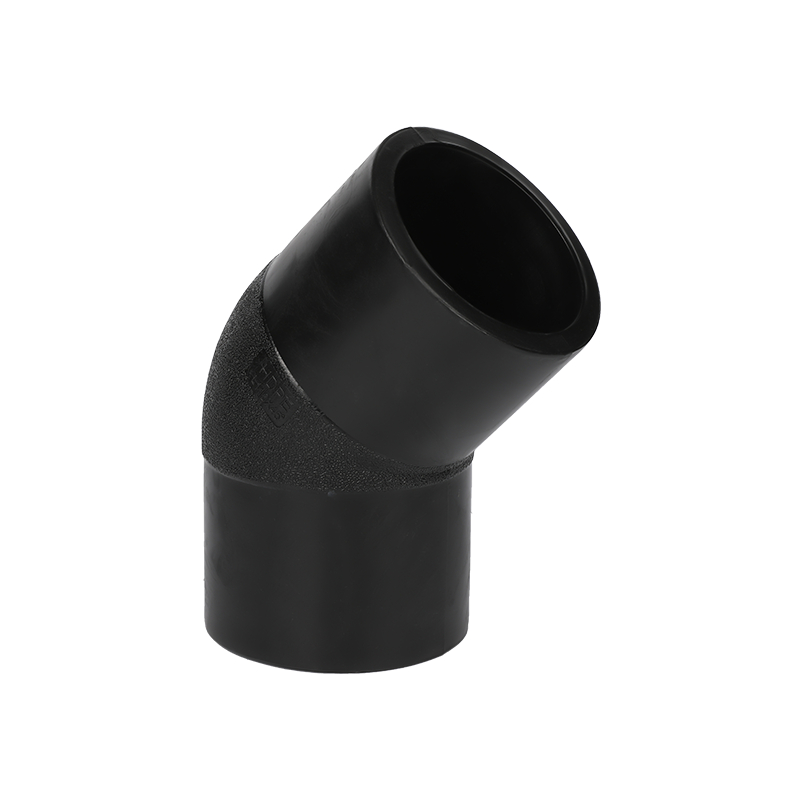
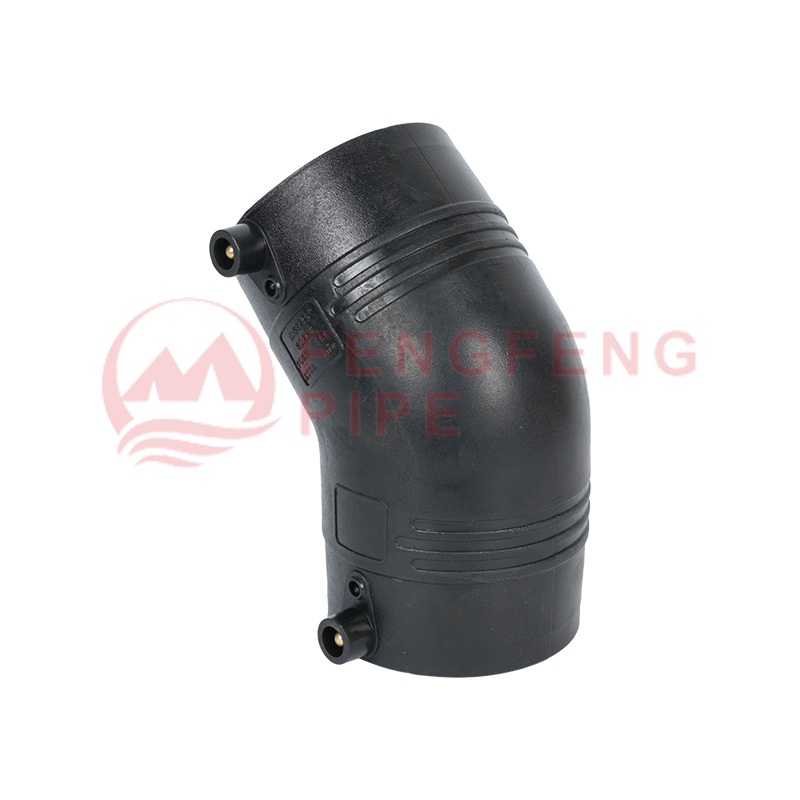
Electrofusion Elbows
Available in 45° and 90° configurations, these fittings redirect pipeline routing around obstacles or changes in elevation.
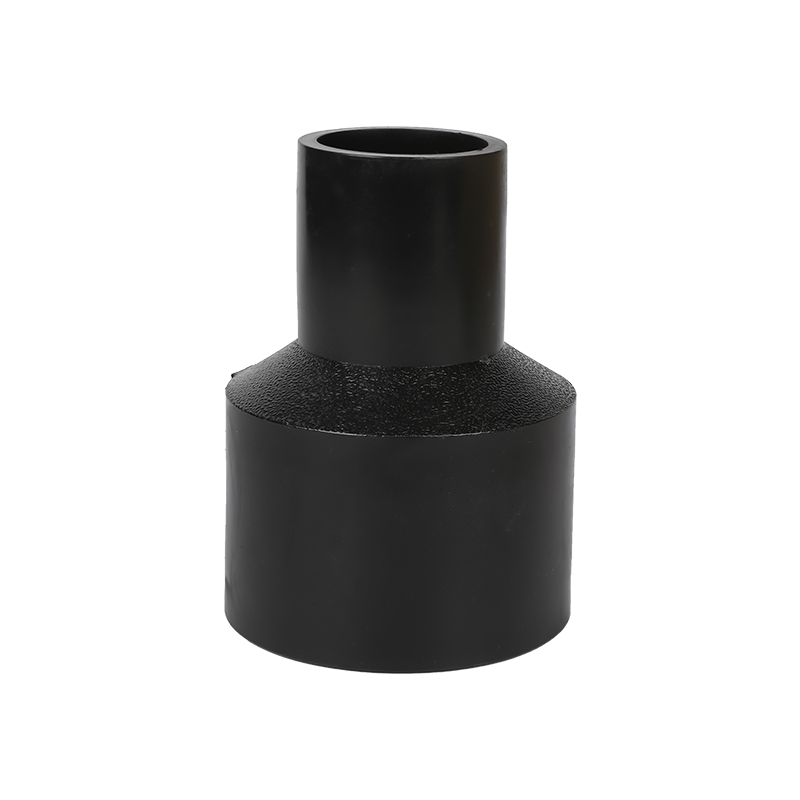
Electrofusion Reducers
Used where pipeline diameter transitions from a larger main to a smaller branch line, maintaining flow continuity and pressure rating.
Electrofusion Saddles
Surface-mounted branch saddles permit a tap connection into a live main for service lines without cutting the pipeline.
Electrofusion End Caps
Used to seal the terminal end of a pipe run or to close off a branch that is not yet in service.
HDPE Electrofusion Fittings: Material Composition and Grades
HDPE electrofusion fittings are produced from high-density polyethylene resin, typically classified under PE80 or PE100 material grades. The resin grade directly determines the long-term pressure rating, minimum required strength, and resistance to slow crack growth that the finished fitting can achieve. Selecting the correct grade for a given pipeline application is not a matter of preference — it is dictated by the operating pressure, medium being transported, and design service life expected from the network.
| Parameter | PE80 Grade | PE100 Grade |
| Minimum Required Strength (MRS) | 8.0 MPa | 10.0 MPa |
| Typical Design Stress | Lower allowable hoop stress | Higher allowable hoop stress |
| Wall Thickness for Equivalent Pressure | Thicker wall required | Thinner wall achievable |
| Typical Applications | Lower-pressure water and drainage lines | Gas distribution, high-pressure water mains |
| Slow Crack Growth Resistance | Standard | Enhanced |
In practice, most modern pipeline projects specify PE100 material for electrofusion pipe fittings due to its ability to achieve equivalent pressure ratings at reduced wall thickness, lowering material cost per meter while maintaining a longer projected service life under sustained internal pressure.
Difference Between Compression Fittings and Electrofusion Fittings
The difference between compression fittings and electrofusion fittings is frequently raised by project engineers evaluating jointing methods for a new polyethylene network. Both fitting types are used on PE pipe systems, but the mechanism of sealing and the long-term performance profile differ substantially.
Compression fittings achieve a seal through mechanical clamping. A nut is tightened over the pipe end, compressing an internal gripping ring and an elastomeric seal against the pipe's outer surface. No heat or electrical current is involved, and the fitting can typically be disassembled and reused on a different pipe section. Electrofusion fittings, by contrast, rely entirely on heat-induced material fusion. There is no seal to compress and no mechanical grip — the joint strength comes directly from the polyethylene material itself melting and re-solidifying as one piece.
| Comparison Item | Compression Fittings | Electrofusion Fittings |
| Sealing Mechanism | Mechanical clamping with gripping ring and seal | Molecular fusion of polyethylene material |
| Equipment Needed | Basic hand tools | Electrofusion control unit, pipe scraper, alignment clamps |
| Typical Diameter Range | Small to medium diameters | Small through large diameters |
| Long-Term Seal Reliability | Dependent on seal condition over time | Consistent with pipe body, no separate seal to degrade |
| Reusability of Fitting | Can often be removed and reused | Permanent, non-removable once fused |
| Installation Skill Requirement | Lower training threshold | Requires trained, certified operators |
| Upfront Equipment Investment | Minimal | Higher, due to fusion machine and accessories |
Project teams working on gas distribution networks or buried water mains with long design lives generally favor electrofusion connections, since the absence of a separate rubber seal removes one of the most common long-term failure points found in mechanical jointing systems.
The Electrofusion Technique: Step-by-Step Process
The electrofusion technique depends heavily on preparation quality, since the strength of the finished joint is determined almost entirely by how well the two mating surfaces are cleaned, aligned, and heated. A rushed or poorly documented installation can result in a joint that looks complete on the outside while carrying a weak or incomplete fusion zone internally.
01
Surface Preparation
The pipe surface is scraped with a purpose-built rotary or manual scraper to remove the oxidized outer layer, exposing fresh, unweathered polyethylene beneath. This step is not optional — oxidized material will not fuse correctly regardless of heat applied.
02
Cleaning and Marking
The scraped area is wiped with an approved cleaning agent, and the required insertion depth is marked on the pipe to confirm correct positioning once the fitting is slid into place.
03
Alignment and Clamping
Pipe ends are aligned using rounding or repair clamps to correct ovality, and the fitting is positioned centrally over the joint area to ensure even contact between the coil and the pipe surface.
04
Fusion Cycle
The control unit reads the fitting's embedded barcode or resistance value and automatically applies the correct voltage and fusion time, removing guesswork from the heating cycle.
05
Cooling Period
The joint must remain undisturbed and unclamped-free of movement or stress for the full cooling duration specified by the fitting manufacturer before the line can be pressure tested or backfilled.
Difference Between Heat Fusion and Electrofusion
The difference between heat fusion and electrofusion often causes confusion among engineers new to polyethylene pipeline construction, since both are fusion-based methods that avoid mechanical seals. Heat fusion, also called butt fusion, uses an external heater plate pressed against two pipe ends until both faces melt, after which the plate is removed and the two molten ends are pressed together under controlled force until cooled. Electrofusion instead relies on an internal heating element built into the fitting itself, with no external heater plate or pressing force required.
Butt fusion is generally the preferred method for long, straight pipe runs where two pipe ends of matching diameter need to be joined end-to-end. Electrofusion becomes the more practical choice for branch connections, directional fittings, repairs in confined trenches, or any situation where there is insufficient space to bring heating plates and hydraulic clamps into position. Because electrofusion fittings do not require the pipe to be moved into an external clamp for pressing, they are frequently used for tie-ins on live or partially restrained pipeline sections.
Standard for Electrofusion Fittings
The standard for electrofusion fittings governs dimensional tolerances, fusion parameters, coil resistance values, pressure test requirements, and long-term strength verification. These technical documents exist so that fittings produced across different manufacturing batches and different production lines maintain consistent, predictable fusion behavior when installed in the field.
| Standard Reference | Scope of Coverage |
| ISO 8085 | Thermoplastics fittings for fusion jointing with plain-end and spigot connections |
| EN 12201 Series | Polyethylene piping systems for water supply and drainage under pressure |
| ASTM F1055 | Specification for electrofusion type polyethylene fittings for outside diameter controlled pipe |
| ISO 4437 | Polyethylene piping systems for gas supply, including electrofusion joint requirements |
| ISO 13950 | Electrofusion joints for coating removal and inspection requirements |
Beyond dimensional compliance, quality verification for electrofusion pipe fittings typically includes tensile testing of fused joint samples, peel decohesion testing to check for incomplete fusion at the interface, and hydrostatic pressure testing to confirm the joint holds rated pressure without deformation. Manufacturers producing fittings under these standards generally maintain batch traceability records, allowing any fitting installed in the field to be traced back to its resin lot, molding date, and quality test results.
Manufacturing Process and Quality Verification
Producing electrofusion fittings begins with resin selection, where PE80 or PE100 compound is verified against supplier certificates before entering the molding process. The resistance wire coil is precision-wound to a specified resistance value, then positioned within the injection mold cavity before the polyethylene body is molded around it. Coil placement accuracy directly affects how evenly heat is distributed during the fusion cycle, so winding and placement tolerances are checked at multiple stages of production rather than only at final inspection.
Resin Verification
Incoming polyethylene compound is checked against density, melt flow index, and MRS classification before being approved for molding.
Coil Winding Control
Resistance wire coils are wound to a target resistance value with tight tolerance bands, since inconsistent resistance leads to uneven fusion heat.
Dimensional Inspection
Fitting bore diameter, wall thickness, and socket depth are measured against standard dimensional tables for the specified pipe size.
Tensile and Peel Testing
Sample joints are fused and then subjected to tensile pulling and peel decohesion testing to confirm fusion integrity across production batches.
Hydrostatic Pressure Testing
Completed fittings are pressure tested to confirm they hold rated pressure without leakage, deformation, or joint separation.
Batch Traceability Records
Each production batch is logged with resin lot number, molding parameters, and test results for full field traceability.
Typical Application Fields for Electrofusion Fittings
Electrofusion fittings are used across a wide range of pipeline sectors where joint reliability, corrosion resistance, and long service life are priorities. In municipal water supply networks, electrofusion connections are used extensively for distribution mains, service line tie-ins, and repair sections where trenchless replacement methods are employed. In gas distribution networks, electrofusion fittings are the dominant jointing method for polyethylene gas mains due to the absence of any mechanical seal that could degrade over decades of buried service.
Mining and mineral processing operations rely on electrofusion pipe fittings for slurry transport lines, where abrasive media combined with vibration make mechanical joints prone to loosening over time. Industrial and chemical processing facilities also select electrofusion connections for corrosive fluid transport lines, since polyethylene's chemical resistance combined with a seal-free joint reduces the risk of leakage points along a pipe run. Agricultural irrigation networks, marine outfall pipelines, and geothermal piping systems represent additional sectors where electrofusion jointing has become a standard practice rather than an exception.
Selecting Electrofusion Fittings Suppliers
Choosing among electrofusion fittings suppliers requires looking beyond price comparison alone. Since the fitting's internal coil and molding quality cannot be visually verified after installation, the manufacturing process and quality documentation behind the product become the real basis for confidence in long-term performance.
Verify that the fitting is produced from certified PE80 or PE100 resin with traceable batch documentation.
Confirm the fitting complies with the relevant standard for electrofusion fittings applicable to the project region, such as ISO 8085, EN 12201, or ASTM F1055.
Request test reports covering tensile strength, peel decohesion, and hydrostatic pressure performance for the specific fitting size and pressure rating required.
Check that the fitting's barcode or data-matrix coding is compatible with the electrofusion control units used on site.
Review the dimensional range offered, since a single production line covering couplers, tees, elbows, reducers, saddles, and end caps across a broad diameter range indicates manufacturing depth.
Confirm packaging and coil protection methods used during shipping, since coil damage during transport can compromise fusion performance before installation even begins.
Frequently Asked Questions
What are electrofusion fittings used for?
They are used to join polyethylene pipe sections in water supply, gas distribution, mining slurry, chemical transport, and irrigation networks, wherever a permanent, seal-free connection is required.
What is the standard for electrofusion fittings?
Common references include ISO 8085 for fusion jointing fittings, EN 12201 for pressure water piping systems, ASTM F1055 for outside-diameter-controlled pipe fittings, and ISO 4437 for gas piping applications.
What is the electrofusion technique in simple terms?
It is a jointing method where an electrical current heats a coil embedded in the fitting, melting the fitting and pipe surfaces together so they solidify into one continuous piece of polyethylene as they cool.
Is electrofusion stronger than compression fitting connections?
Electrofusion joints achieve strength through material fusion rather than mechanical clamping, so they do not depend on a separate seal that can degrade, which generally gives them a more consistent long-term strength profile compared with compression fittings.
Can electrofusion fittings be used on both water and gas pipelines?
Yes, provided the fitting is manufactured and certified to the relevant standard for the intended medium, since gas and water applications may specify different pressure ratings and resin grades.
KEEP IN TOUCH

About Us
Zhejiang Fengfeng Pipe Industry Co., Ltd. uses efficient single screw injection molding machines for high productivity and low energy use.
Products link
Contact
-

+86-19858193396
+86-13735359894 -

+86-0574-63555288
-

-

No. 21, Market Road, Diankou Town, Zhuji City, Shaoxing City, Zhejiang Province, China