


 English
 中文简体
中文简体 русский
Industry news
 Home / News / Industry news / Can You Use PVC Fittings on HDPE Pipe? A Complete Transition Guide for Installers
 Can You Use PVC Fittings on HDPE Pipe? A Complete Transition Guide for Installers
 2026.09.21
 Industry news
A plumbing crew working on a sewer lateral replacement has just laid 20 meters of HDPE drain pipe. At the building wall, the discharge end has to connect into an existing PVC stack. One of the crew members picks up a PVC coupling, brushes solvent cement onto both mating surfaces, and is about to force the HDPE pipe into the socket. That scene plays out on job sites somewhere every week, and it always triggers the same underlying question: can you use PVC fittings on HDPE pipe?
The direct answer is no. PVC fittings cannot be solvent-welded to HDPE pipe, and no standard solvent or adhesive approved for pressure-rated plumbing will create a reliable long-term bond between the two materials. The joint may feel tight for a few minutes or even a few days, but it will eventually separate because the solvent cement is not actually bonding to the HDPE surface. If a project requires connecting HDPE and PVC, the correct approach is a mechanical or threaded transition fitting that is engineered and certified for mixed-material connections.
Short answer: no. Standard PVC fittings are not compatible with HDPE pipe. Solvent cement does not bond to polyethylene, so the joint will fail. Use a mechanical transition coupling, threaded adapter, or flanged connection instead.
Why PVC fittings do not work directly on HDPE pipe
Understanding why the direct connection fails is more useful than simply memorizing a rule. The reasons are rooted in polymer chemistry, mechanical behavior, and code requirements.
Solvent cement cannot create a structural bond on polyethylene
PVC solvent cement works by dissolving the surface of the PVC material. The active solvents soften the polymer, allowing the molecular chains of the pipe and the fitting to intermingle. When the solvent evaporates, the two parts are effectively fused into one homogeneous piece. That is why a properly made PVC solvent joint is stronger than the pipe itself.
HDPE is fundamentally different. It is a non-polar, highly crystalline polyolefin with excellent resistance to most common solvents. Applying PVC primer and cement to HDPE does not soften the polyethylene surface in a way that creates a weld. Instead, the cement dries as a brittle film on the outside of the pipe. The apparent grip you feel immediately after assembly is only the mechanical friction of the tight socket. Once the cement film dries and shrinks, the joint can often be pulled apart by hand. In our factory and customer testing, a PVC-cemented HDPE joint consistently separates with little or no measured tensile strength.
Thermal expansion mismatch
HDPE has one of the highest coefficients of thermal expansion of any piping material, typically 120 to 200 × 10-6 per degree Celsius, depending on the resin grade. PVC is lower, roughly 50 to 80 × 10-6 per degree Celsius. That means a 6-meter straight run of HDPE can grow or shrink by 12 to 18 millimeters more than PVC over a 30°C temperature change.
In a direct bonded joint, that differential movement creates cyclic shear stress at the interface every time the line heats up and cools down. Even if an adhesive could initially hold the two materials together, repeated thermal cycling would fatigue the bond and lead to separation. Buried HDPE lines are also subject to soil loading and pipe movement, which adds another source of mechanical stress to an already fragile joint.
Linear thermal expansion coefficient comparison
HDPE
120–200 × 10-6 /°C
PVC
50–80 × 10-6 /°C
Different pressure-rating systems
PVC and HDPE are rated for pressure using separate standards. PVC pressure pipe is rated on hydrostatic design stress, often expressed in the Schedule system (Schedule 40, 80) or the SDR system for higher-pressure classes. HDPE pressure pipe uses the hydrostatic design basis from ISO 9080 and is typically specified by SDR, such as PE100 SDR11 or SDR17, or by PN rating. The two rating systems are not interchangeable.
More importantly, a PVC fitting bonded to HDPE would not have any published long-term pressure rating, because no standards organization has ever validated that combination. You would be putting a fitting with a known rating onto a pipe with a known rating, connected by a joint with no rating at all. In pressure applications, that unrated joint becomes the lowest-strength link in the entire line.
Plumbing codes require listed and approved joints
The International Plumbing Code and the Uniform Plumbing Code both require that pipe joints be made in accordance with the applicable standards. PVC solvent joints are covered by ASTM D2564 for the cement and ASTM F656 for the primer. Neither document lists polyethylene as a compatible substrate. HDPE joints are recognized through butt fusion (ASTM D3261), electrofusion (ASTM F1055), or mechanical fittings with listed performance data.
An inspector who sees PVC cement residue on HDPE pipe will reject the installation. If the work is not inspected, the risk falls on the installer and the building owner. A joint that fails after the line is buried can cause thousands of dollars in excavation, cleanup, and rework costs.
Where the HDPE-to-PVC question actually appears on the job site
The question is not academic. It comes up in at least four recurring situations, usually when the correct transition fitting is not on the truck. Recognizing the situation helps you select the right connection method instead of taking a shortcut.
Sewer and drainage repairs
HDPE drainage pipe is tough and flexible, but it can be damaged by excavation equipment, ground movement, or improper bedding. When a repair crew arrives on site with a stock of PVC couplings, it is tempting to replace the damaged section with PVC and glue it to the remaining HDPE. Because gravity drainage is low pressure, many installers assume the joint will be fine. It will not hold up, because the solvent cement never truly grips the HDPE and the buried pipe continues to move under soil loads.
Trenchless water service transitions
HDPE is the standard material for horizontal directional drilling and trenchless water service lines, since long lengths can be heat-fused into a continuous string and pulled through the bore. At the building entrance, the HDPE service line typically exits the ground and must connect to above-grade PVC, copper, or PEX plumbing. Using a solvent-welded PVC fitting on the HDPE end is not an option, so a threaded or compression transition fitting is required.
Mixed-material irrigation systems
Agricultural and estate irrigation systems frequently combine HDPE mainlines with PVC valve manifolds and sprinkler risers. The mainline is fused because it crosses long distances through soil, while the above-ground components are PVC because they are rigid, easy to service, and hold threads well. The connection point between the two materials needs a threaded HDPE adapter or a compression transition, not glue.
Pool, spa, and industrial equipment pads
HDPE is used for pool supply and return lines and some industrial process lines because of its chemical resistance and flexibility. The equipment pad is typically plumbed in PVC for ease of assembly and service. Every one of these installations has a point where HDPE meets PVC, and that point must be bridged with a fitting that is designed for dissimilar materials.
In all four scenarios, the same principle applies: keep HDPE connections fused or mechanically joined with HDPE-rated fittings, and use a listed transition fitting when the material changes.
Transition methods that actually work
Several proven methods can bridge HDPE and PVC. The right choice depends on pipe diameter, internal pressure, whether the line is buried or exposed, and local code acceptance.
Shielded rubber transition couplings
A shielded rubber coupling, also known as a flexible transition coupling, consists of a rubber sleeve with a stainless steel shield and two hose clamps. The sleeve compresses over both pipe ends, accommodating small differences in outside diameter. These couplings are listed to standards such as ASTM C1173 or CSA B602 and are widely accepted for gravity drainage, sewer, and vent lines. They tolerate slight misalignment and ground movement, install in minutes, and require no special tools. Their main limitation is that they are not rated for internal pressure.
Threaded adapters
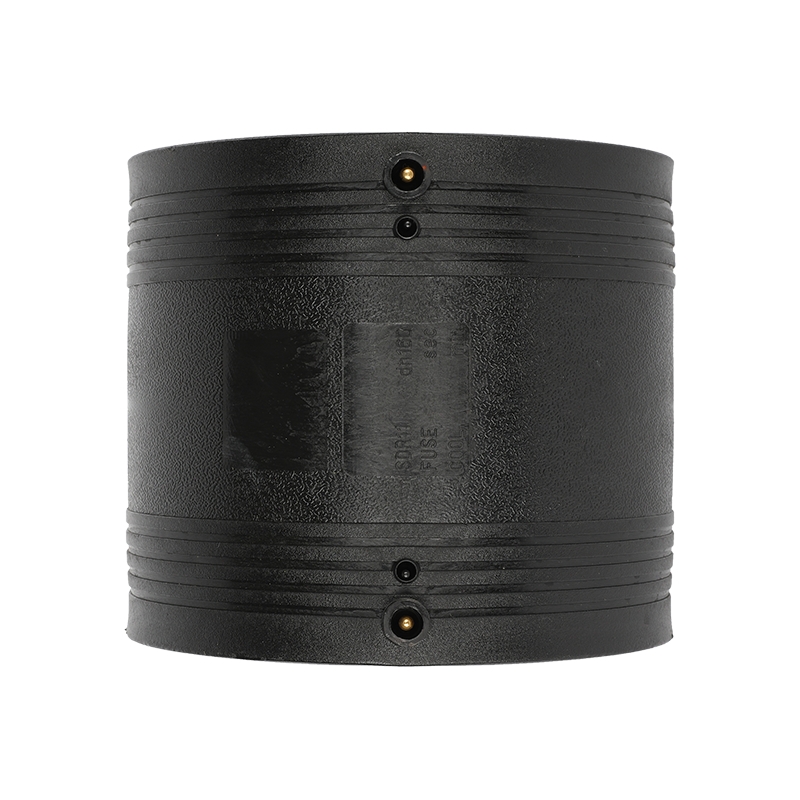
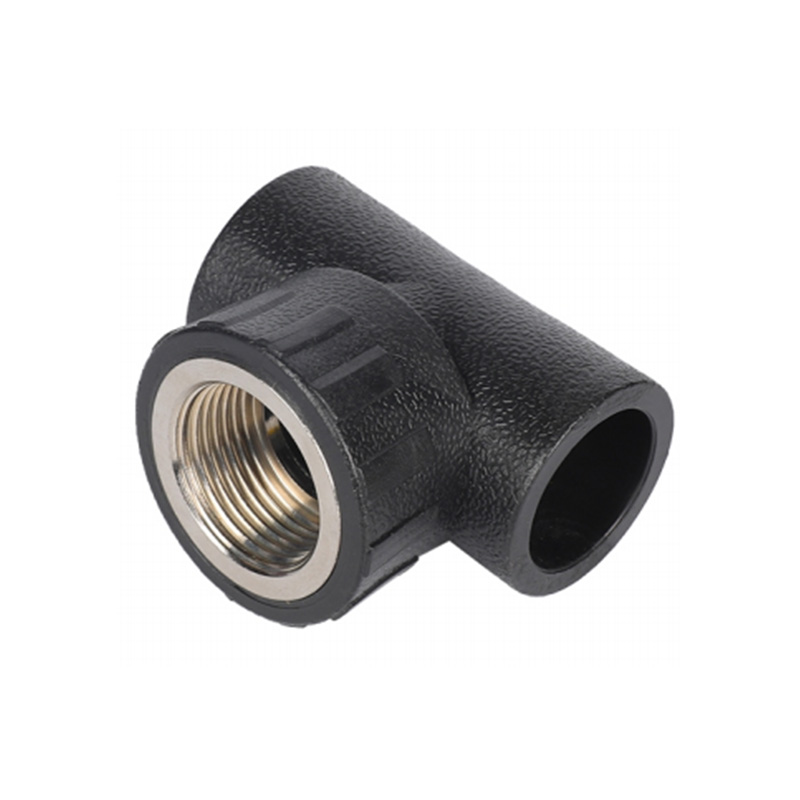
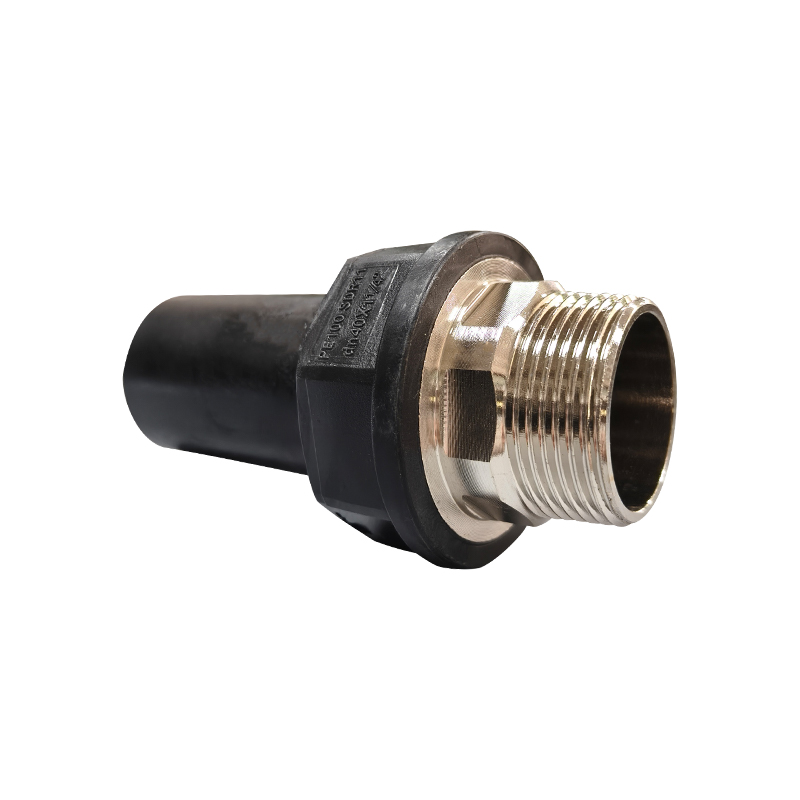
The most common transition method for water service lines is a pair of threaded adapters: an HDPE spigot x female-thread adapter on the HDPE side and a PVC male-thread adapter on the PVC side. The HDPE adapter is joined to the HDPE pipe by butt fusion, socket fusion, or electrofusion. The PVC adapter is solvent-welded to the PVC pipe. The two adapters are then threaded together with PTFE tape or thread sealant.
Threaded transitions are simple, dependable, and code-recognized when the adapters are manufactured to relevant standards. They work for both pressure and gravity applications, in sizes from about DN20 (3/4 inch) to DN110 (4 inches) and larger. The main risk is overtightening, which can strip the softer HDPE threads.
Flanged adapters
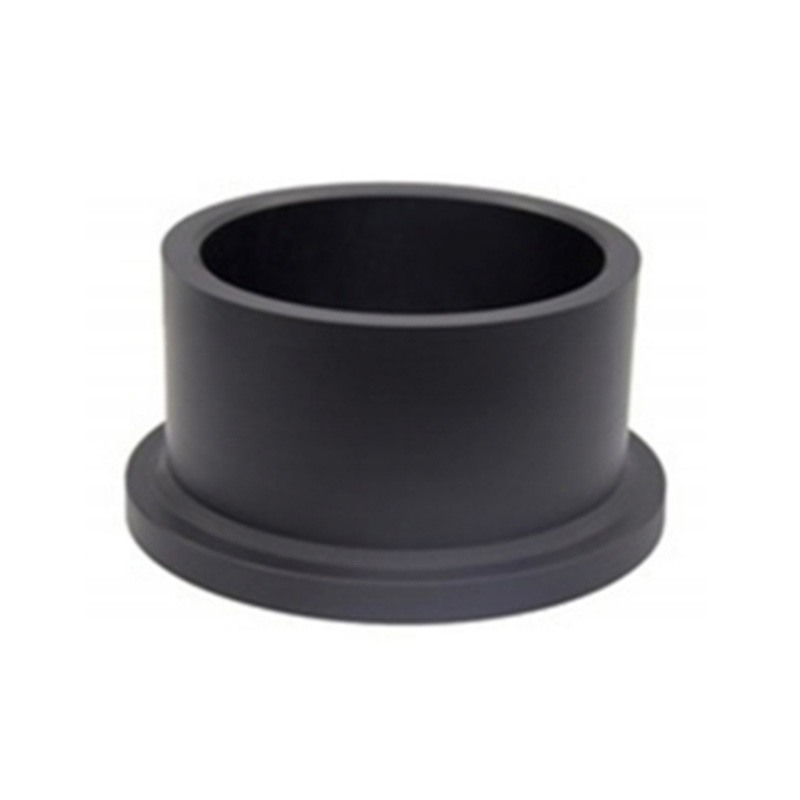
On larger-diameter lines, or wherever the joint needs to be disassembled for maintenance, flanged adapters are the strongest and most service-friendly option. An HDPE flange adapter or stub end is fused to the HDPE pipe, then connected to a PVC flange with a full-face gasket and stainless steel bolts. Common flange standards include ANSI/AWWA C207 and ISO 7005.
Flanged connections are rated for full system pressure when properly assembled, and they can handle repeated assembly and disassembly without damage. They are the standard choice for pump stations, treatment plants, marine outfalls, and industrial process piping.
Compression and push-fit transition fittings
Compression fittings use one or more O-rings and a compression nut or push-fit mechanism to grip the HDPE pipe. Some compression transition fittings are designed to accept HDPE on one end and PVC on the other, either by a solvent socket, a threaded connection, or a second compression mechanism. These fittings are useful in repair situations where heat fusion equipment is not available, or where the pipe cannot be moved far enough to fit a fusion machine.
Compression fittings with a metallic stiffener insert are common for HDPE water service in sizes up to about 63 mm. The stiffener supports the inner wall of the polyethylene pipe so the O-ring can seal properly. The pressure rating varies by manufacturer, and fittings intended for potable water should be certified under NSF/ANSI 61 or the relevant regional standard.
Barbed insert fittings with clamps
For low-pressure irrigation, drainage, and suction-service lines, barbed insert fittings are a simple and inexpensive transition. One end of the insert fitting carries a barbed profile that pushes into the HDPE pipe; the other end is a solvent socket or threaded connection that attaches to PVC. A stainless steel hose clamp secures the HDPE over the barb. This method is not suitable for pressurized potable water lines and is not a listed joint in most plumbing codes, but for non-code agricultural work it is widely used.
Comparison of transition connection methods
Selecting the right method is easier when the options are compared directly. The table below summarizes the most important characteristics of each approach.
| Method | Typical diameter range | Pressure capability | Installation effort | Best application |
|---|---|---|---|---|
| Shielded rubber coupling | DN 40–DN 300 | Gravity / zero internal pressure | Low, clamp drive only | Sewer, drain, vent transitions |
| Threaded adapters | DN 20–DN 110 | Full rated pressure | Medium, fusion plus wrench | Water service, exposed lines |
| Flanged adapters | DN 50–DN 600 | Full rated pressure | High, alignment and bolting | Large pipes, pump stations |
| Compression / push-fit | DN 15–DN 63 | Up to manufacturer rating | Low, push-on | Repairs, underground service |
| Barbed insert plus clamp | DN 13–DN 50 | Low pressure only | Low, clamp drive only | Irrigation and suction lines |
How to make a field transition in seven steps
When a threaded adapter transition is the right choice for a water line, the following sequence produces a dependable, code-recognized result. The same logic applies to other mechanical transition types, with the joining steps adjusted accordingly.
- Cut the HDPE pipe square. Use a wheel-type pipe cutter, a chop saw with a fine-tooth blade, or a sharp handsaw. A square cut is essential for full bearing in the fusion machine and for proper sealing in a mechanical fitting.
- Deburr the cut edges. Remove all loose chips and sharp edges with a deburring tool or a utility knife. Debris left on the fusion heater plate will cause weld defects and contaminant inclusions.
- Fuse the HDPE transition adapter onto the pipe. Whether using butt fusion, socket fusion, or electrofusion, always follow the fitting manufacturer's parameter tables for temperature, pressure, and cooling time. Do not pull pipe hangers or put load on the joint until the fusion has fully cooled.
- Solvent-weld the PVC adapter onto the PVC pipe. Clean the PVC socket and pipe end with PVC primer, apply the appropriate solvent cement, and push the pieces together with a quarter-turn while holding for the required time. Let the PVC joint cure according to the cement manufacturer's schedule before threading the two adapters together.
- Apply thread sealant. Wrap the male PVC threads with four to six layers of PTFE tape, or apply a thread sealant paste certified for potable water systems. The sealant also lubricates the threads, letting you reach a proper tightening torque without scraping or galling.
- Assemble the threaded connection. Thread the PVC adapter into the HDPE female adapter by hand until snug, then tighten another half to full turn with a strap wrench or an adjustable wrench. Protect the HDPE adapter from crush loads by gripping the wrench on the hex or flat surfaces provided.
- Support and test the assembly. Install pipe hangers or blocking within one meter on both sides of the transition so no weight hangs on the threaded joint. Pressure test the completed line to 1.5 times the working pressure for two hours, or according to local code, before backfilling or covering the work.
PVC versus HDPE: what an installer needs to know
New installers sometimes ask why the two materials cannot simply be treated as interchangeable. The differences run deeper than color. The table below highlights the property gaps that matter most in piping decisions.
| Property | HDPE | PVC | Practical impact |
|---|---|---|---|
| Density | 0.93–0.97 g/cm³ | 1.38–1.45 g/cm³ | HDPE floats; PVC sinks |
| Tensile modulus | 0.8–1.0 GPa | 2.4–3.4 GPa | PVC is stiffer and resists bending |
| Coefficient of thermal expansion | 120–200 × 10-6 /°C | 50–80 × 10-6 /°C | HDPE moves two to three times more |
| Low-temperature behavior | Ductile down to about -40°C | Brittle below about 0°C | HDPE suited to cold climates and chilled water |
| Primary joining method | Heat fusion, mechanical | Solvent weld, thread, gasket | No common chemical joining method |
| Standard pressure basis | ISO 9080 / SDR / PN | ASTM D2837 / Schedule / Class | Rating systems are not directly compared |
| Abrasion resistance | Excellent | Moderate | HDPE preferred for slurry and mining lines |
| Typical service life | 50 years or more at rated pressure | 25 to 50 years depending on application | Both materials are long-term investments |
From a practical standpoint, the table explains why mixing the two in a single pipe run is normal and acceptable, provided the connection point is handled with a fitting designed for that purpose. The problem is not that the materials cannot coexist in one system; it is that they cannot be chemically fused to each other.
What to check before buying transition fittings
Choosing the correct transition fitting should be done on paper, not for the first time on the job site. We recommend checking five details against the project specification before ordering.
Outside diameter standard
HDPE pressure pipe in Asia and Europe follows metric outer diameters per ISO 4427 and EN 12201. In North America it may follow iron pipe size (IPS) or ductile iron pipe size (DIPS). PVC Schedule pipe is based on IPS. The outside diameter of a DN110 metric HDPE pipe is 110 mm, while a 4-inch Schedule 40 PVC pipe measures 114.3 mm. A transition fitting that is not matched to the exact OD standard will not seal.
Pressure class
Confirm the pressure rating of both the HDPE line and the PVC line. The transition fitting must be rated at least as high as the lower-rated of the two connected pipes. For HDPE, note the SDR and the PE grade (PE80, PE100). For PVC, note the Schedule or pressure class.
Application and fluid
Potable water requires materials that meet NSF/ANSI 61 or the relevant regional drinking-water standard. Wastewater, irrigation, and industrial fluids may require additional chemical compatibility. A transition fitting that is perfect for a sewer line may not be approved for a drinking-water line.
Installation environment
Buried transitions need protection from rocks, soil movement, and groundwater. Exposed transitions need UV resistance and sometimes fire-resistance ratings. Consider whether the joint will be accessible for future maintenance or permanently encased in concrete or backfill.
Manufacturer documentation
Always ask for the fitting manufacturer's published performance data, material test certificates, and installation instructions. A reputable manufacturer will provide these without hesitation. If the documentation does not clarify pressure rating or approved joining methods, choose another product.
Five mistakes that turn a small transition into a big repair
Most of the failed HDPE-to-PVC connections we see in field reports can be traced to one of five avoidable mistakes. Each one costs time, money, or both.
1. Solvent cement on both surfaces
What happens: the joint holds together for a short period, then pulls apart under pressure or handling. Inspection of failed joints typically shows the cement film completely detached from the HDPE surface.
Prevention: do not use PVC solvent cement on any polyethylene surface. Use a mechanical transition or heat fusion.
2. Assuming ODs match
What happens: a fitting designed for a metric HDPE OD is forced onto an IPS-size PVC pipe, or vice versa. The result is an incomplete seal, a cracked socket, or a joint that leaks immediately on a pressure test.
Prevention: measure both pipe ODs with a caliper and compare them to the fitting manufacturer's dimensional chart.
3. Rubber coupling on a pressure line
What happens: the rubber sleeve, designed for gravity flow, bulges or bursts when the line is pressurized. The leak may be small at first but grows quickly.
Prevention: check the pressure rating of any coupling before installation. Only a coupling rated for the line's maximum working pressure belongs on a pressure system.
4. Overtightening HDPE threads
What happens: HDPE threads strip or the adapter body cracks because HDPE is softer and more ductile than PVC or metal. The transition fitting is ruined and must be cut out and replaced.
Prevention: tighten to snug plus a half-turn maximum, and use a thread sealant that provides lubrication.
5. No pressure test before burial
What happens: a flawed transition joint is covered by trench backfill before the leak is discovered. Repairing it requires excavation, line shutdown, and replacement of the damaged section.
Prevention: always conduct the required hydrostatic or pneumatic test before backfill or concealment, and photograph the test result for the record.
Standards that control HDPE and PVC joining
Knowing which standards apply makes it easier to reject a bad product or method at the purchasing stage. The following list covers the most commonly encountered documents in international piping projects.
- ASTM D2564 — Standard specification for solvent cements for PVC plastic piping systems. The scope is limited to PVC-to-PVC joints.
- ASTM F656 — Standard specification for primers for use in solvent-welded PVC joints. Again, PVC only.
- ASTM D3035 / ASTM F714 — Standard specifications for polyethylene (PE) pressure pipe and large-diameter PE pipe.
- ASTM D3261 — Standard specification for butt heat fusion polyethylene (PE) plastic fittings.
- ASTM F1055 — Standard specification for electrofusion-type PE fittings for outside diameter-controlled PE pipe.
- ASTM C1173 / CSA B602 — Standards for flexible transition couplings used in drain, waste, and vent piping.
- ISO 4427 / EN 12201 — International and European standards for PE piping systems for water supply, including fittings.
- NSF/ANSI 61 — Drinking water system components — health effects. This certification matters for potable-water transitions.
None of these standards endorses a solvent-cement joint between PVC and HDPE. That is the clearest possible signal that such a joint has no legitimate place in a building or infrastructure piping system.
Frequently asked questions about PVC fittings and HDPE pipe
Can PVC fittings be glued to HDPE pipe?
No. PVC solvent cement dissolves PVC but not HDPE. The cement simply dries on the surface of the polyethylene pipe and creates no measurable bond. A glued joint will fail under load, pressure, or thermal cycling.
What is the best way to transition from HDPE pipe to PVC?
For pressurized water lines, the most common and reliable method is a threaded transition: an HDPE female threaded adapter fused to the HDPE pipe and a PVC male threaded adapter solvent-welded to the PVC pipe, joined with PTFE tape or thread sealant. For gravity drainage, a shielded rubber transition coupling is simpler and equally dependable.
Can a rubber coupling be used on a pressure water line?
Only if the coupling is rated and listed for pressure service. Standard shielded drain couplings are for gravity flow. For pressure applications, use a rated compression or transition fitting, and test the joint at 1.5 times the working pressure before backfilling.
Does HDPE pipe have the same outside diameter as PVC Schedule 40 pipe?
Not always. North American PVC Schedule 40 pipe uses iron pipe size ODs. HDPE water pipe may follow metric ISO ODs, IPS ODs, or DIPS ODs depending on the standard it was manufactured to. Always measure the OD before choosing a mechanical fitting.
Is it legal to connect HDPE and PVC in a plumbing system?
Yes, provided you use a listed or approved mechanical transition fitting that is rated for the application. What is not allowed is an unlisted solvent-cement connection. The exact approval requirements depend on the local plumbing code.
Can a heat fusion joint be used to weld HDPE directly to PVC?
No. Heat fusion works because two pieces of the same polyethylene material melt together and intermingle. PVC and HDPE are different polymers with different melting temperatures. Applying fusion heat to a PVC surface will degrade it, not weld it to the polyethylene.
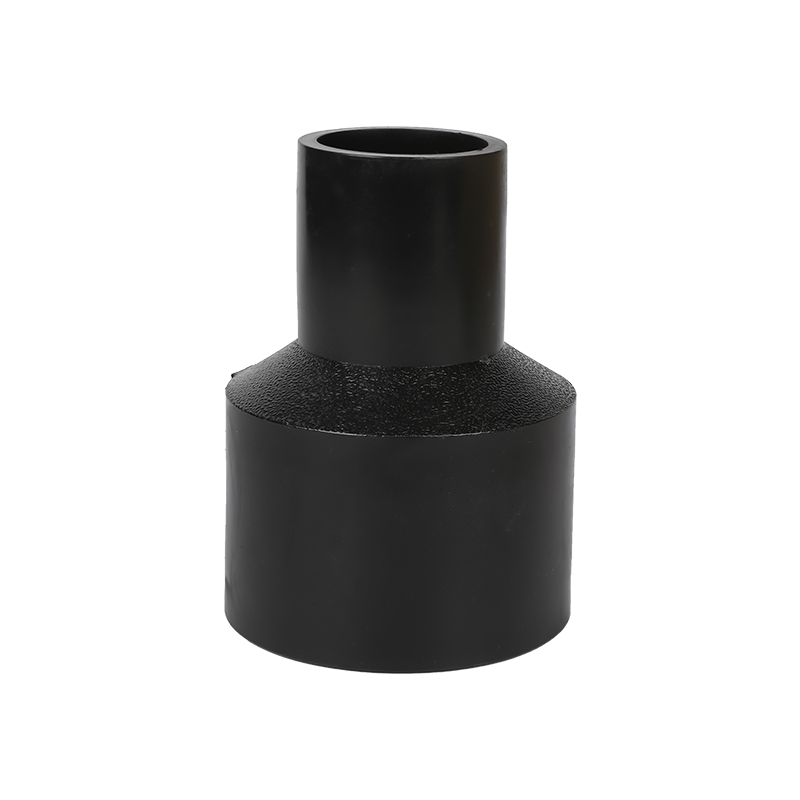
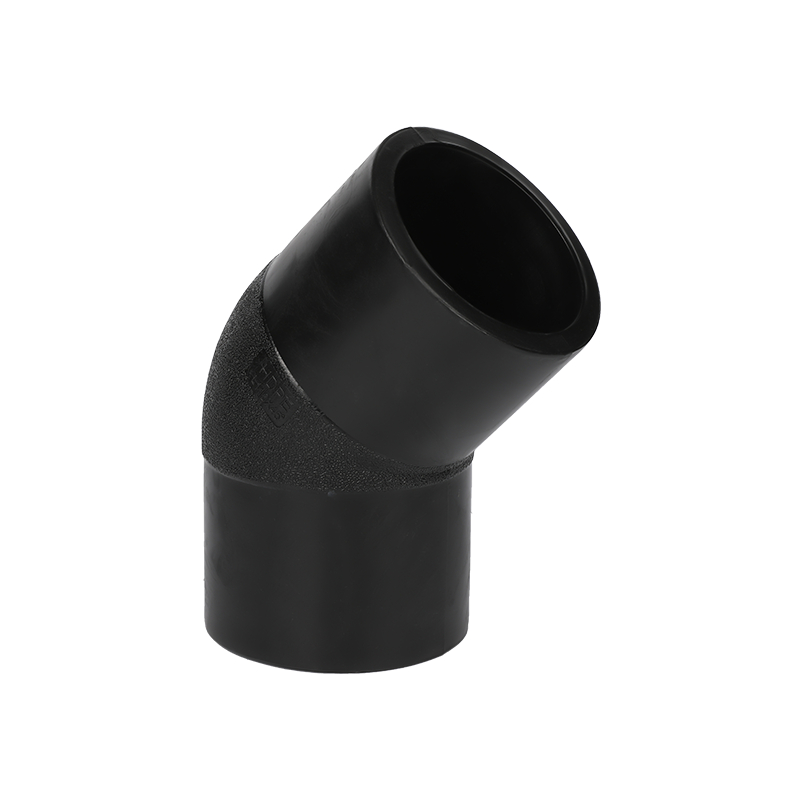
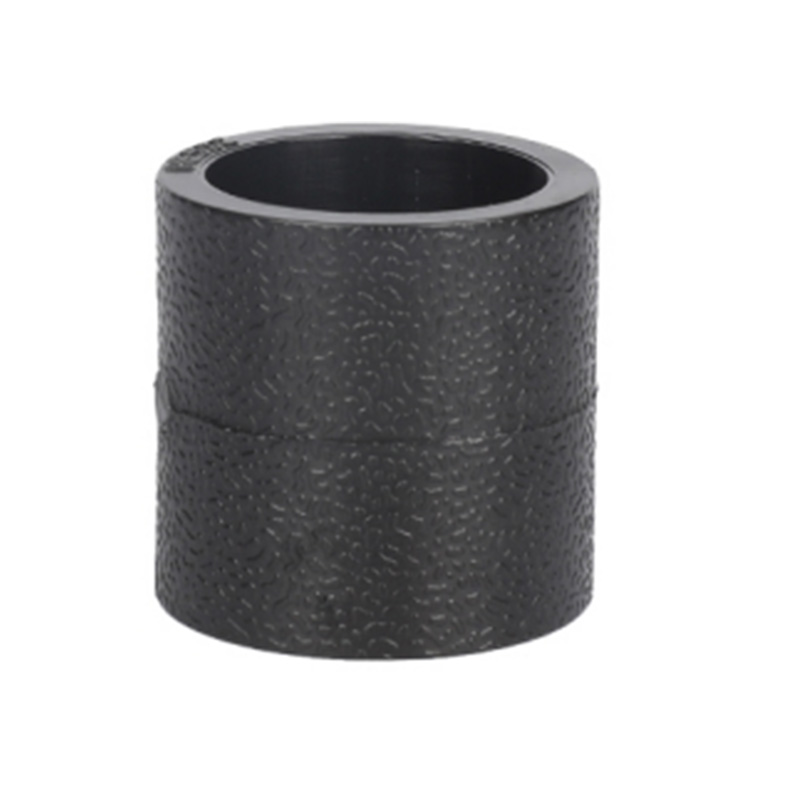
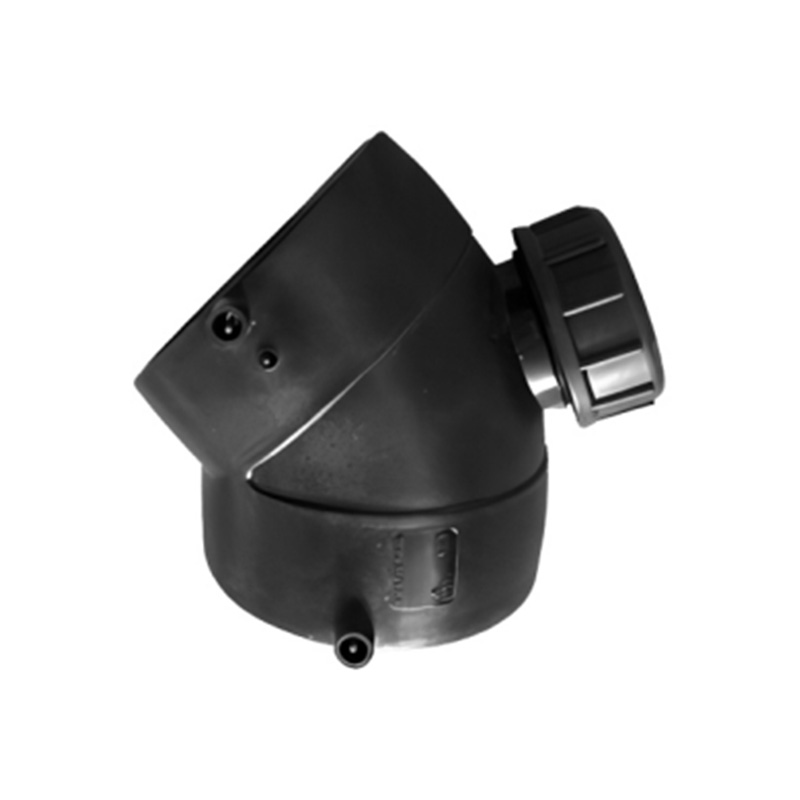
At Zhejiang Fengfeng Pipe Industry, a manufacturer of HDPE butt fusion, electrofusion, socket fusion, and threaded fittings, the question of using PVC fittings on HDPE pipe arrives in our technical mailbox almost every month. Our guidance always comes back to the same principle: choose the joining method that the standards and the materials support, rather than the one that looks fastest in the moment. Heat-fuse or mechanically fit the HDPE side with HDPE-rated components, solvent-weld the PVC side with approved PVC materials, and bridge the two with a listed transition fitting that matches both diameter standards and pressure ratings.
When a transition is properly designed, tested, and buried, it will comfortably outlast the warranty period and keep working for decades. When it is improvised with solvent cement and optimism, it becomes a hidden failure point that no one thinks about again until the first leak appears. The short answer to the original question is no — but the longer answer is that every legitimate HDPE-to-PVC connection has an engineered solution that is fast, affordable, and easy to install, if you choose the right fitting from the start.
KEEP IN TOUCH

About Us
Zhejiang Fengfeng Pipe Industry Co., Ltd. uses efficient single screw injection molding machines for high productivity and low energy use.
Products link
Contact
-

+86-19858193396
+86-13735359894 -

+86-0574-63555288
-

-

No. 21, Market Road, Diankou Town, Zhuji City, Shaoxing City, Zhejiang Province, China