


 English
 中文简体
中文简体 русский
Industry news
 Home / News / Industry news / Can You Use PVC Fittings with HDPE Pipe? A Complete Compatibility Guide
 Can You Use PVC Fittings with HDPE Pipe? A Complete Compatibility Guide
 2026.10.05
 Industry news
A procurement manager at a municipal water project stares at the delivery schedule: the mainline pipe has arrived as HDPE PE100, but the approved fittings list on the table reads PVC-U socket fittings with solvent cement. It is a familiar scene in contractor yards across Asia, the Middle East, Africa, and even parts of North America. The question is always the same: can you use PVC fittings with HDPE pipe?
The direct answer is no. You cannot join PVC fittings to HDPE pipe with solvent cement, and you should not try to force a match by heating, threading, or clamping standard PVC sockets onto HDPE pipe. The two materials are not interchangeable at the joint. But this is not the end of the story. There are engineered transition methods that let you connect HDPE pipe to a PVC system safely, and there are correct fittings made specifically for HDPE. This article explains exactly why the shortcut fails, what actually happens in the field, and which connection methods will pass a pressure test and survive service conditions.
The Short Answer: Why PVC Fittings and HDPE Pipe Do Not Mix
PVC fittings are manufactured to receive PVC pipe. The joint relies on a solvent cement that chemically softens and fuses the PVC surfaces into one homogenous material. HDPE is a different polymer with a non-polar, low-energy surface. Solvent cement cannot dissolve or bond to it in a way that creates a structural joint. When you apply PVC primer and cement to HDPE pipe and push it into a PVC socket, the assembly may feel tight for a few hours, but it has no real weld strength. Once the solvent flashes off and the pipe begins to relax, the joint becomes a mechanical interference fit at best, and a leaking separation point at worst.
There is also a geometric mismatch. HDPE pipe and PVC pipe of the same nominal size are produced to different outside diameter standards in many cases. A PVC socket designed for a PVC pipe OD will not grip an HDPE pipe OD with the same interference. The gap may be too large or too small depending on the pressure rating and the standard each product follows. That alone makes the connection unreliable before you even consider thermal movement.
The engineering conclusion is straightforward: use HDPE fittings for HDPE pipe, use PVC fittings for PVC pipe, and use a recognized transition fitting only where the two systems must meet.
Understanding the Materials: PVC and HDPE at a Glance
Before we dig into joint mechanics, it helps to review what each material actually is. PVC and HDPE are both thermoplastics, but they belong to different families with different molecular structures, physical behaviors, and joining requirements.
PVC: Rigid, Amorphously Structured, and Solvent-Compatible
PVC stands for polyvinyl chloride. In its unmodified form it is a rigid, amorphous-ish polymer with a relatively high glass transition temperature. Pipe-grade PVC-U is typically compounded with stabilizers, lubricants, and impact modifiers. Its defining feature from an installer’s perspective is that it responds well to solvent cement. The cement dissolves the surface layer, allowing polymer chains from both parts to intermingle and form a permanent bond as the solvent evaporates. PVC also has good stiffness and creep resistance at moderate temperatures, which makes it ideal for buried gravity lines, water mains, and electrical conduit. However, PVC is notch-sensitive, brittle under impact at low temperatures, and susceptible to ultraviolet degradation unless properly formulated or painted.
HDPE: Tough, Semi-Crystalline, and Fusion-Welded
HDPE, or high-density polyethylene, is a semi-crystalline thermoplastic with a simple molecular backbone composed of carbon and hydrogen. The crystallinity gives it toughness, fatigue resistance, and a capacity to deform without cracking. A key difference from PVC is its high coefficient of thermal expansion and its ability to be welded by heat. When two HDPE surfaces are heated above the melting point and pressed together, the polymer chains from each side entangle to create a weld that is as strong as or stronger than the parent material. That is why the entire HDPE joining philosophy is built around fusion, not adhesion.
| Property | PVC-U Pipe | HDPE Pipe |
|---|---|---|
| Material structure | Amorphous / lightly ordered | Semi-crystalline |
| Primary joining method | Solvent cement, gasket, threading | Butt fusion, electrofusion, mechanical |
| Coefficient of thermal expansion | Typically 5–8 × 10⁻⁵ per °C | Typically 1.5–2.2 × 10⁻⁴ per °C |
| Surface energy | Higher, solvent-friendly | Low, non-polar, difficult to bond |
| Typical pressure ratings | PN6 to PN25 for PVC-O/PVC-M ranges | PE80 to PE100, SDR 11 to SDR 41 |
| Behavior under impact | Can crack, especially at low temperature | Ductile, absorbs impact energy |
| Field repair complexity | Simple with socket fittings and cement | Requires fusion equipment or mechanical clamps |
The takeaway from this comparison is that the two materials were designed around different connection philosophies. One is an adhesive-based system optimized for rigid dimensions; the other is a fusion-based system optimized for welded joints and thermal movement. Trying to glue a semi-crystalline polymer with a solvent that works on amorphous PVC is like trying to weld aluminum with solder meant for copper. The chemistry does not cooperate.
The Technical Reasons Behind the Incompatibility
Experienced engineers may already sense that the issue is not just about the glue. Several physical and mechanical factors combine to make PVC-on-HDPE connections fail. Let us go through each one in detail because each factor becomes a separate risk in the field.
Solvent Cement Has No Chemical Anchor on HDPE
Solvent cement for PVC typically contains tetrahydrofuran, cyclohexanone, or similar ketone solvents, along with dissolved PVC resin. These solvents aggressively attack the surface of PVC, softening it and allowing polymer chains to migrate across the interface. HDPE is resistant to these solvents. Tetrahydrofuran and cyclohexanone may cause slight swelling of polyethylene at elevated temperatures, but they do not dissolve it at room temperature in a way that produces a bond. The cement simply sits on the HDPE surface, dries, and forms a weak crust. Adhesion failure occurs at the interface with very little applied force.
Thermal Expansion Mismatch
The coefficient of linear thermal expansion for HDPE is roughly twice that of PVC. A 6-meter HDPE pipe subjected to a 20 °C temperature swing will expand or contract about 12–25 mm, while a PVC pipe of the same length will move roughly 6–10 mm. If an HDPE pipe is solvent-glued into a rigid PVC socket, the differential movement creates shear stress at the joint interface. During a hot day, the HDPE pipe tries to expand and pushes against the unsupported end of the socket. During a cold night, it shrinks and pulls away from the socket mouth. Over repeated cycles, the stress exceeds the weak adhesive bond and the joint begins to leak or separate completely.
Dimensional Standards Do Not Line Up
Pipe dimensions are not universal across materials. HDPE pipe is often manufactured to ISO 4427 or EN 12201 using an outside-diameter-based system. PVC pipe may follow ISO 1452, EN 1452, ASTM D1785, or other national standards. In many nominal sizes, an HDPE pipe has a slightly different outside diameter than a PVC pipe of the same nominal size and pressure class. Even if the diameters look similar to the naked eye, the tolerance band is different. A PVC socket that fits a PVC pipe with a tight solvent-weld gap may be either too loose on HDPE pipe, creating a joint with no strength, or too tight, making assembly impossible without forcing—which risks cracking the socket.
Pressure Rating and Long-Term Strength
Even if you managed to glue the two together, the long-term pressure capacity of the joint would be unknown. The hydrostatic design basis for PVC solvent joints is predicated on the bond area being at least as strong as the pipe wall. A glued HDPE-to-PVC joint has no validated bond area, no manufacturer data sheet, and no third-party certification. In a pressurized water line, a failure can occur weeks or months later as the slow relaxation of HDPE reduces the initial interference. The result is a blowout risk, not just a drip.
Chemical Compatibility in Service
The fluid being transported matters too. HDPE is specified for many chemicals because of its resistance to acids, alkalis, and solvents. PVC has a different chemical resistance profile. If the system carries a fluid that attacks PVC but not HDPE, the presence of a PVC fitting creates a weak point in an otherwise compatible pipeline. A hasty adapter using PVC could turn a sound HDPE chemical line into a safety hazard.
| Failure Mode | Likely Timeline | Result |
|---|---|---|
| Solvent bond failure | Hours to days after pressure test | Leak at the interface |
| Thermal pull-out | After first temperature swing | Fitting separates from pipe end |
| Socket cracking | During assembly or shortly after | Visible crack, immediate leak |
| Slow creep relaxation | Weeks to months | Gradual loosening, weeping joint |
| Long-term pressure fatigue | Months under cyclic loading | Blowout near the fitting |
What Happens If You Force the Connection Anyway
It is worth looking at real-world behavior because the failure is not always immediate. The most common attempt is to clean the HDPE pipe end, apply PVC primer and cement, and push it into a PVC socket. Right after assembly, the joint feels solid. The solvent evaporates over a few hours and the installer may even conduct a hydrostatic test successfully. Then the project moves on, and the first sign of trouble appears weeks later as a slow drip under the support bracket or at a buried coupling.
The Delayed Leak
HDPE has a memory for its original dimensions. Extruded pipe is cooled under tension, and when you cut it and handle it, the outer surface may relax over time. This relaxation is small, but it is enough to reduce the interference between the HDPE pipe outer wall and the PVC socket inner wall. Solvent cement never formed a chemical bond, so the joint relies entirely on mechanical grip. As the HDPE relaxes, the grip loosens, and the joint becomes a location where water finds the path of least resistance.
The Thermal Separation
In regions with large diurnal temperature swings, the story is more dramatic. An exposed HDPE pipe running from a valve pit to a PVC manifold can expand during the afternoon heat and contract at night. The PVC socket does not move with the same rate. Eventually the HDPE end works its way out of the socket just far enough to lose the sealing surface. The result is a geyser at the connection point on a hot afternoon.
Damaged Pipe End
Sometimes an installer tries to improve the grip by heating the HDPE pipe end and forcing it into the PVC socket. This softens the HDPE and may deform it, but it does not create adhesion. Worse, the socket was never designed to withstand the radial force of expanding HDPE. The PVC socket can crack, creating a sharp edge that scores the HDPE pipe. That score becomes a stress riser and, over time, a source of slow crack growth in the polyethylene.
A pressured utility cannot afford to test the limits of these failures. The cost of excavation, downtime, and recurring repairs dwarfs the small savings from using a PVC socket instead of a proper HDPE fitting.
The Correct Connection Methods for HDPE Piping
Once you accept that PVC fittings are not an option, the next step is selecting the right connection method for HDPE. Fortunately, HDPE offers several well-established joining techniques that are reliable, repeatable, and certified. Each has its own best-use case.
Butt Fusion Welding
This is the most common method for HDPE pipes of 90 mm and above. The pipe ends are faced, aligned, heated against a heating plate, then pressed together under controlled force. The result is a full-strength weld joint with no fittings required. Butt fusion is ideal for long straight runs, water mains, and gas lines. It requires a fusion machine and operator training.
Electrofusion Welding
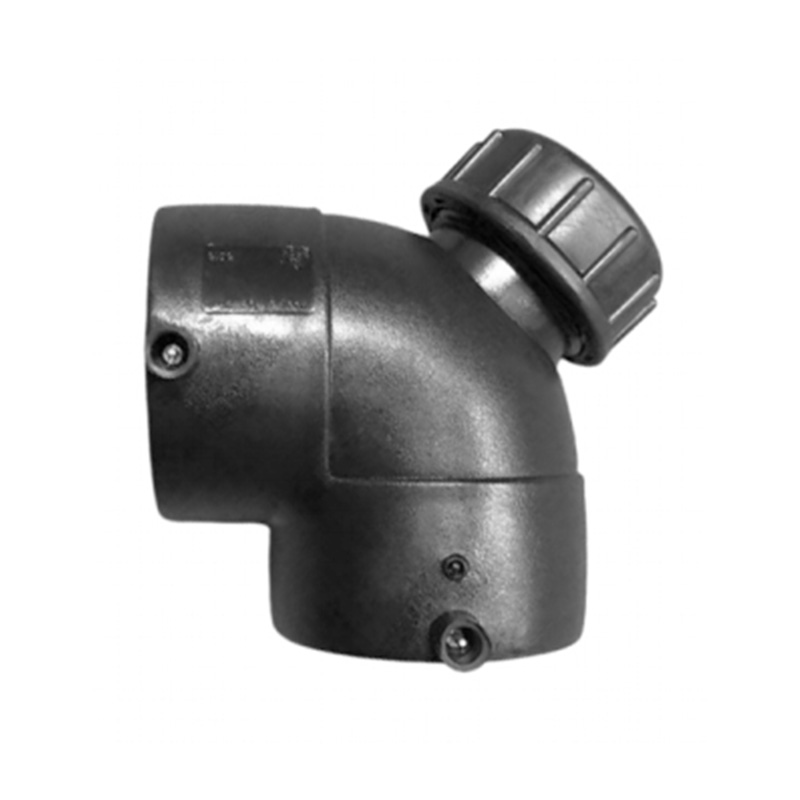
An electrofusion fitting has embedded resistance wires. The HDPE pipe is inserted into the fitting, and a welding machine sends current through the wires, melting the fitting surface and the pipe outer wall together. Electrofusion is excellent for repairs, restricted spaces, and joining pipes of different wall thicknesses. It is more tolerant of field conditions than butt fusion.
Socket Fusion
Used mainly on smaller diameters, typically below 63 mm, socket fusion uses a heating tool to melt both the outside of the pipe and the inside of the socket, then pushes them together. It is simple, fast, and works well for small-bore HDPE lines and irrigation systems.
Compression and Mechanical Fittings
Compression fittings with O-rings and gripping teeth are widely used for HDPE pipe in water service lines, particularly when you need a reversible connection. These fittings are designed specifically for the HDPE outer diameter and pressure rating. They are also the practical choice for temporary installations or where fusion equipment is unavailable.
Each of these methods shares one thing in common: the fitting or weld is designed around HDPE’s specific thermal and mechanical properties. The joint accommodates thermal movement, resists relaxation, and delivers a pressure rating that matches the pipe specification.
| Method | Typical Diameter Range | Equipment Needed | Best For |
|---|---|---|---|
| Butt fusion | 90 mm and above | Butt fusion machine, facing tool | Long mains, buried pipelines, gas distribution |
| Electrofusion | 20 mm to 1200 mm depending on fitting | Electrofusion control box, clamps | Repairs, confined spaces, tie-ins |
| Socket fusion | 16 mm to 63 mm | Socket fusion heating tool | Small-bore water lines, conduits |
| Compression fitting | 16 mm to 110 mm typical | Spanners or wrenches | Service connections, meter boxes, temporary works |
How to Make a Safe Transition from HDPE to a PVC System
In many real projects, the need to connect HDPE to PVC does not disappear. A new HDPE water main may need to tie into an older PVC distribution network. An irrigation pump discharge may be HDPE while the filter manifold is built in PVC. These situations require a deliberate transition point, not a makeshift hybrid joint.
Flange Adapters Are the Most Reliable Option
A flange adapter is a stub of HDPE pipe with a fusion-compatible end, backed by a metal or plastic flange ring. You butt-fuse the HDPE adapter onto the HDPE pipe end, then bolt it to a corresponding PVC flange adapter or a flanged PVC fitting. The connection is made through the bolted flange face with a gasket, so no gluing or welding occurs between different materials. This method is clean, inspectable, and easy to dismantle for maintenance. It is the go-to solution for pipe sizes above 50 mm and for pressure ratings that require a verifiable joint.
Threaded Transition Adapters
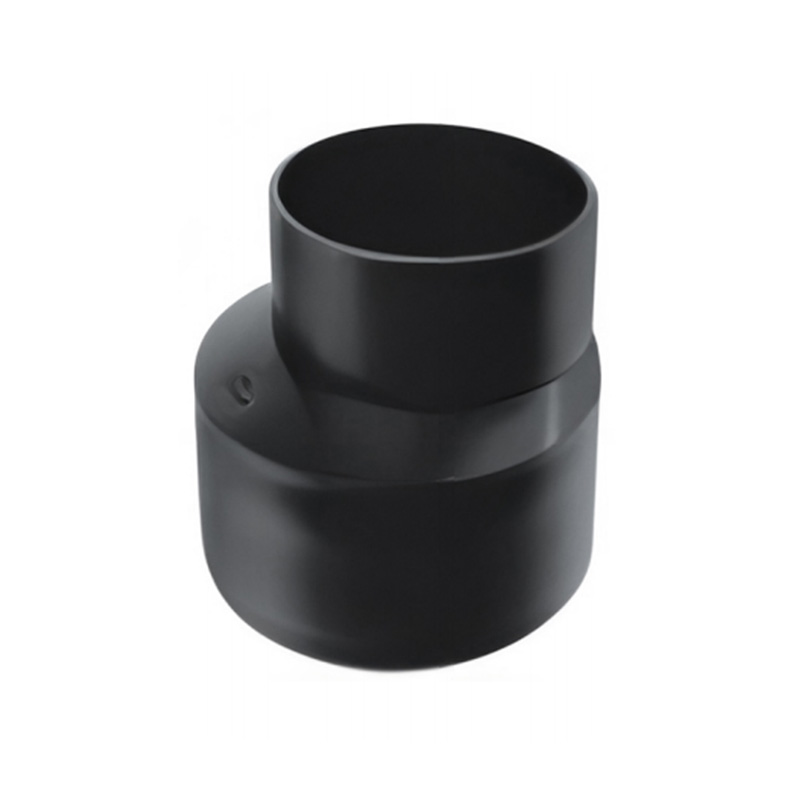
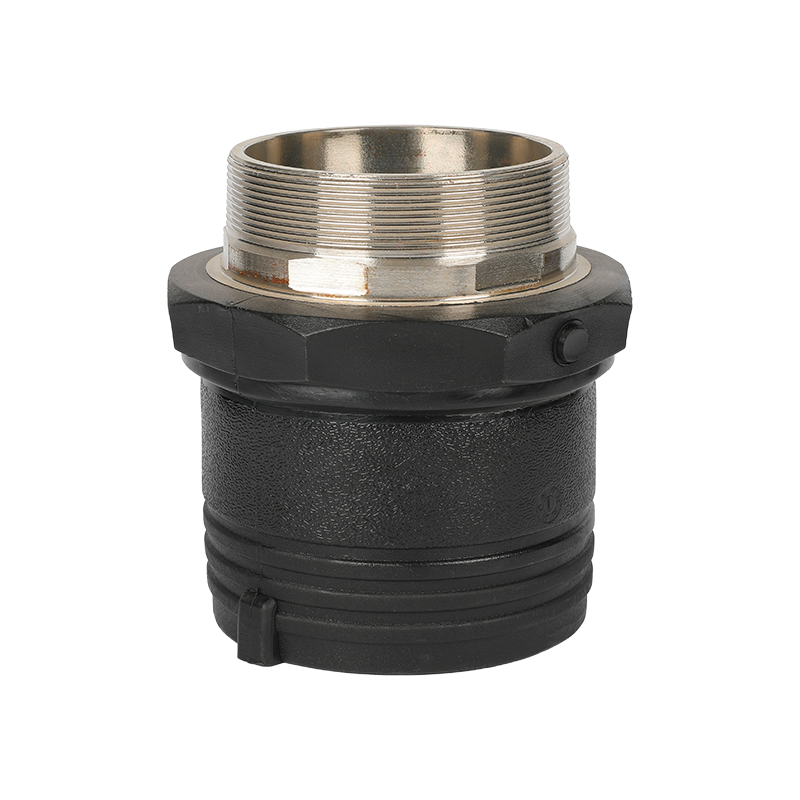
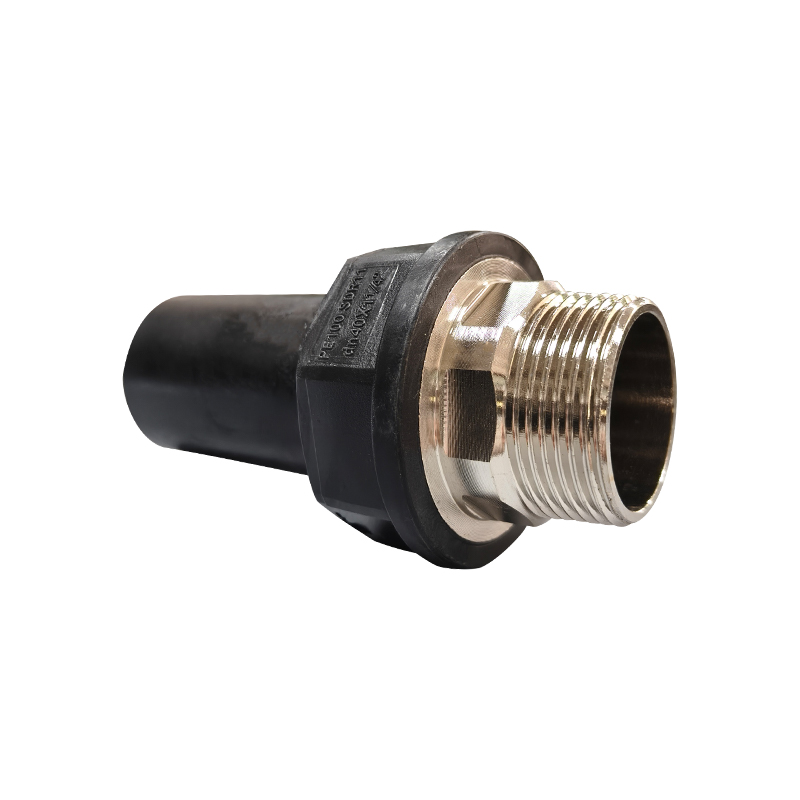
For smaller diameters, a molded transition fitting with an HDPE socket on one end and a tapered thread on the other can bridge the gap. The HDPE side is fused or compression-fitted, and the PVC side connects via a threaded joint. These are common in irrigation, pool, and water treatment applications. The key is to use a fitting that is manufactured for this exact purpose, not a generic metal nipple pressed into a PVC socket. The molded transition fitting handles the different expansion rates at the material boundary better than a rigid adhesive joint.
Compression-Style Transition Couplings
Some manufacturers make transition couplings with a rubber gasket and a stainless steel outer shell. The coupling grips the HDPE pipe on one side and the PVC pipe on the other, creating a watertight seal without bonding the materials together. These are quick to install and are ideal for repair situations where the two pipe materials meet in an existing trench. The coupling permits slight axial movement, which helps absorb differential thermal expansion.
- Cut both pipe ends square and remove burrs and dirt.
- Slide the transition coupling onto one pipe end, then align the second pipe end into the other side of the coupling.
- Tighten the bolts evenly in a star pattern to the torque specified by the coupling manufacturer.
- Perform a pressure test before backfilling the trench.
The most important rule is to always use a transition fitting that is designed for this material combination. Do not invent a hybrid joint using PVC socket and HDPE pipe on site.
How to Select Fittings for an HDPE System
If you are building a new pipeline entirely in HDPE, the fitting selection process should start with the pipe specification, not with whatever is lying around the warehouse. A correct HDPE fitting is made from the same material class as the pipe and has a pressure rating that either matches or exceeds the pipe rating.
Material Grade: PE80 vs PE100
HDPE pipe grades are classified by their minimum required strength. PE80 has a minimum required strength of 8.0 MPa at 20 °C, while PE100 has a minimum required strength of 10.0 MPa. PE100 is increasingly standard for water and gas distribution because it allows thinner walls for the same pressure rating, reducing material weight and increasing flow area. Fittings must be made from the same or higher grade than the pipe. Mixing a PE100 pipe with PE80 fittings creates a system that is only as strong as the PE80 component.
SDR and Pressure Rating
The standard dimension ratio, or SDR, is the ratio of pipe outside diameter to wall thickness. A lower SDR means a thicker wall and a higher pressure rating. For example, SDR 11 PE100 pipe has a nominal pressure rating of PN16, while SDR 17 has PN10. A fitting must match the SDR class of the pipe if you are using butt fusion, because the weld area depends on a matching wall thickness. Compression fittings are usually rated for a range of SDRs, but you still need to verify the actual pressure rating.
Standards and Quality Assurance
Look for fittings that are manufactured and tested in accordance with recognized standards. For HDPE fittings, commonly cited standards include ISO 4427, EN 12201, and ASTM D3261 for electrofusion fittings. Factory quality management also matters. As a pipe manufacturer with ISO 9001 certification, we understand the importance of traceability from the raw material batch to the finished fitting. A fitting without a batch number, dimensional inspection record, or pressure test certificate is a liability in a pressurized system.
| Selection Criterion | What to Verify | Why It Matters |
|---|---|---|
| Material grade | PE80 or PE100 matches pipe grade | A lower grade fitting weakens the whole line |
| SDR class | SDR 11, SDR 17, or other matching value | Ensures proper fusion joint geometry |
| Pressure rating | PN rating equals or exceeds pipe PN | Prevents burst under operating pressure |
| Standards compliance | ISO 4427, EN 12201, ASTM | Provides traceable, third-party validation |
| Alternative joining method | Electrofusion or mechanical compatible | Needed when field fusion is not practical |
If you are sourcing HDPE fittings for an international project, also consider the delivery lead time. A factory that produces both pipe and fittings from a single site can simplify logistics and ensure that the materials in each shipment come from a consistent production batch. That consistency reduces the risk of dimensional mismatches between pipe and fitting.
Installation and Service Considerations
The best fittings fail when installation practice is poor. HDPE pipe has unique handling requirements, and installers who come from a PVC background often bring habits that do not transfer well. Here are the most critical installation points.
UV Exposure
HDPE is sensitive to prolonged ultraviolet exposure. If the pipe has been stored outdoors for more than a few months, the surface can become oxidized, which degrades weld quality. For butt fusion, the oxidized surface layer must be removed during the facing operation, so in most cases the fusion process handles this automatically. For electrofusion, the pipe surface should be scraped clean before fitting installation. If you plan to use compression fittings on a pipe that has been stored outside for a long time, consider cutting off the weathered end section and fitting to fresh pipe surface.
Temperature Effects on Fusion
Fusion welds are temperature-sensitive. Most HDPE pipe welding standards specify a minimum ambient temperature of around -5 °C and a maximum of about 40 °C. In cold weather, the heating plate cools faster, and in hot weather, the cooling time changes. Adjust the welding parameters according to the machine manufacturer’s guidance. Never attempt electrofusion on a wet pipe end, because the moisture turns to steam during welding and creates voids in the joint.
Bending Radius
HDPE pipe can be bent, which is one of its advantages over PVC. However, there is a minimum bending radius that depends on the pipe's diameter and SDR. A common rule of thumb is 20 to 25 times the outside diameter for a pipe under pressure. If the bending radius is too tight, the strain in the pipe wall can exceed the design limit and shorten the service life. When connecting HDPE to PVC through a transition fitting, keep the bend away from the transition point so that lateral strain is not transferred directly into the joint.
Bedding and Backfill
HDPE pipes are flexible, meaning they rely on soil support to resist external loads. The trench bottom must be smooth and free of sharp stones. Backfill should be compacted in layers, but not over-compacted around the pipe. An uneven trench bottom causes point loading, which can deform the pipe and stress the fittings. In transition areas, additional compaction care is needed around the adapter so that the rigid PVC side and flexible HDPE side are both supported properly.
These installation details are exactly the kind of thing a pipe manufacturer with twenty years of production experience pays attention to. In our factory in the Yangtze River Delta, we test fittings across a wide range of wall thicknesses and fusion conditions so that field installers receive a product that behaves predictably.
Frequently Asked Questions
Can I use PVC glue on HDPE pipe?
No. PVC glue, also called solvent cement, will not bond to HDPE. The HDPE surface is resistant to the solvents used in PVC cement, so the cement dries without creating a molecular bond. The joint will fail under pressure or thermal movement. Use a proper HDPE mechanical adapter or fusion fitting instead.
Is there an adapter that goes from HDPE pipe to PVC pipe?
Yes. Several engineered adapter types exist. The most reliable options are flange adapters with fusion joints on the HDPE side and bolted connections to a PVC flange, molded transition fittings with threaded connections, and compression transition couplings that grip both pipe materials with a gasket seal.
Can I heat a PVC fitting and force it onto HDPE pipe?
No. Heating a PVC fitting softens it, but it also weakens it and may release harmful fumes. The PVC socket will not bond with the HDPE pipe, and the thermal stress created during cooling will likely crack the socket or create a poor seal. This is a dangerous shortcut.
What about using PVC fittings on HDPE pipe for drainage or irrigation?
For gravity drainage systems with no internal pressure, a PVC fitting glued to HDPE may appear to work because there is no pressure forcing the joint apart. However, ground movement and thermal expansion can still separate the joint over time. Use a proper transition coupling for buried gravity systems, or replace the PVC fitting with an HDPE fitting that suits the pipe.
How do I choose between butt fusion and electrofusion fittings?
Butt fusion is generally more economical for large-diameter straight runs, while electrofusion is more practical for repairs, small diameters, and situations where the pipe cannot be moved. Consider the installed cost, available equipment, and the need for future dismantling. Both methods produce reliable joints when executed according to the machine manufacturer’s procedures.
Why does HDPE pipe need joints that allow thermal movement?
HDPE has a higher coefficient of thermal expansion than PVC. If the pipe is restrained from moving, thermal stress builds up in the joint. Properly engineered HDPE fittings either fuse the pipe into a continuous system that accommodates movement across the entire line, or they are mechanical joints that allow controlled movement at the connection point.
Are HDPE fittings more expensive than PVC fittings?
The upfront cost of an HDPE fitting is often higher than a PVC socket fitting. But when you compare the total installed cost—including labor, equipment, joint testing, and the risk of failure—the HDPE system frequently is the more economical choice for applications that require flexibility, leak resistance, and long service life. The price difference narrows significantly once you factor in the reduced need for joint sealants and the lower rate of callbacks.
If you are evaluating a project that mixes HDPE and PVC pipe, do not make the decision in the warehouse. Decide at the design table. Map out where each material will be used, choose a transition strategy before the trench is opened, and specify fittings from a manufacturer that can show you the material grade, pressure rating, and certification data. When the installation crew asks whether PVC fittings will work on HDPE pipe, the answer should already be part of the approved drawings.
The cost of doing it right the first time is always lower than the cost of excavating a failed joint in five years. HDPE pipe is expected to serve for fifty years or more in properly designed systems. The fittings and joints are the places where that promise is won or lost.
KEEP IN TOUCH

About Us
Zhejiang Fengfeng Pipe Industry Co., Ltd. uses efficient single screw injection molding machines for high productivity and low energy use.
Products link
Contact
-

+86-19858193396
+86-13735359894 -

+86-0574-63555288
-

-

No. 21, Market Road, Diankou Town, Zhuji City, Shaoxing City, Zhejiang Province, China