


 English
 中文简体
中文简体 русский
Industry news
 Home / News / Industry news / Why Is Butt Fusion the Most Reliable Method for Connecting Fusion HDPE Pipe
 Why Is Butt Fusion the Most Reliable Method for Connecting Fusion HDPE Pipe
 2026.06.15
 Industry news
In modern industrial, municipal water supply, gas transportation, and mining slurry fields, fusion hdpe pipe has been widely used due to its excellent corrosion resistance, flexibility, and long service life. However, the safety and reliability of the entire piping system largely depend on the quality of the joint connections. Among various connection methods, butt fusion has become the most mainstream and reliable technology because it achieves homogenous fusion between the joint and the pipe material, reaching a pressure-bearing capacity equal to the pipe itself. From a professional technical perspective, this article deeply explores the critical application of hdpe butt fusion fitting in practical construction, and systematically analyzes the process requirements and selection parameters of butt fusion elbow and butt fusion tee.
---
The Decisive Impact of Modern Butt Fusion on fusion hdpe pipe Performance
During the hot-melt connection process of fusion hdpe pipe, the two opposing pipe ends are heated to a cross-linked molten state using a heating plate. The heating plate is then removed, and a specific pressure is applied to force the ends together, holding them under pressure while they cool and solidify. The essence of this connection method is the mutual diffusion, entanglement, and recrystallization of molecular chains under high temperature and pressure.
To ensure that the high-density polyethylene pipeline does not experience stress cracking during long-term operation, the butt fusion process must strictly control three core elements: temperature, pressure, and time. If the heating temperature is too high or the time is too long, the material will undergo thermal degradation, reducing the molecular weight and weakening the mechanical properties of the joint. Conversely, insufficient temperature will prevent the molecular chains from diffusing fully, resulting in a false weld.
---
Manufacturing Standards and Selection Cores of hdpe butt fusion fitting
In complex pipeline network designs, direction changes and flow splitting are inevitable. As the core connecting components in the system, the pressure rating (such as SDR11, SDR17, etc.) of the hdpe butt fusion fitting must strictly match the connected fusion hdpe pipe.
Professional-grade hdpe butt fusion fitting is typically produced from high-molecular-weight, narrow-molecular-weight-distribution pipe-grade resins (such as PE100 or PE100-RC) through high-pressure injection molding, or made by precision multi-angle cutting and welding of pipes. Injection-molded fittings have no internal stress concentration points, feature a more optimized streamlined flow channel design, and effectively reduce fluid resistance. When selecting fittings, it must be ensured that the wall thickness and outer diameter tolerances comply strictly with ISO 4427 or ASTM D3261 standards, which is a prerequisite for ensuring that the misalignment during butt fusion does not exceed the limit.
---
Construction Technical Essentials and Fluid Resistance Control of butt fusion elbow
At nodes where the pipeline system changes direction, the butt fusion elbow bears huge impact and shear forces caused by the change in fluid direction.
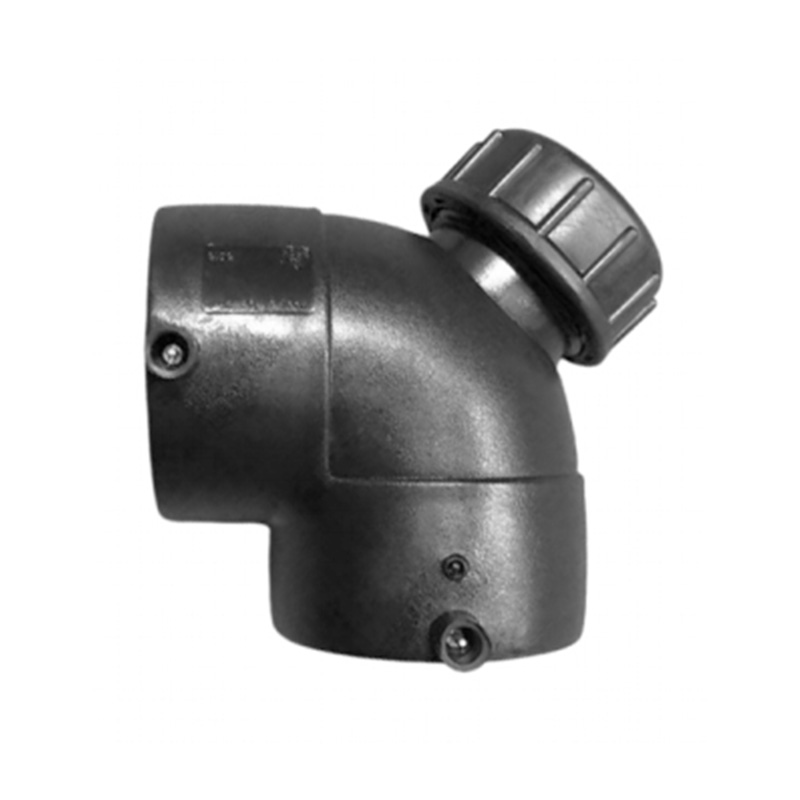
Common butt fusion elbow types include 90 degree and 45 degree variations. In actual butt fusion construction, the elbow is more difficult to position and align in the clamps of the fusion welding machine than a straight pipe because of its own geometric shape. Poor alignment leads to local misalignment at the welding surface, reducing the effective wall thickness at that point, which easily generates stress concentration under high-pressure operating conditions.
To reduce system energy consumption and prevent water hammer effects from damaging the joints, high-standard projects prefer to use injection-molded long-radius butt fusion elbow products. Compared with multi-segment welded mitered elbows, injection-molded elbows have smoother inner walls and smaller local resistance coefficients, significantly optimizing fluid dynamics performance.
---
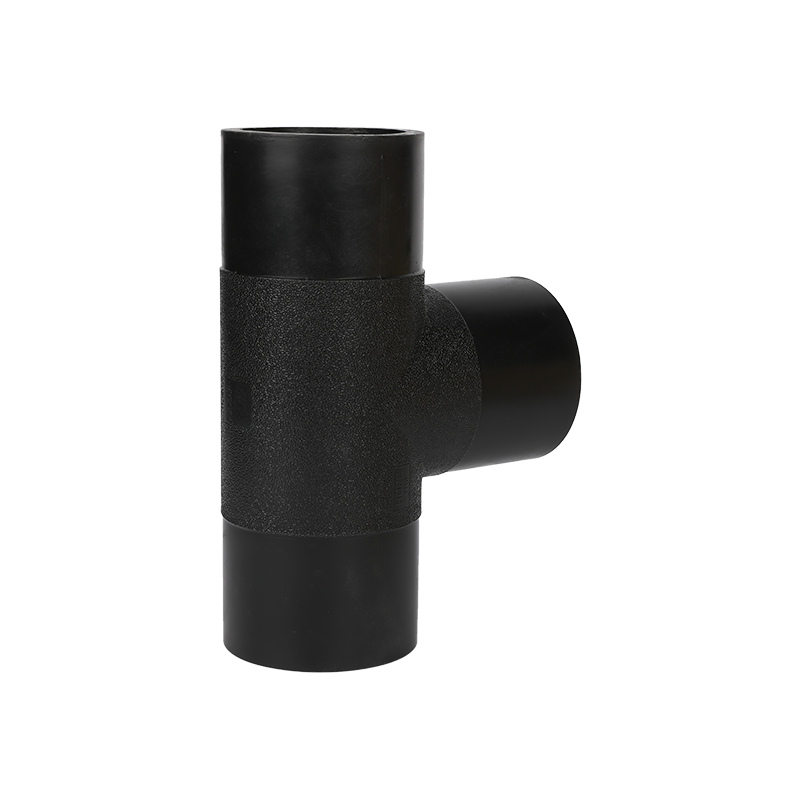
Structural Stress Analysis and Welding Specifications for butt fusion tee
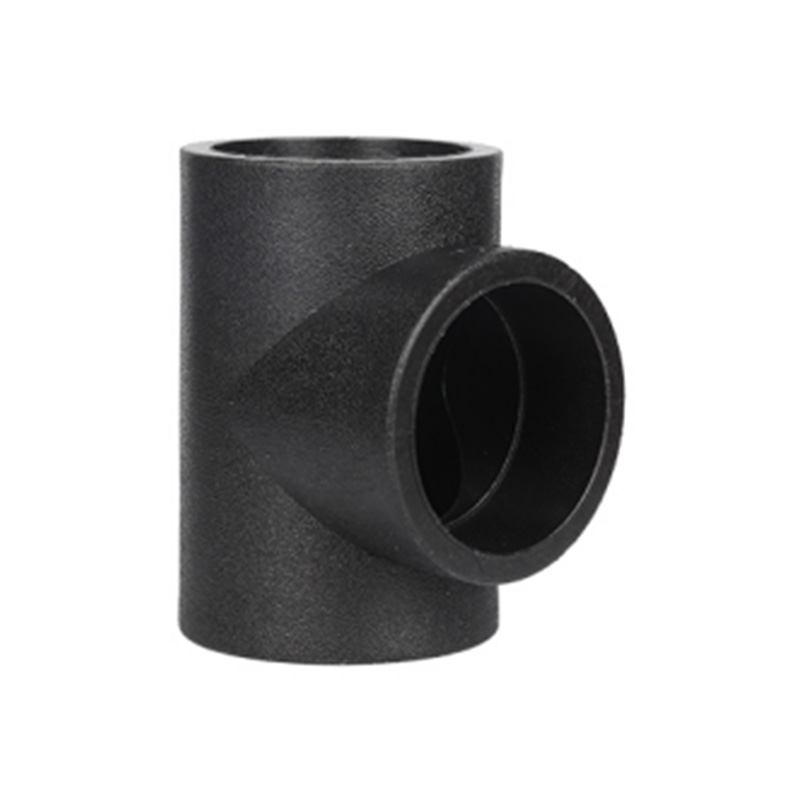
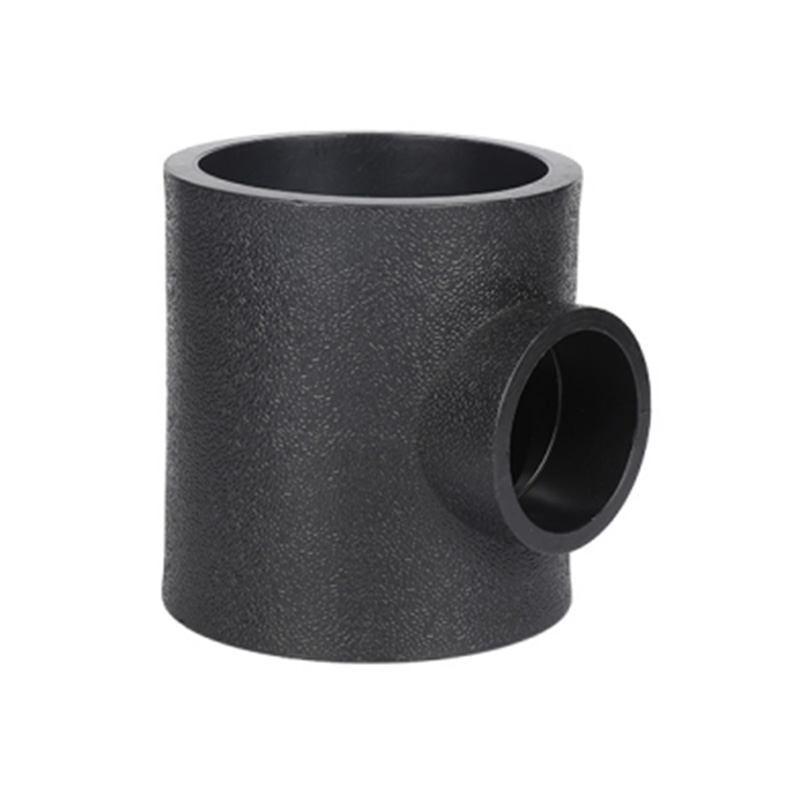
As the core component for flow splitting and merging in pipelines, the butt fusion tee is the most complex structural component under stress in the entire network. At the intersection of the main pipe and the branch pipe, due to the sudden change in geometric shape, regional stress several times higher than that of ordinary straight pipes is generated under internal pressure.
When choosing a butt fusion tee, there are equal tees and reducing tees. When executing butt fusion connections, because the three ends of the tee are relatively short, higher requirements are placed on the clamp structure of the welding machine and the flatness of the heating plate. During welding, it must be ensured that the end faces of the tee are completely parallel to the end faces of the straight pipe. After facing, ensure that the end faces are free of any residual shavings. The heat soaking time must be calculated accurately based on the material wall thickness to ensure uniform melting across the entire circumferential surface.
---
Comparison of Physical and Process Parameters of Core Fittings
| Parameter / Performance Indicator | butt fusion elbow (90 degree Injection Molded) | butt fusion tee (Equal Injection Molded) | fusion hdpe pipe (Straight Pipe) |
| Local Resistance Coefficient | Approx. 0.3 - 0.5 | Approx. 0.8 - 1.2 (Branch diversion) | Only considers friction loss |
| Main Stress Concentration Area | Inner and outer radius centerlines of the elbow | Shoulder area where the main and branch pipes intersect | Uniform overall stress on the pipe body |
| Alignment Requirement | High (Strictly prevent slight distortion due to clamping) | Extremely High (Ensure geometric perpendicularity of the three axes) | Standard (Align both ends properly) |
| Maximum Allowable Misalignment | 10% of wall thickness and not exceeding 1mm | 10% of wall thickness and not exceeding 1mm | 10% of wall thickness |
| Cooling Time Requirement | Strictly follow standards; external forces are forbidden during this time | Should be extended appropriately to prevent shrinkage cavities due to heat accumulation in the thick walls | Executed according to the standard time corresponding to the wall thickness |
---
Professional Guidance for Resolving Common Defects in Butt Fusion Connections
When assembling hdpe butt fusion fitting on-site, construction personnel often encounter problems such as uneven weld beads, excessively large or small beads, and joint cracking. The core to solving these technical pain points lies in deep control of the on-site environment and equipment status:
Uneven beads or no bead on one side: This is usually because the butt fusion elbow or butt fusion tee is not fully aligned with the straight pipe on the machine frame, or the heating plate surface coating is damaged, causing uneven temperature. The solution is to close the two ends to check the misalignment after facing, ensuring it is less than 10% of the wall thickness, and regularly measure the temperature at various points on the heating plate surface.
Holes or loose texture in the weld bead: This is mainly due to excessively high joining pressure forcing out too much molten material, or contamination of the welding surface by moisture and dust. When constructing in high humidity or windy and sandy environments, a protective shelter must be set up, and the welding end faces of pipes and fittings must be wiped with alcohol of over 95% concentration before heating.
Premature termination of cooling: High-density polyethylene has low thermal conductivity. Although the surface may feel cool, the interior of the joint may still be in a high-temperature softened state. If the clamps are removed or the pipe is moved at this time, micro-voids or cracks will form internally. The next movement must only be carried out after the specified cooling time under pressure is fully reached.
By precisely grasping the physical characteristics of fusion hdpe pipe, combining standardized and regulated butt fusion processes, and properly configuring high-quality butt fusion elbow and butt fusion tee components, it is possible to ensure that the entire pressure piping system achieves true leak-free and maintenance-free operation.
KEEP IN TOUCH

About Us
Zhejiang Fengfeng Pipe Industry Co., Ltd. uses efficient single screw injection molding machines for high productivity and low energy use.
Products link
Contact
-

+86-19858193396
+86-13735359894 -

+86-0574-63555288
-

-

No. 21, Market Road, Diankou Town, Zhuji City, Shaoxing City, Zhejiang Province, China