


 English
 中文简体
 русский
Industry news
 Home / News / Industry news / HDPE Fittings SDR and Pressure Rating: How to Choose the Right PN Grade
HDPE Fittings SDR and Pressure Rating: How to Choose the Right PN Grade
 2026.11.04
 Industry news
The Short Answer: Match SDR to the Pipe, Then Check PN
If you are extending, repairing, or specifying an HDPE line, the fitting SDR should match the pipe SDR. A PE100 SDR 11 fitting belongs on PE100 SDR 11 pipe. A PE100 SDR 17 fitting belongs on PE100 SDR 17 pipe. Matching SDR keeps the fusion interface, wall thickness, bore alignment, and stress path consistent. For a quick water-service reference at 20°C, PE100 SDR 11 is approximately PN16, SDR 17 is approximately PN10, and SDR 7.4 is approximately PN25.
That is the starting point, not the whole answer. The required pressure rating also depends on resin grade, maximum operating temperature, surge and vacuum conditions, chemical exposure, joint method, and the standard governing the project. A fitting with the right SDR but the wrong polyethylene grade, or the right grade but an unqualified fusion joint, can still sit outside the real pressure envelope.
Rule of thumb: never choose an HDPE fitting by outside diameter alone. Confirm three things together: pipe SDR, polyethylene grade, and design pressure after temperature derating.
What SDR Means on an HDPE Fitting
SDR stands for Standard Dimension Ratio. It is the outside diameter divided by the minimum wall thickness. A lower SDR number means a thicker wall relative to the diameter. SDR 7.4 has a much heavier wall than SDR 17 at the same outside diameter, so it can carry a higher internal pressure. The standard SDR series used in polyethylene pressure piping commonly includes 32.5, 26, 21, 17, 13.6, 11, 9, and 7.4. Some published tables show 13.5 and 7.3 because of rounding or different standard editions.
Fittings are not universal. A molded electrofusion coupler, a butt-fusion tee, or a socket-fusion elbow is dimensioned for a specific SDR range. The fitting may share the same nominal outside diameter as the pipe, but the wall thickness and fusion zone must still match. If you put an SDR 17 coupler on an SDR 11 pipe, the parts may look close at the spigot, but the wall section and heating interface are wrong. The result is a joint that may pass a quick pressure test and then creep, ovalize, or leak under sustained load.
The same logic applies to reducers, tees, elbows, flange adaptors, and end caps. A reducer has two SDR references because it connects two pipe sizes. A tee has a run and a branch. Each outlet must match the pipe it serves. When a project mixes SDR 11 and SDR 17 pipe, the transition fitting must be specified explicitly, not selected by eye.
For a dimensional check before ordering, review this guide to wall thickness and SDR standard dimensions. It helps separate nominal size from pressure class, which is where many procurement errors begin.
SDR, PN, and Wall Thickness: The Relationship in Plain Terms
PN is the nominal pressure rating in bar. For PE100 water service at 20°C, the relationship between SDR and PN is predictable enough for a first shortlist. The table below gives common PE100 SDR values and approximate PN ratings under standard water service. Use it to narrow the options, not to release a purchase order.
| SDR | Relative wall thickness | Approximate PN (PE100, 20°C water) | Typical starting point |
|---|---|---|---|
| 7.4 | Thickest | PN25 | High-pressure industrial, mining, high-head lines |
| 9 | Very thick | PN20 | High-head water, slurry, demanding industrial duty |
| 11 | Thick | PN16 | Potable water mains, irrigation headers, general industrial |
| 13.6 | Medium | PN12.5 | Medium-pressure water and selected industrial lines |
| 17 | Moderate | PN10 | Low-pressure water, agriculture, drainage, light industrial |
| 21 | Thin | PN8 | Gravity and low-pressure transfer |
| 26 | Thinner | PN6 | Low-pressure and non-pressure duty |
| 32 | Very thin | PN5 | Drainage, ventilation, low-head transfer |
| 41 | Thinnest | PN4 | Low-pressure drainage and non-pressure applications |
The pattern is simple: as SDR increases, the wall gets thinner and the pressure rating drops. The practical consequence is not only pressure capacity. A thicker wall costs more material, weighs more, and reduces the internal bore for the same outside diameter. A thinner wall saves cost and improves flow area, but it leaves less margin for surge, vacuum, abrasion, or temperature derating.
SDR 7.4PN25
SDR 9PN20
SDR 11PN16
SDR 13.6PN12.5
SDR 17PN10
SDR 21PN8
SDR 26PN6
SDR 32PN5
SDR 41PN4
The chart is a visual shortlist, not a design tool. A line that needs PN10 at 20°C may need SDR 13.6 or SDR 11 once the operating temperature rises or surge pressure is included. A drainage line that never sees positive pressure may use a much thinner wall, but it still needs enough stiffness for burial, handling, and vacuum conditions.
PE100 vs PE80: Same SDR, Different Pressure
Two fittings can both be marked SDR 11 and still have different pressure ratings if they are made from different polyethylene grades. PE100 has a minimum required strength of 10 MPa. PE80 has a minimum required strength of 8 MPa. The higher strength of PE100 allows a thinner wall for the same pressure, or a higher pressure for the same wall.
A common example makes the difference clear. PE100 SDR 11 is typically PN16. PE80 SDR 11 is typically PN12.5. If a project specifies PE100 pipe and the fitting supplier ships PE80 fittings with the same SDR, the joint may look correct and still fall short of the design pressure. The mismatch is especially risky in butt fusion because the two materials can have different melt flow behavior and consolidation characteristics.
In procurement, ask for the resin grade, batch certificate, and traceability from resin to finished fitting. Do not accept a generic “PE100” statement on the invoice without a batch reference. If the pipe is PE100, the fitting should be PE100. If the project requires a specific grade, put that requirement in the purchase order and verify it at incoming inspection.
Temperature Derating: The Hidden Factor in Pressure Rating
HDPE pressure ratings are usually stated at 20°C. Above that, the allowable pressure falls. The exact derating depends on the resin, the standard, the fluid, and the design life. A line that is rated PN16 at 20°C is not a 16 bar line at 50°C. The table below is illustrative only; use the governing standard or the manufacturer’s design tables for a real project.
| Water temperature | Illustrative derating factor | What it means for an SDR 11 / PN16 line |
|---|---|---|
| 20°C | 1.00 | PN16 baseline |
| 30°C | 0.87 | Approximately PN13.9 |
| 40°C | 0.74 | Approximately PN11.8 |
| 50°C | 0.60 | Approximately PN9.6 |
| 60°C | 0.47 | Approximately PN7.5 |
If the line runs at 40°C, a nominal PN16 rating is not 16 bar in service. The design may need SDR 13.6 or SDR 11 to restore the required margin. If the line also sees surge, the selected SDR may need to be lower again. This is why a pressure rating question cannot be answered from SDR alone.
Temperature also affects the fitting. A molded fitting may have a different wall section from the pipe, especially at the branch or the fusion collar. The pressure envelope of the assembly is the lower of the pipe, the fitting, and the joint. Confirm the fitting’s temperature derating separately rather than assuming it follows the pipe automatically.
Fitting Type and Joint Method Change the Real Pressure Envelope
Even with the correct SDR, the joint is often the weakest point in the assembly. The way the fitting connects to the pipe determines how the load is transferred, how the fusion zone behaves, and how much field quality control is needed.
Butt fusion fittings
Butt fusion is common on larger HDPE lines and high-pressure duty. The pipe and fitting ends are faced, heated, and pressed together. The fitting SDR must match the pipe SDR, and the fusion parameters must be set for the actual wall thickness and resin grade. A butt-fusion tee or elbow with the right SDR but the wrong facing or heating cycle can create a joint with incomplete consolidation. For high-pressure work, ask for a fusion trial and a joint inspection plan, not only a dimensional certificate.
Electrofusion fittings
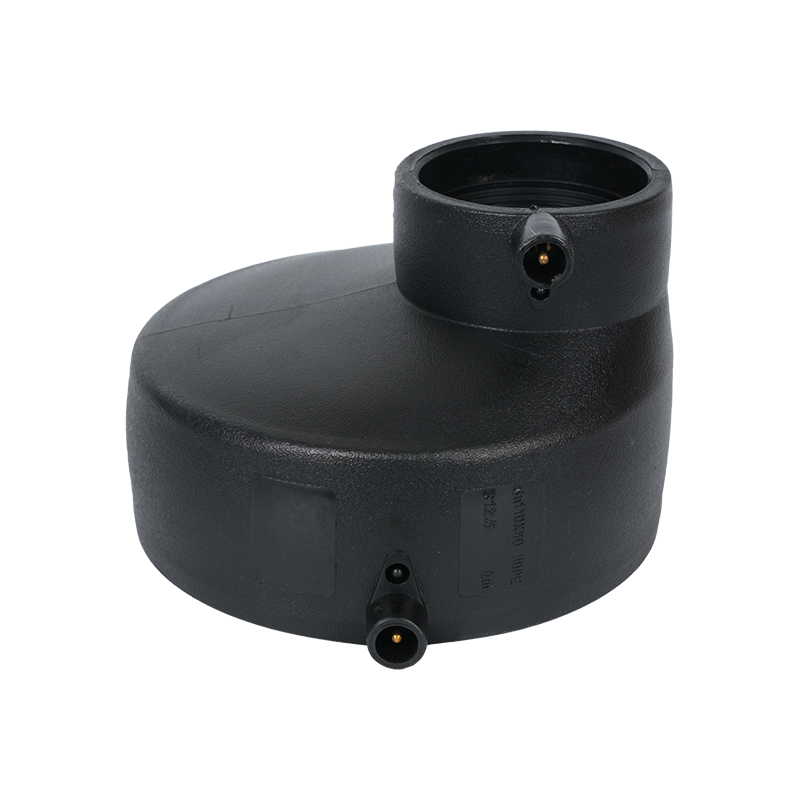
Electrofusion uses an embedded heating coil and a controlled power cycle. It is useful in tight trenches, repair work, and transitions where butt fusion is difficult. The fitting must match the pipe SDR and the pipe outside diameter. The installation also depends on surface preparation, clamping, and the correct welding machine. A coupler that is mechanically correct but contaminated at the fusion surface can leak under pressure.
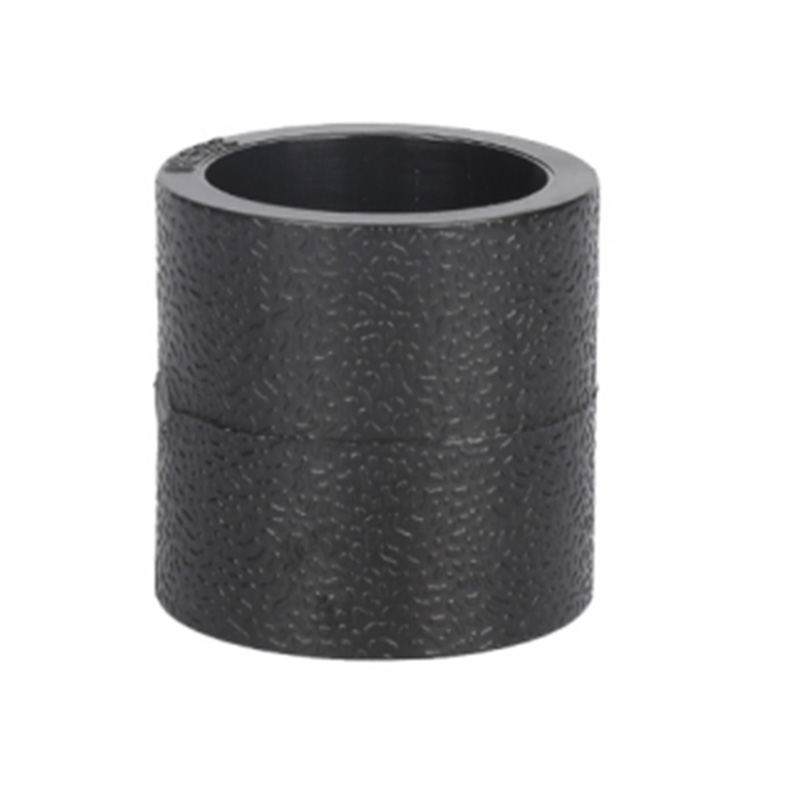
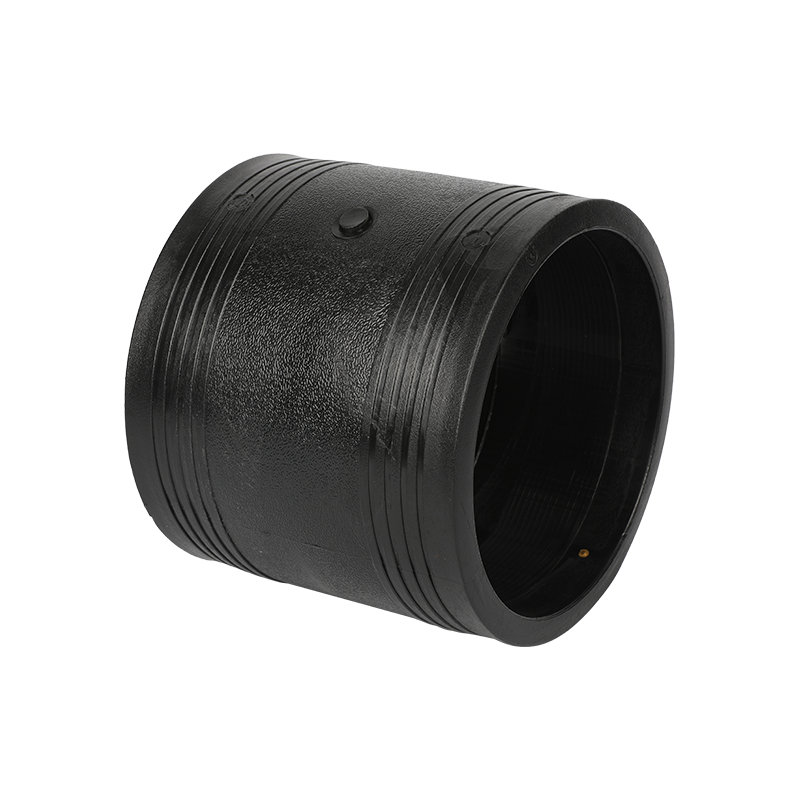 HDPE Electrofusion Equal Coupler for Pipe JoiningFor tight trenches, repairs, and transitions, this coupler joins matching SDR HDPE pipes via electrofusion and offers corrosion and pressure resistance.View Product →
Socket fusion, threaded, and compression fittings
Socket fusion is common on smaller diameters. The pressure rating depends on the fitting body, the socket depth, and the heating and cooling cycle. Threaded HDPE fittings introduce a different risk: the thread cuts into the wall. A thin-wall SDR that works in a fusion joint may not be suitable for a threaded connection at the same pressure. Compression fittings are mechanical and rely on an insert, nut, and seal. Their pressure rating can be lower than the pipe rating, so check the fitting’s own rating rather than the pipe’s SDR alone.
Valves and transition pieces
Valves, flange adaptors, and metal-to-plastic transitions often set the practical pressure limit. A ball valve may have a PN rating that is lower than the pipe, or its fusion ends may be rated differently from its body. A flange adaptor may be strong enough, but the backing ring and bolt grade can limit the assembly. Check the pressure class of every component, not only the pipe and the main fitting.
Application Scenarios: Which SDR Fits Which Duty
The right SDR depends on what the line does. A water main, an irrigation header, a gas line, a slurry line, and a drainage stack do not share the same design envelope. Use the application to set the starting point, then verify with temperature, surge, and joint method.
Municipal water mains
PE100 SDR 11 or SDR 17 is common depending on head and surge. SDR 11 gives more pressure margin; SDR 17 can be suitable for lower-pressure distribution. Confirm the design pressure after derating and check the fitting SDR at every transition.
Irrigation and agriculture
SDR 17 and SDR 21 are frequent starting points for low-pressure distribution. Pump startup, valve closure, and uneven terrain can create surge that is much higher than the static head. Do not size only from the pump curve.
Industrial and mining
SDR 7.4, SDR 9, or SDR 11 may be needed for high-pressure slurry, process water, or demanding duty. Abrasion and chemical exposure can change the service life, so the pressure rating is only one part of the specification.
Drainage and siphon systems
SDR 26, SDR 32, or SDR 41 may be adequate for low-pressure drainage, but siphon drainage can see vacuum and dynamic effects. Check stiffness, support spacing, and the fitting design rather than assuming a thin wall is always acceptable.
For gas distribution, the design rules are usually stricter than for water. A PE100 SDR 11 line may be used in medium-pressure gas, but the governing code, safety factor, and fitting qualification matter more than a simple PN number. For chemical lines, the resin may need to be selected for chemical compatibility as well as pressure. A standard PE100 water rating does not automatically cover every chemical at every temperature.
One practical test is to write the design envelope in one line: fluid, maximum temperature, design pressure, surge pressure, vacuum, burial depth, and joint method. If any of those is missing, the SDR selection is incomplete. The fitting package should then be checked against that same line, not only against the pipe label.
A Practical Selection Workflow
A reliable SDR selection follows a sequence. Skipping a step usually shifts the risk to the field, where the correction is more expensive.
- Define the design pressure, including surge and vacuum. Do not use only the normal operating pressure.
- Define the maximum operating temperature and the duration of any higher-temperature events.
- Confirm the polyethylene grade: PE100 or PE80, and any project-specific resin requirement.
- Apply the temperature derating and any chemical derating required by the standard.
- Select a shortlist of SDR values from the standard table, not from a supplier’s stock list alone.
- Match the fitting SDR and grade to the pipe at every outlet, including reducers and branches.
- Check the joint method and the pressure class of valves, flanges, and transitions.
- Verify the standard, test reports, batch traceability, and fusion procedure before release.
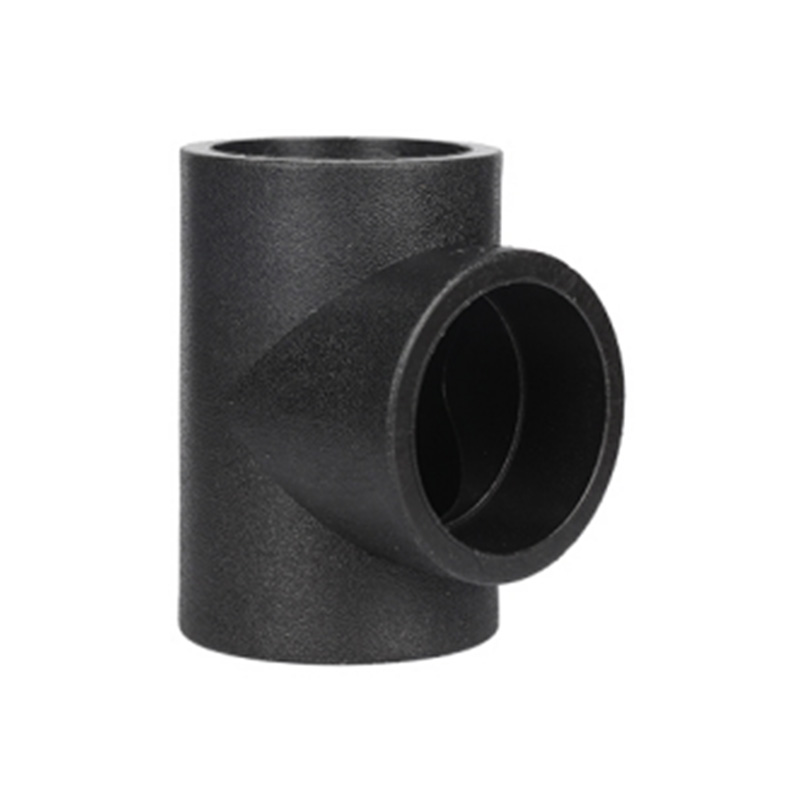
 HDPE Butt Fusion Equal Tee for Branch ConnectionsUse this equal tee for hot-melt butt-fusion branch connections; its size and SDR options support planning a fusion trial with the actual pipe combination.View Product →
For a high-pressure line, add a fusion trial with the actual pipe and fitting combination. The trial should include the planned machine, heating cycle, facing tool, and cooling time. Inspect the bead and the fusion interface, and keep the trial record with the project file. For electrofusion, confirm the welding machine calibration and the traceability of the fitting batch.
Common Mistakes in SDR Selection
- Choosing by outside diameter only. Two pipes can share the same outside diameter and have different wall thickness and SDR.
- Putting an SDR 17 fitting on an SDR 11 pipe. The parts may fit at the spigot but the fusion interface and wall section are wrong.
- Ignoring temperature derating. A PN16 rating at 20°C is not a PN16 rating at 50°C.
- Mixing PE100 pipe with PE80 fittings. The joint may not develop the design pressure, even with the same SDR.
- Using threaded fittings on thin-wall SDR. The thread reduces the effective wall and can create a leak path or a stress concentration.
- Assuming all fusion fittings have the same pressure rating. A molded tee, a machined flange adaptor, and a valve can have different limits.
- Forgetting surge and vacuum. Pump startup, valve closure, and siphon drainage can load the system beyond the static pressure.
- Skipping batch verification. A certificate that does not reference the batch is difficult to defend if a joint fails.
Most of these mistakes are avoidable with a one-page specification. The specification should state the pipe SDR, fitting SDR, resin grade, design pressure, design temperature, joint method, and the acceptance standard. That page is more useful than a general catalogue note because it forces the project team to resolve the interactions before the order is placed.
Procurement Checklist: What to Confirm Before Ordering
Procurement is where technical intent becomes a physical shipment. A fitting can be correct on the drawing and still arrive with the wrong grade, the wrong packaging, or a batch record that does not match the project. Use a checklist that covers both the product and the evidence.
Resin grade
Confirm PE100 or PE80 in writing. Ask for the batch certificate and check that it matches the fittings, not only the pipe.
SDR match
List every fitting by size, type, and SDR. Check reducers and tees outlet by outlet. Do not accept a generic “suitable for HDPE” statement.
Pressure class
Check PN at the design temperature, including surge and vacuum. Confirm the valve and flange rating separately from the pipe rating.
Joint method
State butt fusion, electrofusion, socket fusion, threaded, or compression. Each method has different field requirements and inspection points.
Traceability
Ask for batch numbers, test reports, and packing lists that connect the fittings to the project. Keep the records with the fusion logs.
Packaging and handling
Machined fusion surfaces need protection from contamination and impact. Confirm the packaging method and the storage conditions on arrival.
 Industrial Ball Valve for Flow Control in PipelinesFor isolation points, review this industrial ball valve’s pressure class and connection standard together with its sealing and flow-control characteristics.View Product →
For isolation points, specify the valve pressure class and the connection type at the same time. A ball valve with fusion ends must match the pipe SDR, while the valve body must meet the design pressure. If the valve is supplied with a different connection standard, the transition piece becomes part of the pressure envelope and should be reviewed with the same care as the main fitting.
How Fengfeng Supports SDR-Matched Fitting Supply
Zhejiang Fengfeng Pipe Industry Co., Ltd. has manufactured HDPE piping products since 2002 from its base in Zhuji, Zhejiang. The product range covers butt fusion fittings, electrofusion fittings, socket fusion fittings, HDPE threaded fittings, PE and PP compression fittings, valves, welding machines, siphon drainage fittings, and fish cage brackets. That breadth matters when a project needs a consistent SDR and grade across elbows, tees, reducers, couplers, and transitions.
The company works under ISO9001:2000 quality management and ISO14001 environmental management systems. Products are described as PICC-insured, and the product life claim is more than 50 years under suitable service conditions. Those statements are useful only if they are tied to the actual batch and specification. For project supply, the practical value is in matching the fitting SDR to the pipe SDR, keeping the resin grade consistent, and providing records that the installer can file with the fusion report.
For export orders, packaging and surface protection deserve attention. Fusion surfaces must stay clean, and machined ends should not be dented in transit. A supplier that understands this will pack by size and connection type rather than treating every fitting as a generic hardware item. That reduces site rework and helps the installation crew keep the fusion cycle within the qualified procedure.
If you need to align a fitting schedule with a pipe schedule, start with the pipe SDR, the design temperature, and the joint method. Then confirm the fitting range and the batch documentation. You can learn more about the manufacturing and quality systems behind the product range before releasing the enquiry.
Frequently Asked Questions
What SDR do I need for a 10 bar HDPE water line?
For PE100 water at 20°C, SDR 17 is approximately PN10. If the maximum operating temperature is higher, or surge is significant, select a lower SDR such as 13.6 or 11 and verify the derated pressure. Do not use the 20°C rating as the design rating for a hot or surge-prone line.
Can I use an SDR 17 fitting on an SDR 11 pipe?
No. The fitting SDR should match the pipe SDR. The outside diameter may look similar, but the wall thickness and fusion interface are different. A mismatch can produce an incomplete joint or a stress concentration that shows up later under pressure.
Does a lower SDR always mean a better choice?
Not always. A lower SDR gives a thicker wall and a higher pressure rating, but it also costs more, weighs more, and reduces the bore for the same outside diameter. The right choice is the lowest pressure class that satisfies the design envelope with the required margin, not the thickest wall available.
What is the pressure rating of SDR 11 HDPE?
For PE100 water at 20°C, SDR 11 is approximately PN16. For PE80, the same SDR is approximately PN12.5. The actual rating depends on the standard, temperature, and design factor, so confirm the value for the specific resin and application.
Do HDPE fittings have the same pressure rating as the pipe?
Only when the fitting has the same SDR, the same polyethylene grade, and a qualified joint. Some fittings, especially threaded fittings, valves, and transitions, have their own pressure limits. Check the lowest-rated component in the assembly, not only the pipe.
How do I verify that the fitting is really PE100?
Ask for the resin grade, batch certificate, and traceability record. Check that the certificate references the batch supplied, not a generic product family. For critical work, include incoming inspection and a fusion trial in the quality plan.
Can I mix PE100 pipe with PE80 fittings?
It is not recommended for pressure service. The two grades have different minimum required strength and may behave differently during fusion. Use matching grade and SDR, and confirm the joint procedure for the actual combination.
What else changes the required SDR besides pressure?
Temperature, chemical exposure, surge and vacuum, burial depth, abrasion, service life, and joint method all affect the selection. A fitting that is correct for a buried water main may be wrong for an above-ground chemical line or a siphon drainage system.
KEEP IN TOUCH

About Us
Zhejiang Fengfeng Pipe Industry Co., Ltd. uses efficient single screw injection molding machines for high productivity and low energy use.
Products link
Contact
-

+86-19858193396
+86-13735359894 -

+86-0574-63555288
-

-

No. 21, Market Road, Diankou Town, Zhuji City, Shaoxing City, Zhejiang Province, China