


 English
 中文简体
中文简体 русский
Industry news
 Home / News / Industry news / How to Ensure Zero Leakage When Installing HDPE Socket Fusion Fittings in Professional Piping Projects
 How to Ensure Zero Leakage When Installing HDPE Socket Fusion Fittings in Professional Piping Projects
 2026.05.11
 Industry news
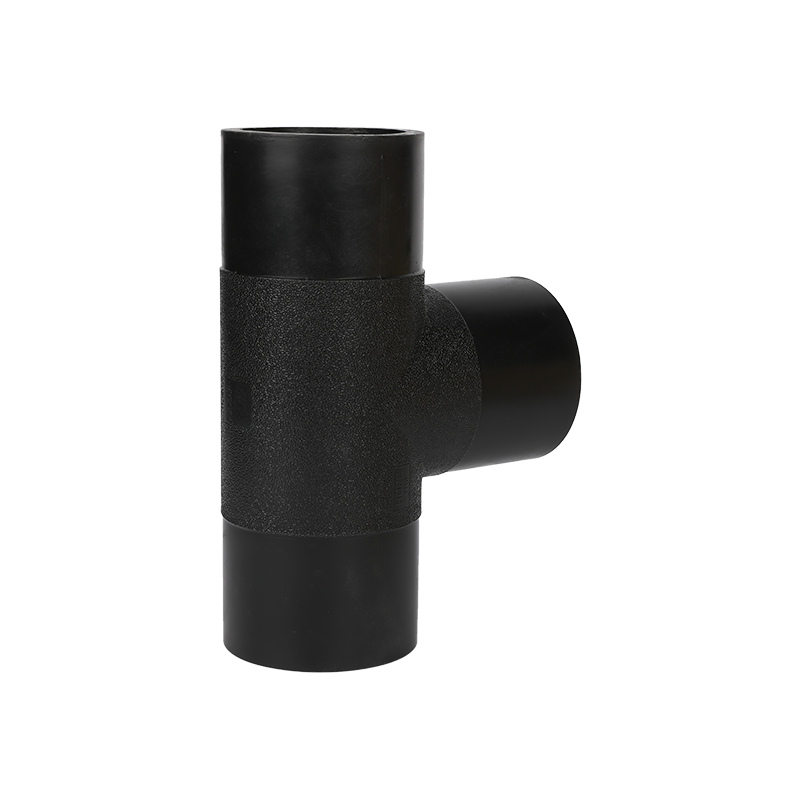
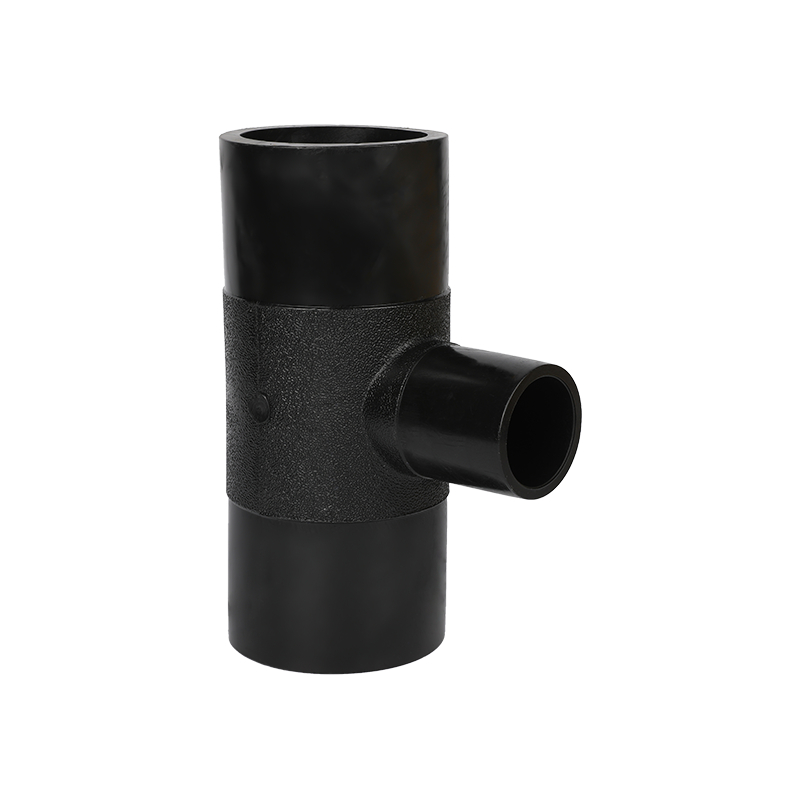
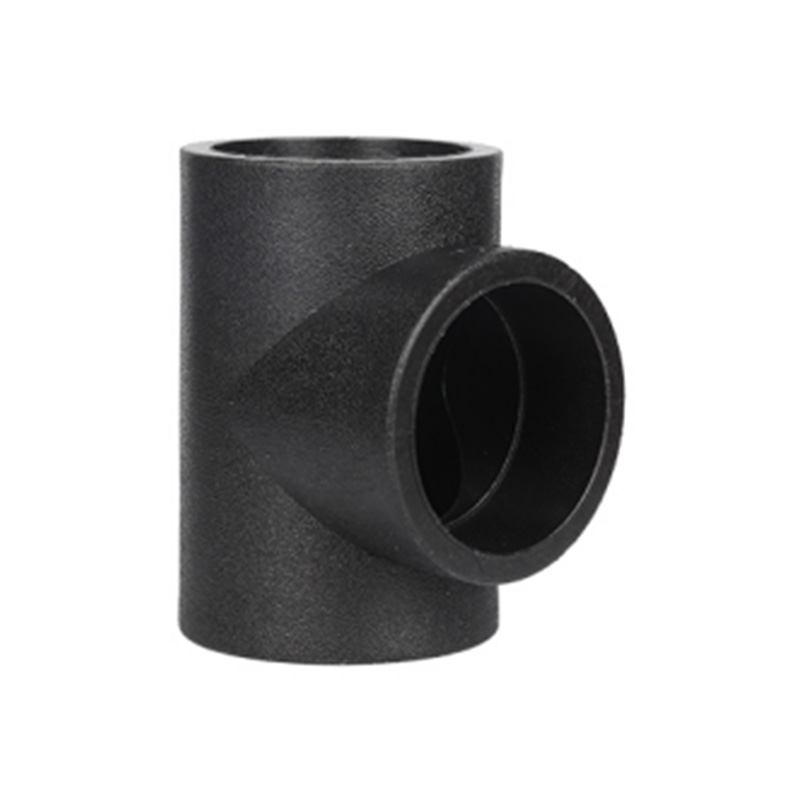
High-density polyethylene (HDPE) piping systems are widely utilized in municipal water supply, gas transportation, and industrial pipeline construction due to their excellent corrosion resistance, high toughness, and service life spanning several decades. Among various connection technologies, the thermal socket fusion method using hdpe socket fusion fittings has become an indispensable connection mode for small and medium diameter pipeline systems because of its high integrity and outstanding sealing performance.
This article provides an in-depth analysis of the application specifications, common operational challenges, and technical parameters of hdpe pipe socket and hdpe socket fittings from a professional engineering perspective. This guide aims to help engineering personnel effectively improve construction quality and mitigate leakage risks.
Core Mechanism: The Essence of Thermal Socket Fusion Technology
The connection principle of pe socket fusion fittings involves using specialized heating tools to simultaneously heat the outer surface of the hdpe pipe socket (spigot end) and the inner surface of the hdpe socket fittings (socket end) to a precise temperature. Once the material reaches a molten state, the heating tool is rapidly removed, and the pipe is inserted linearly into the fitting.
During this process, the polyethylene molecular chains on both connection surfaces diffuse and entangle with each other under the influence of high heat and compressive force. As the material cools and solidifies, the interface between the pipe and the fitting disappears completely, forming a homogeneous unit that is no weaker than the pipe itself in terms of strength and sealing. This molecular-level fusion is the core guarantee against medium leakage.
Key Parameters: Construction Control and Quality Benchmarks
Socket fusion construction has extremely strict requirements for temperature, time, and operation. Any deviation in these parameters may lead to cold joints or over-welding. Below are the core technical parameters for hdpe socket fusion fittings under standard ambient temperatures:
| Pipe Outer Diameter (mm) | Heating Temp Set Point (°C) | Heating Time (Seconds) | Max Changeover Time (Seconds) | Cooling Time (Minutes) |
| 20 | 260 ± 10 | 5 | 4 | 2 |
| 25 | 260 ± 10 | 7 | 4 | 2 |
| 32 | 260 ± 10 | 8 | 6 | 4 |
| 40 | 260 ± 10 | 12 | 6 | 4 |
| 50 | 260 ± 10 | 18 | 6 | 4 |
| 63 | 260 ± 10 | 24 | 8 | 6 |
| 75 | 260 ± 10 | 30 | 8 | 8 |
| 90 | 260 ± 10 | 40 | 10 | 8 |
| 110 | 260 ± 10 | 50 | 10 | 10 |
Note: The heating time applies to an ambient temperature of approximately 20°C. If the construction environment temperature is low, the heating time should be appropriately extended, but the heating temperature must be strictly controlled at approximately 260°C to prevent raw material oxidation and degradation.
Construction Standards: Avoiding Hidden Defects in Socket Connections
During the installation of the hdpe pipe socket, technical personnel must strictly follow standardized operating procedures to resolve common issues such as weak welds, cracking, and excessive internal beads that restrict flow.
Surface Treatment and Oxidation Layer Removal
During storage and transportation, a dense oxidation layer forms on the surface of HDPE pipes. If left untreated, this layer hinders the fusion of molecular chains. Therefore, before inserting the pipe into the hdpe socket fittings, a specialized scraper must be used to remove approximately 0.2mm of the pipe's outer surface in the welding zone. The area should then be cleaned with an isopropyl alcohol cleaner to ensure it is free of oil and moisture.
Marking Control and Depth Measurement
Excessive insertion depth causes molten material to be squeezed into the interior of the pipeline, reducing the cross-sectional area and increasing flow resistance. Insufficient insertion depth results in a reduced welding area and lowers the pressure-bearing capacity of the joint. During construction, a gauge must be used to accurately mark the insertion depth line on the hdpe pipe socket.
Coaxial Alignment and Non-Rotational Insertion
At the moment of socket fusion, the pipe and the pe socket fusion fittings must be kept on the same axis. The pipe should be pushed in vertically and evenly. Rotating or twisting the pipe during insertion is strictly prohibited, as it destroys the uniformity of the molten layer and causes air pockets or uneven weld seams.
Quality Inspection: Standards for Qualified Weld Seams
After completing the connection of hdpe socket fittings, the interface should undergo a visual inspection within the specified time.
Double Bead Formation: A qualified joint should form a uniform, smooth bead around the edge of the socket.
Alignment and Concentricity: There should be no visible angular deviation between the fitting and the pipe.
Absence of Carbonization and Voids: The surface of the bead should have a uniform material luster, without charred black spots or pores/honeycomb gaps caused by moisture evaporation.
By strictly controlling these process details and utilizing high-quality pe socket fusion fittings, it is possible to ensure a zero-leakage operation of the entire HDPE piping system, significantly enhancing the overall safety and durability of the network.
KEEP IN TOUCH

About Us
Zhejiang Fengfeng Pipe Industry Co., Ltd. uses efficient single screw injection molding machines for high productivity and low energy use.
Products link
Contact
-

+86-19858193396
+86-13735359894 -

+86-0574-63555288
-

-

No. 21, Market Road, Diankou Town, Zhuji City, Shaoxing City, Zhejiang Province, China