


 English
 中文简体
中文简体 русский
Industry news
 Home / News / Industry news / Why is natural cooling critical for an HDPE Socket Fusion Fitting to prevent joint leaks
 Why is natural cooling critical for an HDPE Socket Fusion Fitting to prevent joint leaks
 2026.02.02
 Industry news
Deep Physical Mechanism of HDPE Socket Fusion Fitting Connection and Cooling
Environmental Impact on the Cooling Process
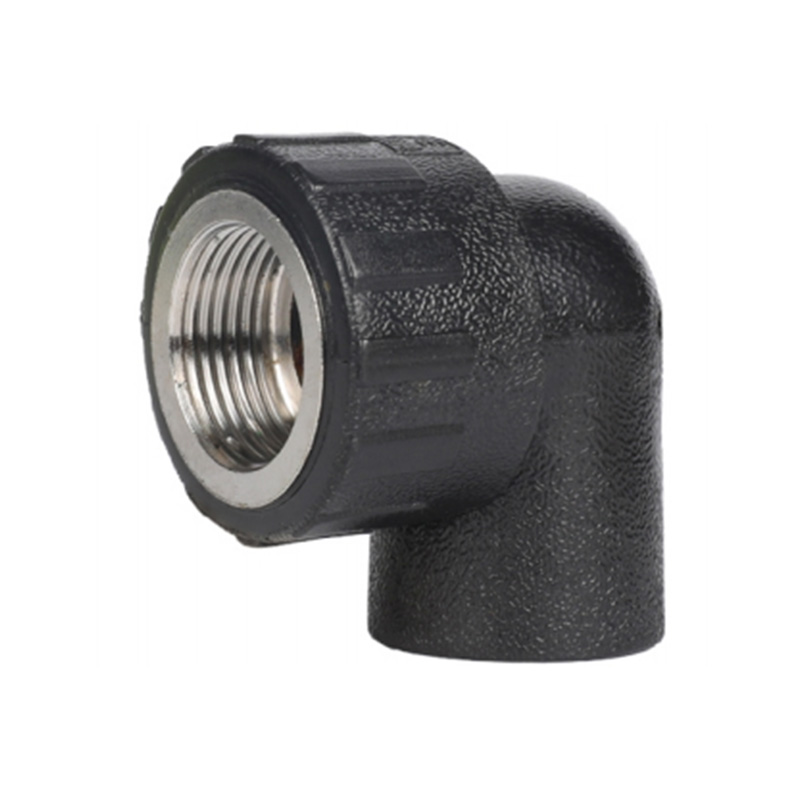
Before analyzing specific parameters, it is essential to understand why the cooling process of an HDPE Socket Fusion Fitting is critical to the integrity of the entire piping system.
Molecular Chain Movement and Re-crystallization
High-Density Polyethylene (HDPE) is a semi-crystalline thermoplastic. When the heating tool warms the pipe end and the internal wall of the HDPE Socket Fusion Fitting above the melting point (typically 260°C), the organized crystalline structure of the molecules is broken down into a disordered, molten fluid.
During the cooling phase following insertion, two primary actions occur:
- Molecular Interpenetration: The molten molecules from both the pipe and the HDPE Socket Fusion Fitting penetrate each other, eliminating the interface between the two components.
- Re-folding: As the temperature drops, the molecular chains begin to fold back into an organized crystalline lattice.
- Volumetric Shrinkage: HDPE exhibits significant thermal shrinkage (approximately 2% to 3%). If cooling is handled incorrectly, this shrinkage can create internal voids or vacuum bubbles.
Why Natural Cooling is the Only Choice
Artificially accelerating the cooling process—such as by spraying water or using high-powered fans—causes the outer layer of the material to harden rapidly into a "shell" while the core remains hot and expanded. When the internal material finally cools and shrinks, it is restrained by the hardened shell, creating massive internal stress. This residual stress is a leading cause of Environmental Stress Cracking (ESC) in the HDPE Socket Fusion Fitting years after installation.
Core Operational Procedures and Parameters for HDPE Socket Fusion FittingSocket fusion differs from butt fusion because it relies on an interference fit between the fitting and the pipe. Accuracy in timing is the most important factor for success.
Detailed Steps and Time Allocation
For every HDPE Socket Fusion Fitting connection, the timing must be precise.
A. Heating Phase
The heating plate temperature must remain constant at 260°C (+/- 10°C). Simultaneously push the pipe into the heating sleeve and the HDPE Socket Fusion Fitting onto the heating spigot. Never rotate the pipe or the fitting during insertion or removal from the heater.
B. Changeover and Joining Phase
This is the most vulnerable stage where heat loss occurs rapidly. Quickly remove the components from the heater and push the pipe into the HDPE Socket Fusion Fitting in a straight line. The pipe must be pushed to the pre-marked depth to ensure the molten material pools correctly at the base of the fitting.
C. Holding Phase (Fixing)
This is the first stage of cooling. The joint must be held firmly by hand or a clamp without any movement or vibration. Since the HDPE Socket Fusion Fitting usually has thicker walls than the pipe, it acts as a heat sink, absorbing heat from the pipe surface to stabilize the bond.
D. Final Cooling Phase
Release the external pressure and let the joint rest on the ground or a support. Do not drag the pipeline or apply heavy bending forces to the joint during this time.
Technical Parameter Comparison Table (Based on SDR11)
| Nominal Diameter (mm) | Insertion Depth (mm) | Heating Time (at 20°C) | Max Changeover (s) | Holding Time (s) | Total Cooling Time (min) |
| 20 | 14 | 6s | 4s | 30s | 2 |
| 32 | 18 | 10s | 6s | 40s | 4 |
| 63 | 27 | 25s | 8s | 60s | 10 |
| 90 | 35 | 40s | 10s | 100s | 15 |
| 110 | 41 | 50s | 12s | 150s | 20 |
Environmental Impact on the Cooling Process
Ideal 20°C conditions are rare on construction sites. Parameters must be adjusted based on the environment.
Cold Weather Construction
When the ambient temperature is below 5°C, use a heat gun to bring the HDPE Socket Fusion Fitting and pipe end to room temperature to remove frost or moisture. Increase the heating time by approximately 10% to 20%. Wrap the joint in an insulation blanket during cooling to prevent cold air from causing surface stress imbalances.
High Temperature and Direct Sunlight
Under intense summer sun, a welding tent must be used. In direct sunlight, the surface of an HDPE Socket Fusion Fitting can exceed 50°C. The total cooling time should be increased by 50% because the rate of heat dissipation slows down significantly as the temperature gradient decreases.
Common Cooling Errors and Failure ModesThe following behaviors are the primary causes of engineering failures regarding HDPE Socket Fusion Fitting installations:
Premature Loading
Moving the pipe before cooling is finished causes a shear displacement in the molten layer. The joint may look normal on the outside, but it will fail during a pressure test with a "peeling" type leak. Strictly adhere to the "Total Cooling Time" before any handling or movement.
Forced Water Cooling (Quenching)
Staff often pour water on joints to speed up the work. This leads to incomplete crystal growth and microscopic circumferential cracks. The heat transfer coefficient of water is much higher than air, causing the HDPE Socket Fusion Fitting to shrink instantly while the inner pipe is still expanded, compromising the seal.
Bead Morphology Judgment
Inspect the double melt bead squeezed out at the connection. A good bead is rounded, full, and covers the edge of the HDPE Socket Fusion Fitting. A flat or jagged bead usually indicates insufficient heating or movement during the cooling phase.
FAQ:Q: Why are cooling requirements for a Socket Fitting stricter than for Butt Fusion?
A: Socket connections involve a larger contact surface area and an "interference fit." The HDPE Socket Fusion Fitting is designed with thick walls to provide radial pressure. If cooling is incomplete, the elastic recovery force of the fitting is not yet stable, which can lead to micro-gaps at the sealing interface.
Q: Can I adjust the alignment of the pipe during cooling?
A: You only have a window of about 2 to 3 seconds immediately after insertion to make micro-adjustments. Once the Holding Phase begins, any adjustment will break the molecular bonds currently forming.
Q: Does high humidity affect the cooling of an HDPE Socket Fusion Fitting?
A: Humidity has a negligible effect on the cooling rate itself, but moisture must never enter the welding interface. Steam will form bubbles, leading to a honeycombed, weak structure inside the joint.
Q: Why does the weld area sometimes look slightly darker after cooling?
A: This is a normal result of the thermal history of the material. As long as there is no charring (a burnt, black appearance), slight discoloration does not impact physical performance.
Quality Control Checklist- Verify Parameters: Check the cooling table specific to your pipe diameter for each HDPE Socket Fusion Fitting.
- Use a Stopwatch: Never count in your head; timing must be exact.
- Static Placement: Mark the area to ensure no one moves or kicks the pipeline during the cooling cycle.
- Final Check: Confirm the joint temperature has dropped below 40°C using an infrared thermometer before proceeding with pressure testing.
KEEP IN TOUCH

About Us
Zhejiang Fengfeng Pipe Industry Co., Ltd. uses efficient single screw injection molding machines for high productivity and low energy use.
Products link
Contact
-

+86-19858193396
+86-13735359894 -

+86-0574-63555288
-

-

No. 21, Market Road, Diankou Town, Zhuji City, Shaoxing City, Zhejiang Province, China