


 English
 中文简体
中文简体 русский
Industry news
 Home / News / Industry news / HDPE vs PVC: Which Is Stronger? Material, Pressure, and Jointing Facts
 HDPE vs PVC: Which Is Stronger? Material, Pressure, and Jointing Facts
 2026.10.12
 Industry news
The direct answer: HDPE is stronger in impact, fatigue, and joint integrity; PVC is stronger in stiffness
If “stronger” means resistance to cracking, ground movement, water hammer, and repeated surge events, HDPE is usually the stronger pipe. If “stronger” means short-term tensile modulus, rigidity, and the ability to hold a straight alignment without external support, PVC is the stronger material. That distinction matters because pipe buyers often compare the two materials using only one number, such as burst pressure or wall thickness, and then discover the real failure mode on site is something else entirely.
For a pressurized water or industrial line, HDPE’s viscoelastic behavior allows it to absorb surge and impact that would crack rigid PVC. For a low-pressure drainage run, a simple vent line, or a short indoor waste application, PVC’s stiffness and lower material cost can make it the more practical choice. The correct answer is not “HDPE always wins” or “PVC always wins.” The correct answer depends on whether the dominant load is pressure, impact, fatigue, soil settlement, thermal movement, chemical exposure, or installation speed.
Practical comparison in one view
- Impact and toughness: HDPE wins because it yields and deforms instead of shattering.
- Short-term rigidity: PVC wins because its higher modulus resists bending and soil loading better in rigid buried designs.
- Fatigue and water hammer: HDPE wins because it tolerates repeated pressure cycles and surge events.
- Joint leak risk: HDPE fusion joints are homogeneous and fully sealed; PVC solvent-cemented joints depend on surface preparation and cure time.
- Temperature and UV: Both need correct formulations and installation practice; HDPE with carbon black performs well outdoors, while PVC needs UV stabilizers and impact modifiers for exposed service.
When a project specifies HDPE or PVC, the material choice should be tied to the pipe’s operating pressure, design temperature, burial depth, soil conditions, joining method, and expected service life. A pipe that is “stronger” on a laboratory tensile test can still fail earlier in the field if its joints are wrong, its bedding is poor, or its thermal expansion is restrained incorrectly.
What “strength” means in pipe selection
Strength in piping systems is not one property. It is a combination of tensile strength, impact resistance, fatigue resistance, creep resistance, stiffness, and joint integrity. HDPE and PVC behave differently because their molecular structures are different. HDPE is a semicrystalline thermoplastic with long flexible chains. PVC is an amorphous thermoplastic with bulky chlorine atoms that restrict chain movement. Those molecular differences create the practical differences buyers see in the field.
| Property | HDPE | PVC | What it means for selection |
|---|---|---|---|
| Tensile modulus | Lower, often around 0.8 to 1.2 GPa | Higher, often around 2.4 to 3.0 GPa | PVC is stiffer and holds shape better; HDPE bends without cracking. |
| Elongation at break | Typically above 600% | Often 50% to 100% | HDPE stretches and absorbs movement; PVC has less tolerance before fracture. |
| Impact resistance | High, especially at low temperature | Moderate to low unless modified | HDPE is safer for handling, trenchless work, and cold-weather installation. |
| Fatigue resistance | High under cyclic pressure | Lower under repeated surge | HDPE is preferred for pump lines, surge-prone networks, and moving ground. |
| Stiffness under soil load | Requires proper embedment and bedding | Higher inherent stiffness | PVC can hold grade better in rigid trench designs; HDPE relies on soil-structure interaction. |
| Joint method | Heat fusion, electrofusion, socket fusion, mechanical transition | Solvent cement, gasketed bell-and-spigot, threaded in some sizes | Fusion creates a monolithic joint; solvent cement depends on workmanship and cure. |
The chart above is not a universal test result. It is a practical ranking based on how the two materials respond to common buried and above-ground loads. The important point is that HDPE tends to win where movement, impact, and cyclic pressure dominate. PVC tends to win where rigidity, simple drainage, and low initial cost dominate.
Material structure: why HDPE bends and PVC cracks
HDPE is a semicrystalline polymer. Its chains can slide and reorient under load, which gives the pipe a high elongation at break and excellent resistance to sudden impact. When an HDPE pipe is struck or settles, it can deform locally without losing its overall pressure boundary. That behavior is why HDPE is widely used in trenchless installation, seismic areas, and soil conditions where some movement is expected.
PVC is an amorphous thermoplastic. Its molecular chains are relatively rigid, and the material has a higher modulus. That rigidity is useful when the pipe must span without support, hold a precise slope, or resist soil pressure in a rigid pipe design. The trade-off is lower strain tolerance. PVC can crack when it is notched, exposed to low temperatures, or subjected to impact during handling and backfilling.
HDPE behavior
Flexible, impact-tolerant, fatigue-resistant, and suitable for fusion joints. It can be coiled in smaller diameters, which reduces the number of joints and lowers installation time.
PVC behavior
Rigid, dimensionally stable, and efficient in low-pressure drainage. It requires careful handling in cold weather and reliable solvent-cement procedures to avoid joint failures.
For buyers, this difference translates into a simple question: will the line experience movement, impact, or pressure cycling? If yes, HDPE’s molecular structure gives it a real advantage. If the line is static, low-pressure, and rigidly supported, PVC’s stiffness can be an advantage.
Pressure capacity: SDR, schedule, and temperature derating
Pressure capacity is one of the most misunderstood comparisons. HDPE pressure pipe is commonly specified by SDR, which is the ratio of outside diameter to wall thickness. A lower SDR means a thicker wall and higher pressure rating. PVC pressure pipe is often specified by schedule, such as Schedule 40 or Schedule 80, or by pressure class. The two systems are not directly interchangeable without checking the actual dimension ratio, material grade, and design factor.
| Parameter | HDPE | PVC |
|---|---|---|
| Common pressure designation | SDR 11, SDR 13.6, SDR 17, SDR 21, SDR 26, etc. | Schedule 40, Schedule 80, pressure class 100, 160, 200, etc. |
| Effect of temperature | Pressure rating decreases as temperature rises; design charts are used. | Pressure rating also decreases with temperature; PVC has a lower useful upper limit in many pressure services. |
| Surge allowance | HDPE’s viscoelastic response can absorb surge better than rigid PVC. | PVC requires careful surge analysis because it is less tolerant of repeated pressure spikes. |
| Design factor | Typically includes a service design factor applied to the material’s long-term hydrostatic strength. | Typically based on a pressure class and a safety factor tied to the standard and temperature. |
If a project requires a high-pressure water main, HDPE often provides a stronger long-term system because the fusion joints are as strong as the pipe body and the material handles surge. If a project requires a low-pressure drain, PVC can meet the pressure requirement with a thinner, lower-cost wall and a familiar installation method.
Jointing: fusion versus solvent cement is often the deciding factor
HDPE joints are made by heat fusion. Butt fusion, socket fusion, and electrofusion all melt the pipe and fitting surfaces and then cool them under pressure to form a continuous material. A properly made fusion joint has no gasket, no glue line, and no mechanical gap. That is why HDPE systems are often described as leak-free, especially in buried and trenchless installations where joint failure is expensive to repair.
PVC joints are commonly made with solvent cement or gaskets. Solvent cement creates a chemical weld by softening the PVC surfaces and fusing them together. The method works well when the pipe is clean, dry, properly primed, and allowed to cure for the correct time. But solvent cement does not work on HDPE. HDPE is not soluble in common PVC solvents, so attempts to glue HDPE with PVC cement will fail. That is a common field mistake, and it is one reason material transition fittings and mechanical couplings are required.
For a deeper field explanation, see why PVC glue will not work on HDPE pipe. The article covers surface energy, solvent behavior, and the correct alternatives.
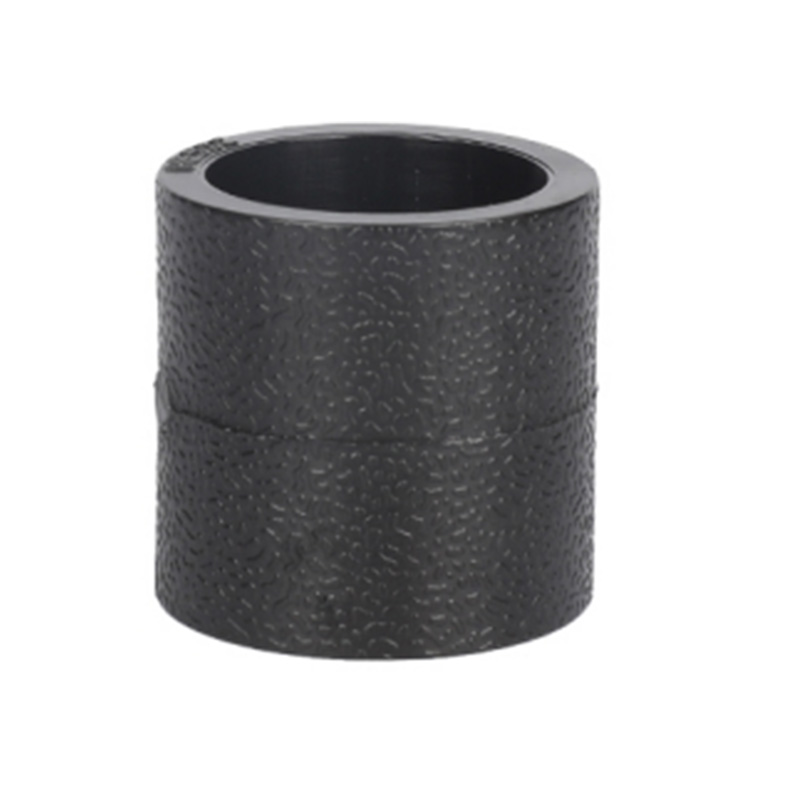
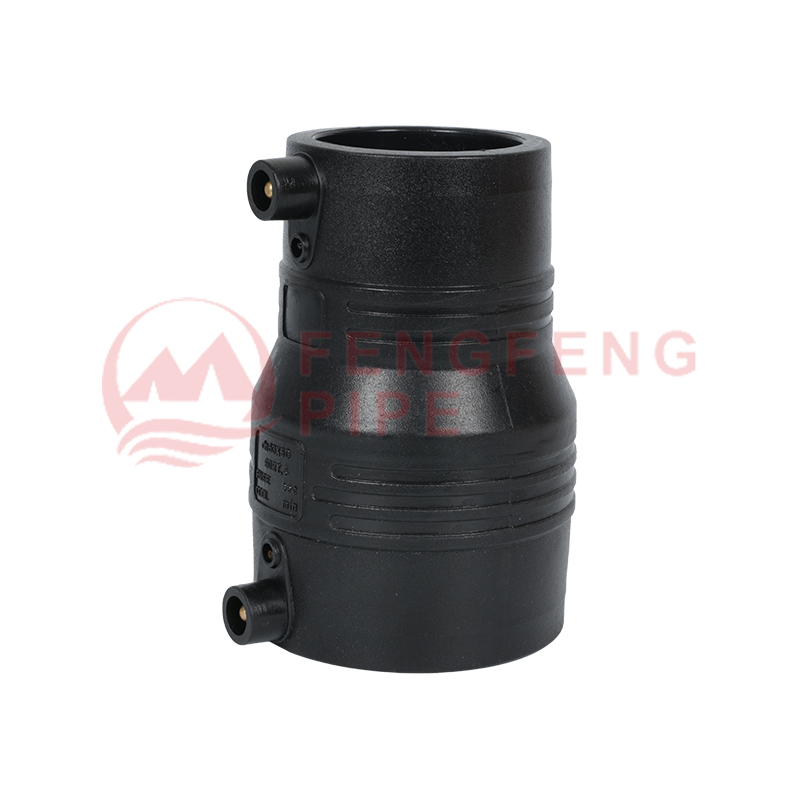
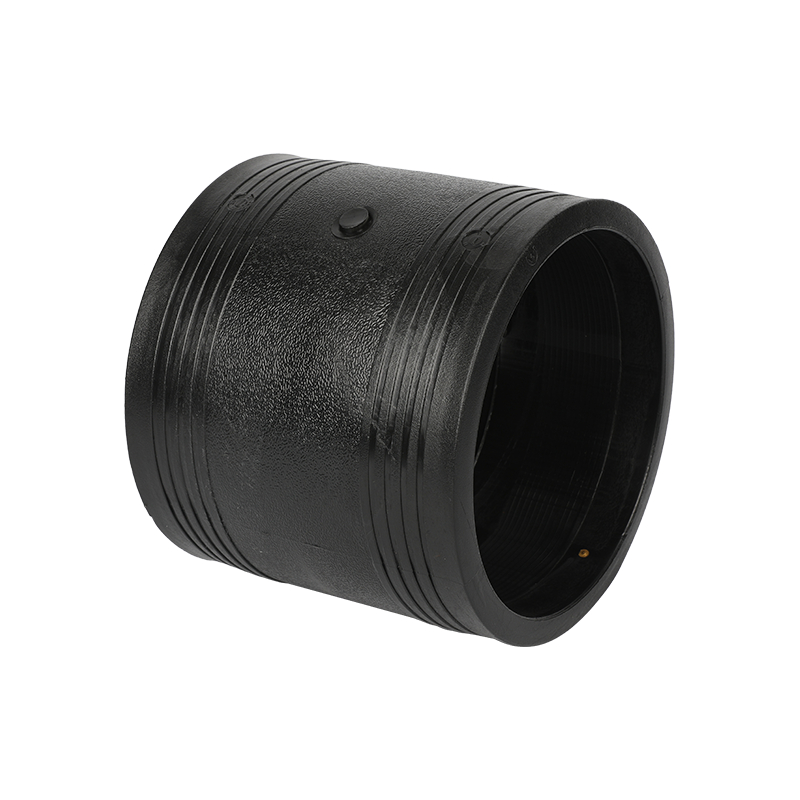 HDPE Electrofusion Equal CouplerHDPE electrofusion equal coupler joins same-diameter pipes by electrofusion; corrosion, pressure, and aging resistant for water, drainage, and chemical systems, including tight-trench repairs.View Product →
Electrofusion couplers are especially useful when the pipe cannot be rotated, when the trench is tight, or when a repair must be made without moving the line. The fitting contains an embedded heating wire, and the welding machine applies a controlled current for a specified time. The result is a repeatable joint that can be inspected through the fusion indicator and pressure-tested like the rest of the system.
Flexibility, bend radius, and installation reality
HDPE can be bent to a radius that would break PVC. The allowable bend radius depends on diameter, wall thickness, temperature, and whether the bend is temporary or permanent. In smaller diameters, HDPE can be delivered in coils, which means fewer joints and faster installation. In larger diameters, HDPE pipe is still flexible enough to follow minor alignment changes and to tolerate settlement without cracking.
PVC is rigid. It cannot be coiled in practical pressure sizes, and it should not be forced into a bend. A PVC line needs fittings for direction changes and proper support or bedding to prevent point loading. That rigidity can be beneficial when the pipe must maintain a constant slope, but it also makes PVC more vulnerable to impact during handling and backfilling.
- HDPE advantage: fewer joints, faster trenchless installation, and better tolerance of ground movement.
- PVC advantage: simple layout, familiar fittings, and straightforward slope control in gravity drainage.
- HDPE risk: poor bedding can cause excessive deflection; the pipe must be installed with proper embedment.
- PVC risk: impact damage and solvent-cement joint defects can cause leaks that are difficult to locate after burial.
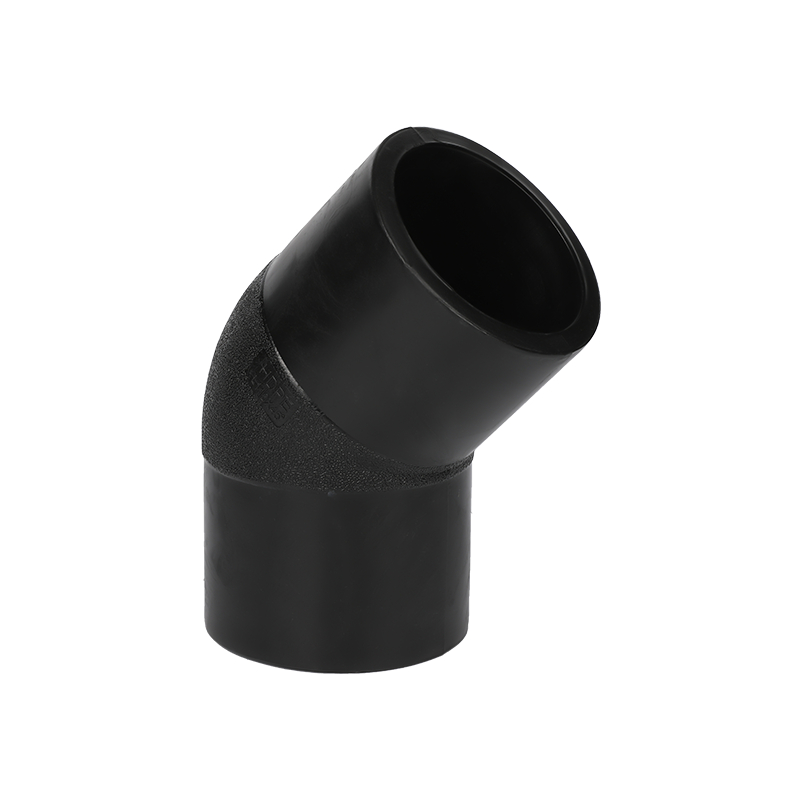
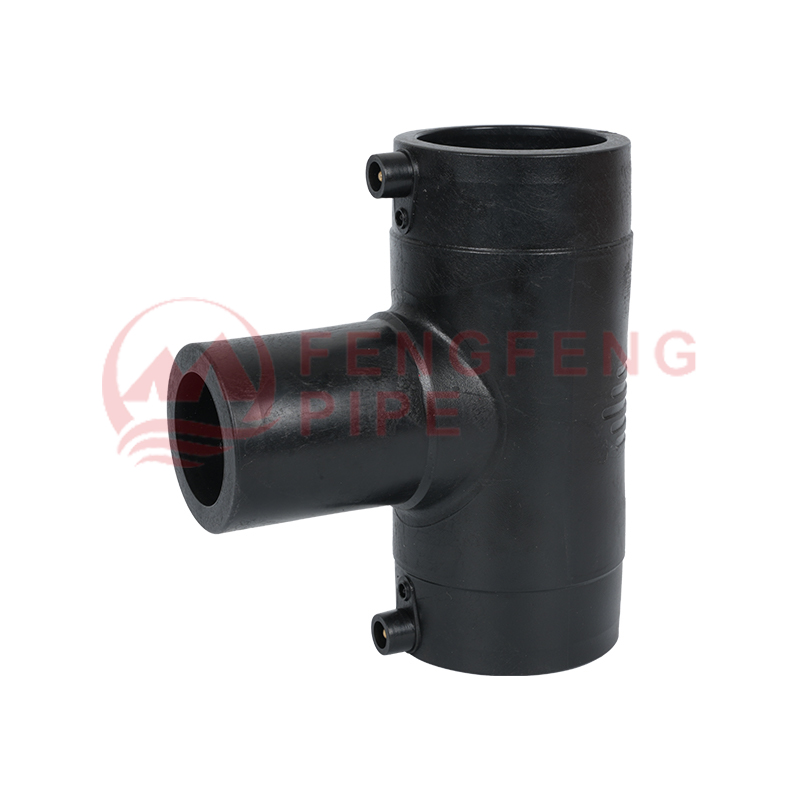
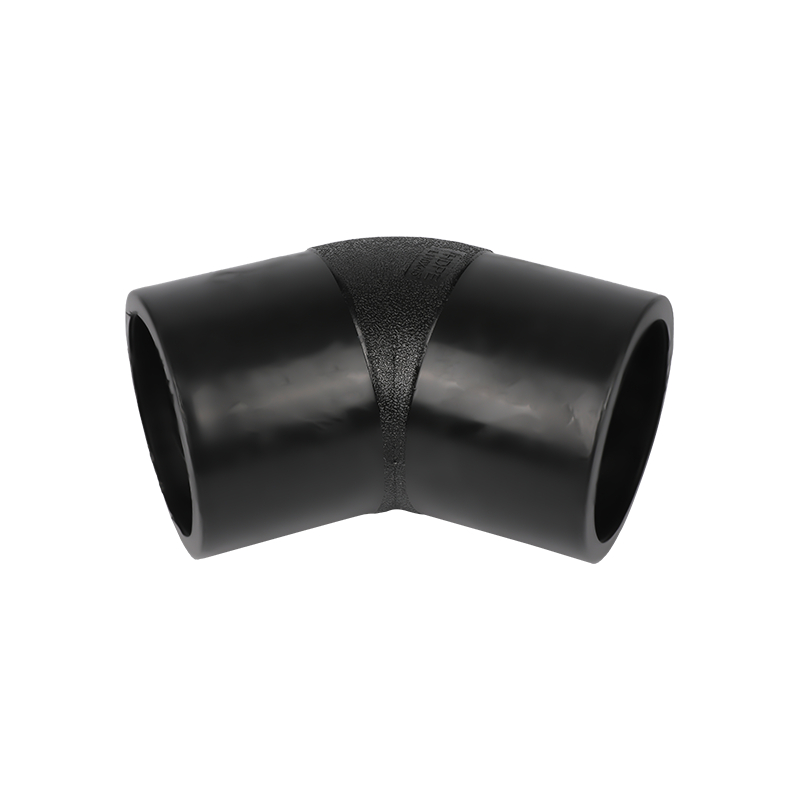 Butt Fusion Fitting Series by Zhejiang FengfengButt fusion fitting series from Zhejiang Fengfeng Pipe Industry; check the technical characteristics and specifications sections for available sizes and fusion details.View Product →
Water hammer and surge: where HDPE pulls ahead
Water hammer occurs when a valve closes quickly or a pump stops suddenly, creating a pressure wave that travels through the pipe. Rigid materials such as PVC transmit and reflect that wave with less damping. HDPE, because it is viscoelastic, absorbs some of the surge energy and reduces the peak pressure spike. This does not mean surge analysis is unnecessary, but it does mean HDPE systems often have a wider tolerance for real-world operating events.
For pump stations, mine dewatering, slurry lines, and municipal water networks with frequent valve cycling, HDPE is usually the stronger choice. For a simple gravity drain with no pressure surge, PVC can perform well for decades. The presence of check valves, fast-closing valves, or high-velocity flow should push the design toward HDPE or toward a more detailed surge analysis.
Temperature and UV exposure
Both HDPE and PVC lose pressure capacity as temperature rises, but their practical limits differ. HDPE generally performs well from below freezing to around 60°C for standard pressure pipe, with higher-temperature grades available for specific applications. PVC is often limited to lower service temperatures in pressure applications and becomes more brittle in cold weather.
| Condition | HDPE | PVC |
|---|---|---|
| Cold weather handling | Excellent impact resistance; can be installed in cold conditions with proper procedures. | More brittle; extra care is needed to avoid cracks and impacts. |
| High temperature pressure service | Rating decreases with temperature; specialized grades can extend the range. | Useful range is generally lower for pressure service; derating is required. |
| UV exposure | Carbon-black HDPE resists UV degradation for long-term outdoor exposure. | Requires UV stabilizers and proper formulation for exposed service. |
| Thermal expansion | Higher expansion coefficient; needs expansion loops, offsets, or restrained design. | Lower expansion coefficient; still requires allowance in long runs. |
If the pipe will be stored outdoors for months before installation, UV resistance matters. If the pipe will carry hot water or process fluid, temperature derating matters even more. Buyers should request the manufacturer’s pressure-versus-temperature chart rather than assuming the ambient rating applies to every operating condition.
Chemical resistance: HDPE is usually more forgiving
HDPE resists a broad range of acids, bases, and salts, which makes it common in chemical processing, mining, landfill leachate, and wastewater. PVC also resists many chemicals, but it can be attacked by certain solvents, ketones, and aromatic hydrocarbons. The correct material depends on the specific chemical, concentration, temperature, and exposure duration.
- HDPE: strong resistance to many inorganic chemicals, acids, and bases; good for abrasive slurry and wastewater.
- PVC: good resistance to water, acids, and bases in many drainage applications; limited by some solvents and high-temperature chemical service.
- Common mistake: choosing a pipe based on room-temperature chemical resistance without checking the actual operating temperature.
For chemical lines, the safest approach is to request a chemical resistance table from the pipe manufacturer and confirm the expected concentration and temperature. A material that is stronger mechanically can still fail chemically if it is not compatible with the conveyed fluid.
Cost and lifecycle: the cheaper pipe is not always the lower-cost system
PVC usually has a lower initial material cost than HDPE, especially in drainage sizes. HDPE often has a higher material cost, but its installed cost can be competitive because it can be coiled, requires fewer joints, and can be installed with trenchless methods. The lifecycle cost also includes repair frequency, pump energy, downtime, and service life.
| Cost factor | HDPE | PVC |
|---|---|---|
| Material price | Usually higher per meter in comparable pressure sizes. | Usually lower for drainage and low-pressure sizes. |
| Jointing cost | Requires fusion equipment and trained operators; joints are strong and permanent. | Solvent cement is low-cost but labor-sensitive; gasketed joints need proper lubrication and insertion. |
| Installation speed | Can be fast with coils and fusion; good for trenchless. | Fast in open trench with standard fittings. |
| Repair cost | Fusion repair is reliable but needs equipment. | Solvent repair is simple but can be difficult in wet conditions. |
| Expected service life | Often designed for 50 years or more under proper conditions. | Commonly around 30 to 50 years depending on application and formulation. |
For a large project, a small difference in pipe price can be outweighed by the cost of a single leak repair or a pump failure caused by surge. That is why many engineers compare HDPE and PVC on a total installed cost basis rather than on the price of the pipe alone.
Where PVC wins
PVC is often the better choice for gravity drainage, vent stacks, low-pressure irrigation, and indoor waste systems where the pipe is supported, protected from impact, and not exposed to aggressive chemicals. Its stiffness helps it hold a slope, and its solvent-cement jointing is familiar to most plumbing crews.
- Gravity sewer and drain lines: rigid pipe maintains grade and uses standard fittings.
- Low-pressure water distribution: Schedule 40 and Schedule 80 PVC are widely available.
- Indoor plumbing vents: lightweight, easy to cut, and simple to cement.
- Short service runs: where trenchless installation and ground movement are not concerns.
PVC also has a lower coefficient of thermal expansion than HDPE, which can simplify above-ground design when temperature changes are moderate. However, PVC’s lower impact resistance means it should be handled carefully in cold weather and protected from heavy backfill loads.
Where HDPE wins
HDPE is usually the stronger choice for pressurized water, wastewater force mains, mining, landfill, geothermal, trenchless rehabilitation, and any project where ground movement, surge, or joint leakage is a major risk. Its fusion joints are monolithic, and its flexibility allows it to follow slight changes in alignment without fittings.
- Water mains and force mains: leak-free fusion joints and surge tolerance.
- Trenchless installation: flexibility and abrasion resistance support directional drilling and pipe bursting.
- Mining and slurry: high impact strength and chemical resistance.
- Landfill and leachate: chemical resistance and long service life.
- Cold regions: HDPE handles freezing and impact better than PVC.
- Seismic zones: flexibility helps the pipe survive ground movement.
HDPE also has a favorable fatigue profile. A pump line that starts and stops several times per day will expose the pipe to cyclic pressure. Under those conditions, HDPE’s resistance to fatigue crack growth is a major advantage over rigid PVC.
Fittings and transitions: the system is only as strong as its connections
A pipe comparison is incomplete without fittings. HDPE systems use butt fusion, electrofusion, socket fusion, and mechanical transition fittings. PVC systems use solvent-cement fittings, gasketed fittings, and threaded adapters in smaller sizes. Mixing the two materials requires a purpose-made transition fitting, not a glued joint or a wrapped connection.
For HDPE-to-metal or HDPE-to-PVC transitions, male and female threaded adapters, flange adaptors, and electrofusion transition couplings are common. The choice depends on pressure, pipe size, burial conditions, and whether the joint must be restrained. A threaded transition can be convenient for pumps, valves, and equipment connections, but it must be installed with the correct thread sealant and support.
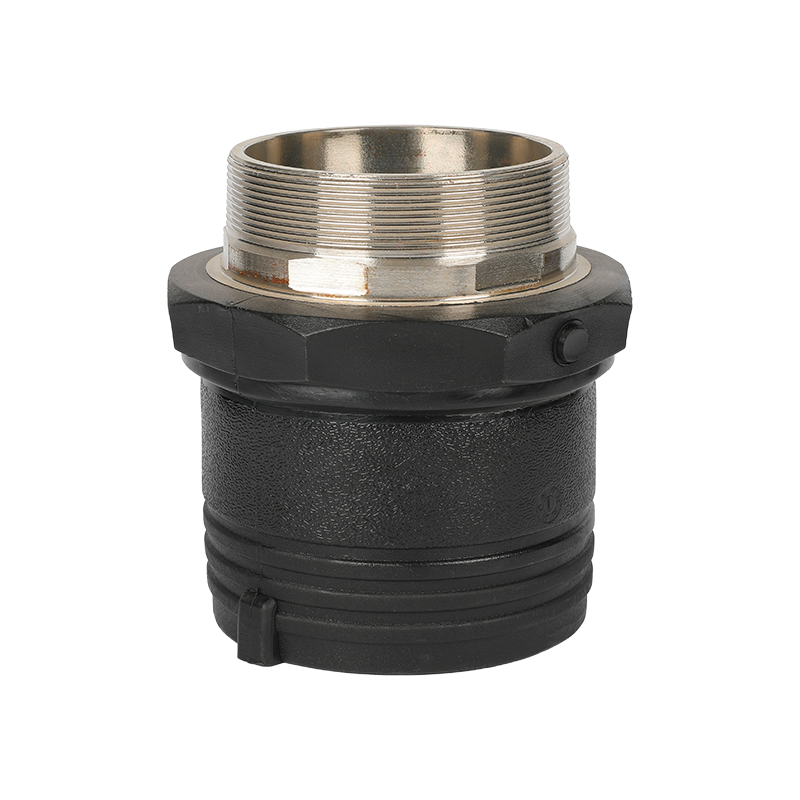
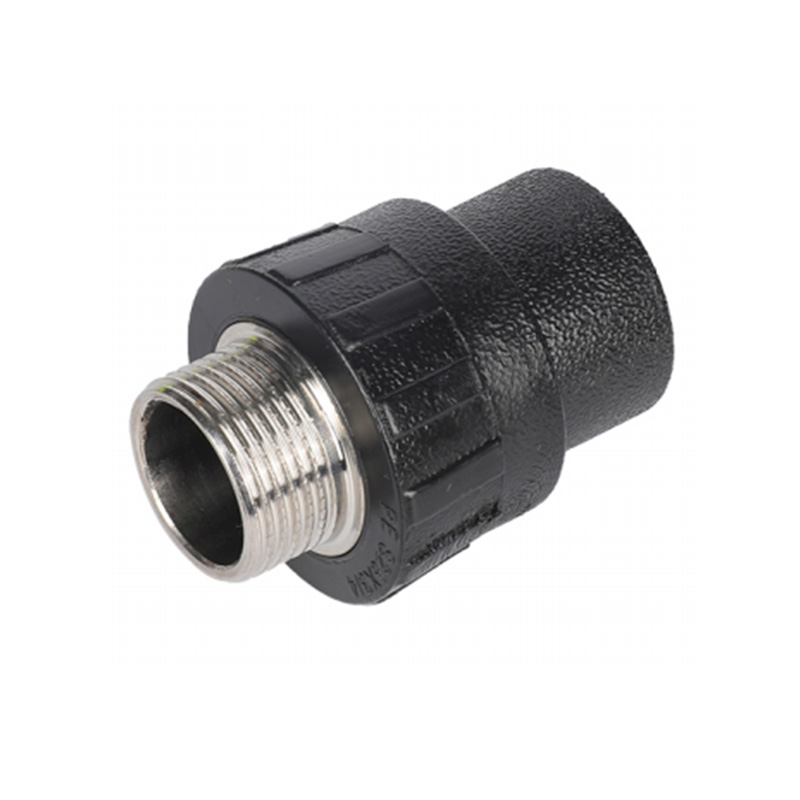 HDPE Male Thread Adaptor for Equipment ConnectionsThreaded HDPE male adaptor for pump, valve, or equipment interfaces; corrosion resistant and leak-tight, but not intended to replace fusion joints in buried mains.View Product →
Threaded HDPE fittings are not a replacement for fusion joints in a buried main. They are best used at equipment interfaces, where the connection must be disassembled or where a metal thread is required. For buried transitions, a flange adaptor or electrofusion transition coupling usually provides a more reliable long-term seal.
Our factory produces HDPE butt fusion, electrofusion, socket fusion, thread fittings, valves, and welding machines as a matched system. You can review our manufacturing background to see how quality control, material traceability, and pressure testing are handled before shipment.
Quality checks buyers should request before shipment
When comparing HDPE and PVC suppliers, the material specification is only the first step. The second step is verifying that the pipe and fittings meet the required standard and that the jointing method is compatible with the site conditions. A strong pipe can still fail if the fittings are undersized, the fusion parameters are wrong, or the pipe is stored incorrectly.
- Material grade certificate: confirm the PE 100 or PE 100-RC grade for HDPE, or the PVC cell class and impact modification for PVC.
- Dimension and SDR check: verify outside diameter, wall thickness, and ovality against the project specification.
- Pressure test report: request hydrostatic test records for the pipe and fittings where applicable.
- Fusion procedure qualification: confirm that the fusion parameters match the pipe diameter, wall thickness, and material grade.
- Operator training: ensure that the installation crew is qualified for butt fusion, electrofusion, or solvent cement as required.
- Storage and handling plan: HDPE should be protected from excessive UV and sharp objects; PVC should be protected from impact and prolonged high heat.
For high-risk projects, a pre-production meeting is worth the time. It aligns the pipe manufacturer, fitting supplier, welding equipment provider, and installation contractor on the same fusion or cementing procedure. That single step prevents many of the field failures that later get blamed on the material.
Application guide: which material for which service
The fastest way to choose between HDPE and PVC is to start with the service conditions and work backward. The table below is a practical guide, not a substitute for engineering design.
Choose HDPE when
- The line is pressurized and subject to surge.
- The ground may move, settle, or freeze.
- Leak-free fusion joints are required.
- Trenchless installation is planned.
- The fluid is abrasive, corrosive, or variable.
- The service life target is 50 years or more.
Choose PVC when
- The line is gravity drainage or low pressure.
- The pipe can be rigidly supported and protected.
- Initial material cost is the primary constraint.
- The installation crew is familiar with solvent cement.
- Temperature and chemical exposure are moderate.
- The layout requires many direction changes with standard fittings.
In some projects, the best answer is a hybrid system. HDPE can be used for the pressurized main and the sections that cross under roads or waterways, while PVC can be used for building drainage and vent lines. The transition between the two materials must be made with an approved mechanical or flange connection, not with glue.
FAQ: HDPE versus PVC strength and selection
Is HDPE stronger than PVC?
HDPE is stronger in impact resistance, fatigue resistance, elongation, and joint integrity. PVC is stronger in short-term stiffness and tensile modulus. For pressure lines with surge or movement, HDPE is usually the stronger system. For rigid low-pressure drainage, PVC can be strong enough and more economical.
Can HDPE handle more pressure than PVC?
It depends on the SDR or schedule, wall thickness, temperature, and design factor. A thick-wall PVC pipe can have a higher nominal pressure rating than a thin-wall HDPE pipe, but HDPE’s fusion joints and surge tolerance often make it more reliable in dynamic pressure service. Always compare pressure ratings at the actual operating temperature.
Why can’t I glue HDPE with PVC cement?
PVC solvent cement works by softening and chemically fusing PVC surfaces. HDPE is not soluble in those solvents, so the cement cannot create a continuous bond. HDPE must be joined by heat fusion or connected with a mechanical transition fitting.
Which pipe lasts longer, HDPE or PVC?
Both can last for decades when correctly specified and installed. HDPE is often designed for 50 years or more in pressure service, while PVC service life is commonly estimated at 30 to 50 years depending on formulation, temperature, UV exposure, and installation quality. Joint quality and bedding often matter more than the raw material’s laboratory lifespan.
Is PVC better for drainage?
PVC is often better for gravity drainage because it is rigid, easy to slope, and uses familiar solvent-cement fittings. HDPE can also be used for drainage, especially where movement, chemical resistance, or leak-free joints are important, but it requires proper support and fusion equipment.
Which material is better for cold weather?
HDPE performs better in cold weather because it remains ductile and resists impact. PVC becomes more brittle at low temperatures and needs careful handling to avoid cracks. HDPE fusion can also be performed in cold conditions with adjusted procedures, while solvent cementing PVC in cold weather requires special precautions.
Do HDPE and PVC use the same fittings?
No. HDPE fittings are designed for fusion or mechanical transition, while PVC fittings are designed for solvent cement or gasketed joints. The two systems should not be mixed without an approved transition fitting. Threaded adapters, flange adaptors, and electrofusion transition couplings are common solutions.
How to make the final decision
Start with the failure mode you cannot accept. If a leak under a road, a crack during backfilling, or a surge failure at a pump station would be unacceptable, choose HDPE and design the fusion joints correctly. If the project is a low-pressure drain with good support, moderate temperature, and a tight material budget, PVC can be the practical choice.
Then check the full system: pipe, fittings, valves, transition pieces, welding equipment, and installation procedure. The strongest pipe in the world will not perform if the joint is wrong. The weakest-looking pipe can perform for decades if the system is designed and installed as a complete unit.
For HDPE pressure systems, specify the material grade, SDR, pressure rating, fusion method, and testing requirements. For PVC systems, specify the schedule or pressure class, solvent-cement procedure, expansion allowance, and support spacing. In both cases, require traceability from the raw material batch to the finished product, and verify that the installation crew has the right tools and training.
KEEP IN TOUCH

About Us
Zhejiang Fengfeng Pipe Industry Co., Ltd. uses efficient single screw injection molding machines for high productivity and low energy use.
Products link
Contact
-

+86-19858193396
+86-13735359894 -

+86-0574-63555288
-

-

No. 21, Market Road, Diankou Town, Zhuji City, Shaoxing City, Zhejiang Province, China