


 English
 中文简体
中文简体 русский
Industry news
 Home / News / Industry news / What Fittings Do You Use on an HDPE Pipe? Types, Sizes & Selection Guide
 What Fittings Do You Use on an HDPE Pipe? Types, Sizes & Selection Guide
 2026.08.31
 Industry news
A 110 mm PE100 water main cannot be glued, threaded, or solvent-welded — it has to be fused or mechanically gripped, and that single fact drives every fitting decision on an HDPE project. The fittings used on HDPE pipe fall into a small, well-defined set: butt fusion fittings, electrofusion fittings, socket fusion fittings, compression fittings, and transition fittings that convert the polyethylene line to threads or flanges, with valves completing the network.
Which family you specify depends on four variables: pipe diameter, pressure class (SDR and PN), the welding equipment available on site, and whether the joint will be buried, exposed, or dismantled later. Choose wrongly and the cost is real — a compression fitting specified on a pressurized transmission main can weep within its first season, a thread cut into PE pipe destroys the wall that holds the pressure, and a fitting ordered in the wrong SDR fails the hydrostatic test before the trench is closed.
This guide sets out each fitting family with size ranges, pressure classes, the standards that govern them, and the practical mistakes that show up in the field. It is written for contractors, irrigators, design engineers, and purchasing teams who need the fittings and the pipe to arrive as one matched system.
The Short Answer: Seven Fitting Families Used on HDPE Pipe
HDPE pipe fittings are the components that join, turn, branch, reduce, transition, or shut off a polyethylene pipeline. On a working network you will normally use one or more of seven families: butt fusion fittings, electrofusion fittings, socket fusion fittings, compression fittings, threaded transition fittings, flange adapters with stub ends, and PE ball valves. Buried, pressurized lines above 63 mm are joined by fusion; compression and threaded fittings serve the small-diameter edges of the system.
The direct answer, item by item:
- Butt fusion fittings — elbows, tees, reducers, end caps, and stub ends heat-welded to the pipe ends, for mains from 63 mm up to 1200 mm.
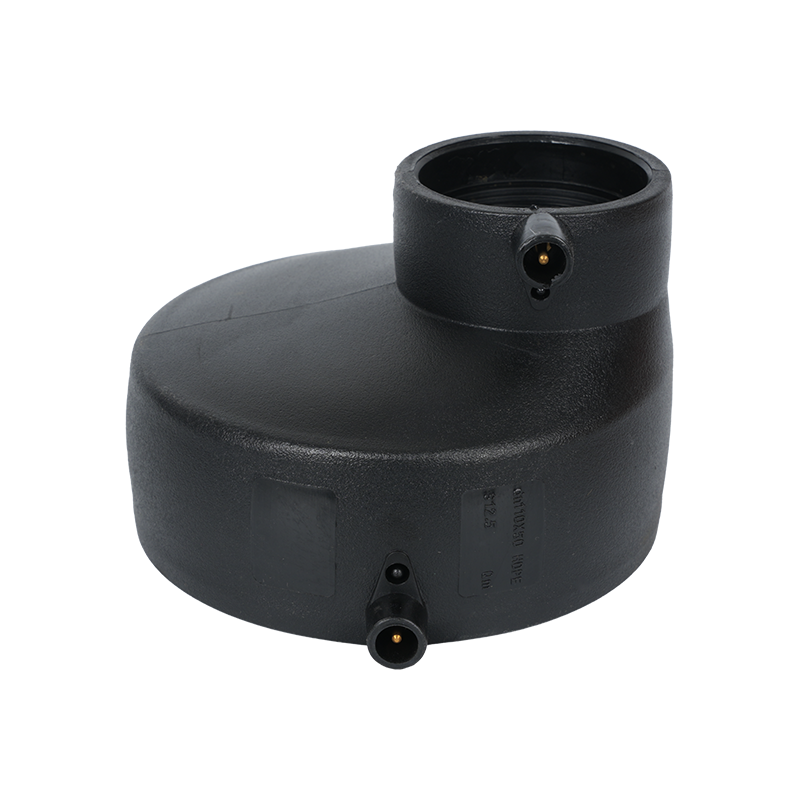
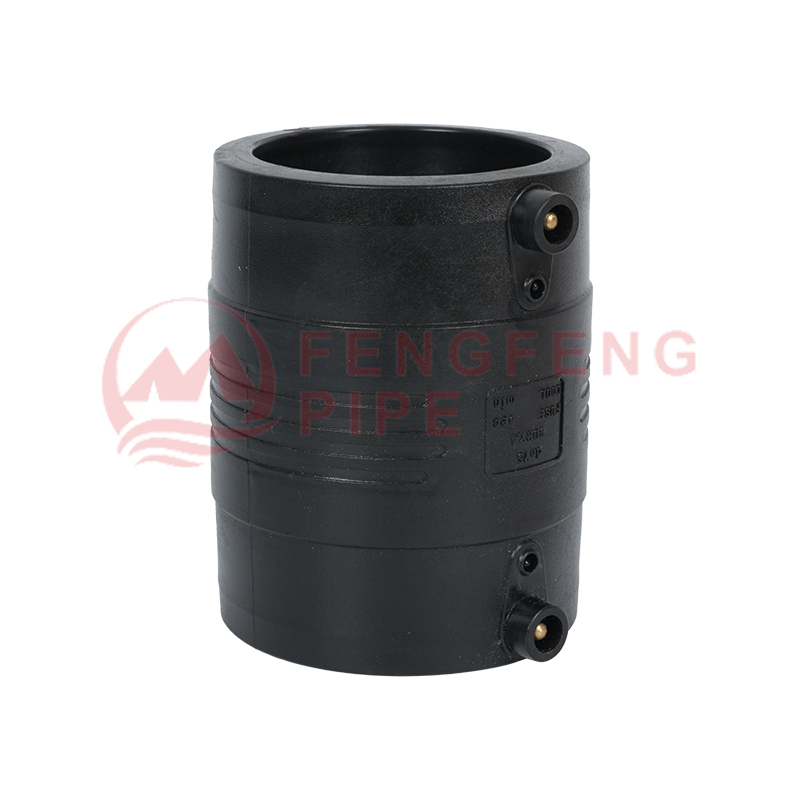
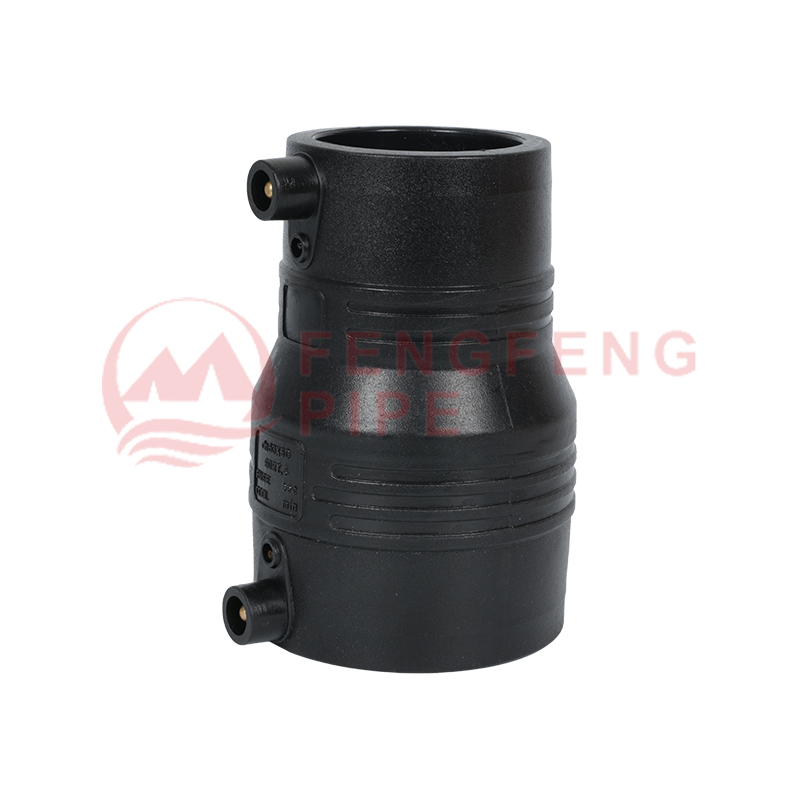
- Electrofusion fittings — couplers, tapping saddles, and elbows with an embedded resistance wire, from 20 mm up to 630 mm.
- Socket fusion fittings — heated-tool joints for small diameters, typically 20 mm to 110 mm.
- Compression fittings — grip-ring and O-ring mechanical joints that need no heat, typically 16 mm to 110 mm.
- Threaded transition fittings — molded bodies with male or female metal threads for connecting to valves, meters, and pumps.
- Flange adapters and stub ends — bolted transitions with a backing ring and gasket for connection to steel equipment.
- PE ball valves — fusion-welded or compression-ended valves that isolate and control the line.
If the line is buried, pressurized, and larger than 63 mm, fusion is the default: a correctly made fusion joint is chemically and mechanically continuous with the pipe wall, which is why a properly installed PE100 system carries a 50-year design rating. Compression and threaded fittings belong at the edges of the system — service connections, equipment hookups, and quick repairs — where their speed and reversibility matter more than absolute joint strength. The table below maps the seven families to their joining method, size range, and typical duty:
| Fitting family | Joining method | Typical diameter range | Typical duty |
|---|---|---|---|
| Butt fusion fittings | Heated-plate weld between pipe and fitting ends | 63-1200 mm | Transmission mains, irrigation networks, industrial lines |
| Electrofusion fittings | Embedded resistance coil energized by a control box | 20-630 mm | Repairs, tie-ins, tight trenches, gas and water services |
| Socket fusion fittings | Heated tool softens the fitting socket and pipe end | 20-110 mm | Building branches, small laterals, plant utility lines |
| Compression fittings | Grip ring and O-ring under a spanner-tightened nut | 16-110 mm | Irrigation, farm water, service connections, fast repairs |
| Threaded transition fittings | Molded or brass-inserted threads on a PE or PP body | 20-110 mm | Connections to meters, pumps, and metal pipework |
| Flange adapters and stub ends | Bolted flange face with gasket and backing ring | 63-600 mm | Pump stations, valve chambers, tank nozzles |
| PE ball valves | Welded or compression ends integrated into the line | 20-315 mm | Isolation and control on distribution networks |
Butt Fusion Fittings: The Backbone of Large-Diameter HDPE
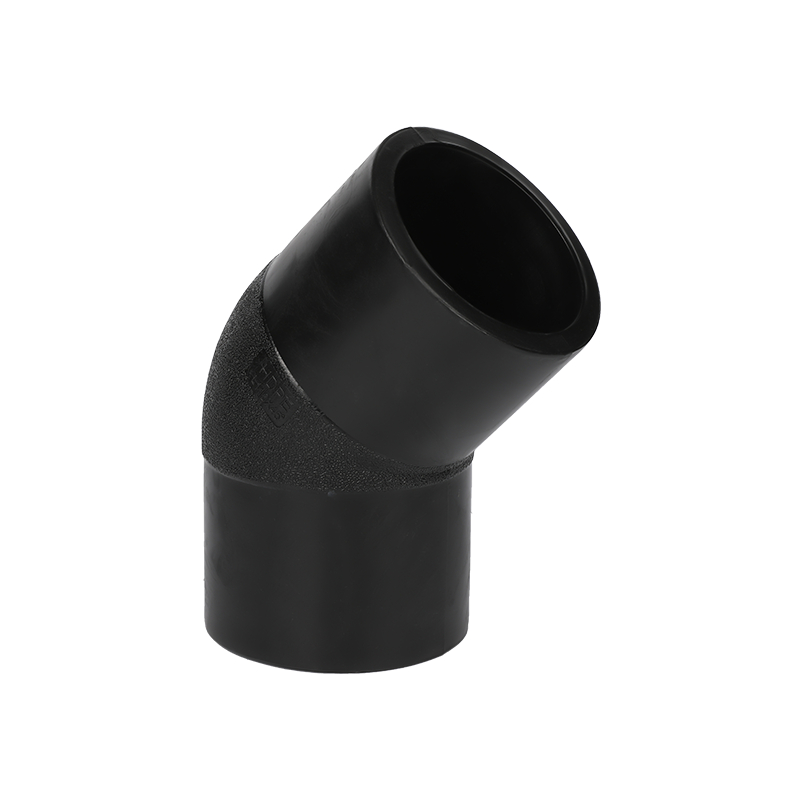
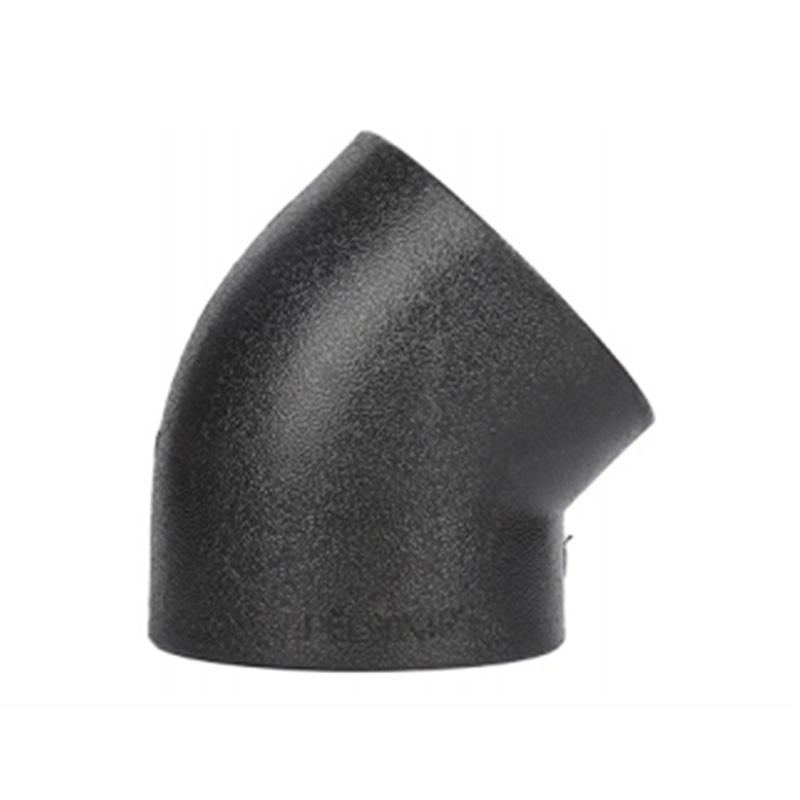
Butt fusion fittings are molded from the same PE100 resin as the pipe, so when they are welded on, the joint becomes a continuation of the pipe wall rather than a separate component bolted or glued against it. The family covers the geometry a network actually needs: 90, 45, 22.5, and 11.25 degree elbows; equal and reducing tees; concentric reducers; end caps; and stub ends for flanging.
The joining process follows a fixed sequence regardless of diameter. Pipe ends and fitting ends are faced flat in a butt fusion machine, checked for alignment and ovality, touched against a heated plate at roughly 200-230 °C depending on the procedure followed, and then pressed together through defined heating, changeover, fusion, and cooling phases under controlled pressure. Procedures such as DVS 2207-1 in Europe and ASTM F2620 in North America set the heater temperatures, soak times, and fusion pressures by wall thickness.
Three practical points decide whether the joint lasts as long as the pipe around it:
- Match SDR for SDR. An SDR11 fitting welded to SDR17 pipe creates a wall-thickness step and a stress point. Fittings and pipe should share the same pressure class and resin grade.
- Respect the cooling time. The double bead that forms at the joint must cool under machine pressure. A joint disturbed early can crack at the bead root long before anyone is standing there to see it.
- Read the bead. A uniform, rounded double bead that does not crack when bent back is the field evidence of a sound weld.
Butt fusion fittings dominate from 63 mm upward because the per-joint cost falls as diameter grows while joint strength stays equal to the pipe. For a 315 mm irrigation main or a 630 mm transmission line, this is the family that carries the system. There is also an accountability argument: a factory that molds the fittings and builds the butt fusion welding machines keeps heater temperatures, tooling dimensions, and drag pressure aligned across the whole joint — which is exactly what a contractor wants when a test failure stops a project.
Electrofusion Fittings: Full-Strength Joints Without Heavy Machinery
Electrofusion (EF) fittings solve a different problem: how to make a full-strength fused joint in a narrow trench, during a night shift, around live infrastructure, or on a site where a butt fusion machine cannot physically reach. Inside each EF coupler, saddle, or elbow sits a resistance coil. A control box reads the bar code printed on the fitting, applies the correct voltage for the programmed time, and the coil melts a precisely defined band of polyethylene that fuses pipe to fitting.
The procedure is unforgiving in a productive way — it forces discipline onto the crew:
- Cut the pipe square and support both ends.
- Scrape away the oxidation layer — about 0.2 mm of surface — with a proper peeling tool. This layer regrows on aged PE and blocks fusion if it is left in place.
- Degrease with a clean wipe and never touch the scraped surface with bare hands.
- Clamp and re-round the pipe. Oval pipe leaves an uneven melt gap and can cause a short circuit at the coil.
- Run the fusion cycle and leave the clamps in place for the full cooling time printed on the fitting.
Standard water and gas ranges run from 20 mm to 630 mm. EF fittings cost more per joint than butt fusion, so most networks use them selectively: tie-ins, branch saddles, repairs in congested ground, and gas service connections where every joint is documented and audited. Standards such as EN 12201 for water and ASTM F1055 in the North American market define the fitting requirements, and because the welding parameters live on the bar code card, field crews do not have to calculate anything under pressure.
Socket Fusion Fittings: Small Diameters and Simple Tooling
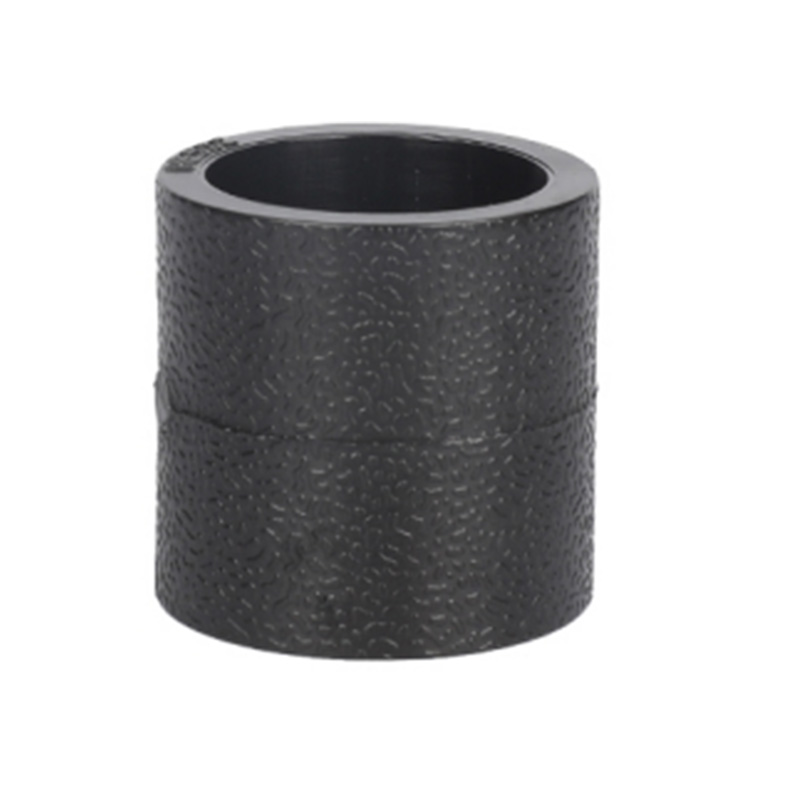
Below 110 mm, a different tool takes over. Socket fusion fittings are molded with a female socket whose inner diameter and depth match the pipe outside diameter. A hand-held heating tool with male and female dies softens the pipe end and the fitting socket at the same moment, and the two parts are pushed to full insertion depth. The result is again a homogeneous joint — no O-rings, no fasteners, no seals to age.
The standard range covers 20 mm to 110 mm, occasionally 125 mm, which maps onto building water branches, small irrigation laterals, and utility lines inside industrial plants. Because the tooling fits into a carrying case, socket fusion suits work in basements, plant rooms, and congested runs where a butt fusion machine simply cannot follow.
Two cautions keep socket-fused lines tight. First, insertion depth matters: the pipe must reach the shoulder inside the socket, or the fused area is too small for the pressure it has to hold. Second, heater temperature and dwell time must follow the tool and fitting manufacturer's procedure. Overheated polyethylene chars and weakens; underheated surfaces leave a cold joint that weeps during the pressure test. On small diameters both errors are easy to make in a rush and equally easy to avoid with a five-minute crew briefing.
Compression Fittings: Full-Pressure Joints With No Welding Machine
Compression fittings are the mechanical answer for small and medium HDPE. A polypropylene body grips the pipe with a grip ring whose teeth bite into the wall; an EPDM O-ring seals against the outside surface; a hand-tightened, then spanner-tightened, nut drives both. No electricity, no heater, no cooling wait — a 32 mm service connection is made in minutes with two spanners.
Typical performance: sizes from 16 mm to 110 mm, rated PN16 up to 63 mm and PN10 from 75 mm to 110 mm with water at 20 °C. That envelope covers irrigation laterals, farm and livestock watering, garden and landscape lines, and a large share of the service connections on distribution networks.
Their limits are just as specific:
- Temperature. The PP body and EPDM seal set the ceiling. Sustained hot water is a job for PE-RT II or steel, not a standard compression fitting.
- Restraint. The grip ring holds pressure, but it does not hold endless pull. Bury or support the pipe so thermal movement does not work the joint loose over the years.
- Diameter. Above 110 mm, mechanical grip designs exist, but fusion is the economical and durable answer for mains.
Used inside those limits, compression fittings are the fastest family on HDPE and the one most often carried on a service truck. Used outside them — on a hot line, on a main that moves, or on a diameter they were never rated for — they are the first joint to drip. Knowing which side of that line a project sits on is worth more than any catalogue page.
Threaded and Flanged Transitions: Connecting HDPE to Everything Else
Sooner or later an HDPE line meets a pump, a water meter, a steel header, or a valve that does not fuse. Transition fittings handle that interface, and they come in two shapes.
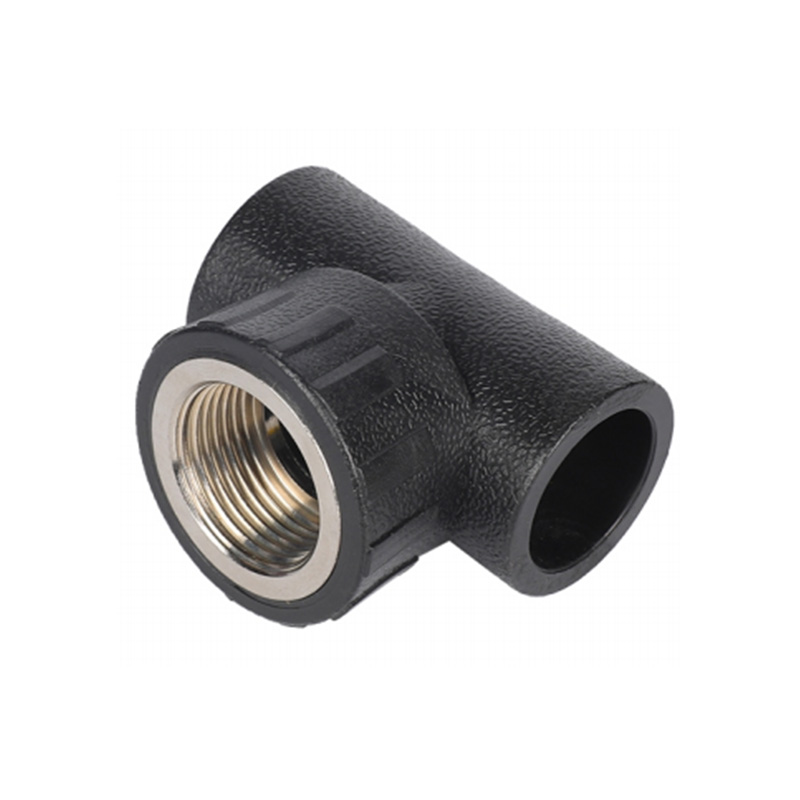
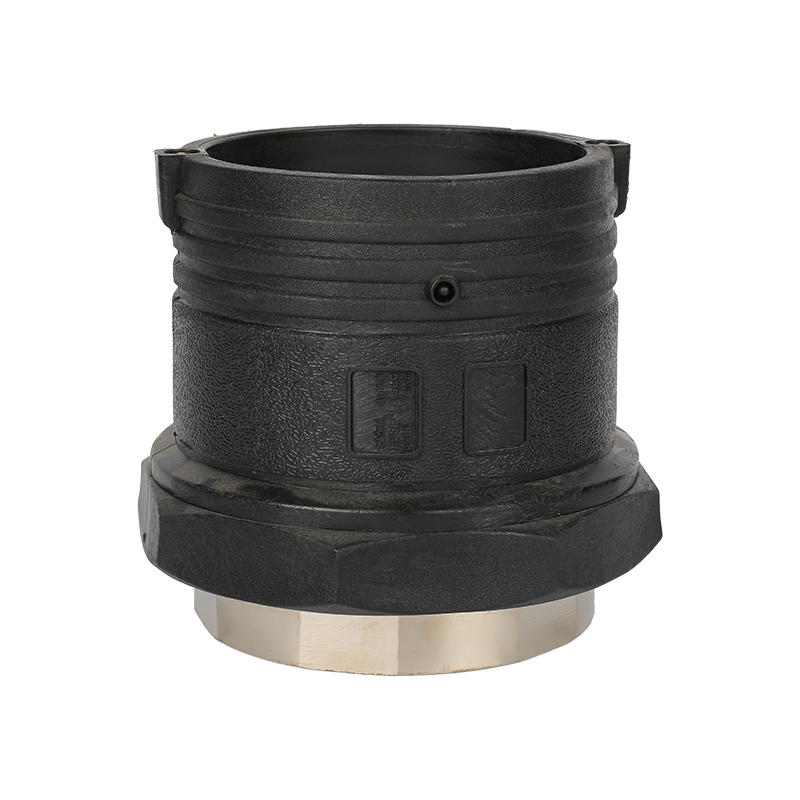
Threaded transition fittings use a molded PE or PP body carrying either a molded metal thread or a brass insert locked into the fitting — male and female versions, commonly 20 mm to 110 mm. The rule that matters most: the thread lives in the fitting, never in the pipe. Cutting a thread into an HDPE wall removes exactly the material the pressure rating depends on and creates a crack starter; it is the single most common do-it-yourself error on PE installations. For heavier duty, butt-weld threaded fittings fuse a threaded interface directly onto the pipe end, keeping the fusion joint and the thread in one factory-molded part.
Flange transitions use a stub end — a short fused collar — plus a backing ring in PP, steel, or stainless steel, a flat gasket, and a bolted flange face. Drilling patterns follow EN 1092 or ASME/ANSI patterns in PN10 and PN16, so the HDPE side bolts directly to a standard steel flange on a pump, tank, or meter set. Two field habits prevent leaks at this interface: tighten the bolts in a cross pattern in progressive passes so the gasket compresses evenly, and confirm the backing ring diameter matches the stub-end land so the seal face carries load uniformly instead of rocking on one bolt.
Valves and the Fittings That Complete the Network
A fitting list is not complete until it controls flow. On HDPE networks that usually means PE ball valves: a fully welded polyethylene body fused directly into the line leaves no external leak path at all, which is why water utilities favor them on distribution networks. Compression-ended PE ball valves cover the small diameters where bringing a welding machine to site is not worth the trip. Larger isolation duties — reservoir outlets, pump stations — pair the line with flange adapters onto gate or butterfly valves.
Around the valves, three specialized fittings appear again and again:
- Tapping saddles and service tees, including electrofusion saddles, that add a 25-63 mm service branch to a live main without shutting the network down.
- Siphon drainage fittings for building roof drainage, a specialized geometry where fitting tolerances decide whether the siphonic system holds its prime.
- PE-RT II pipes and fittings, which step in when service temperature rises above what standard HDPE pressure ratings assume — industrial hot-water circuits and heating lines are their territory.
The pattern worth noticing: on a well-planned system, every fitting family speaks one outside-diameter language. A 110 mm OD is a 110 mm OD whether it arrives as a butt fusion tee, an electrofusion coupler, a compression elbow, or a valve stub. That consistency is what lets a mixed-technology network assemble without surprises — and it is why ordering pipe and fittings from one manufacturer simplifies both the warehouse and the warranty conversation.
Matching Fittings to Pipe: SDR, PN, and Diameter
Before choosing among the families, fix three numbers.
First, resin grade. PE100 has a minimum required strength of 10 MPa against 8 MPa for PE80, so at the same pressure a PE100 fitting needs a thinner, lighter wall. Most new water and irrigation projects specify PE100, and the fitting certificate should state the grade explicitly rather than leaving it to inference.
Second, pressure class. PN is the rated pressure with water at 20 °C, and it links to SDR — the standard dimension ratio of outside diameter to wall thickness. For PE100 the common pairs are SDR11/PN16, SDR13.6/PN12.5, SDR17/PN10, SDR21/PN8, and SDR26/PN6.3. The fitting must match or exceed the pipe class; the safest habit is to order fittings in the same SDR as the pipe, on the same purchase order, from the same factory.
Third, diameter, because diameter decides the economical joining method. Below 110 mm, socket fusion, compression, and electrofusion all compete on convenience. From 63 mm to 630 mm, butt fusion wins on cost per joint while electrofusion wins on access and repair speed. Above 630 mm, butt fusion is effectively the only fused option.
The same outside diameter hides very different walls, which is why SDR — not "size" — is the specification that matters:
Wall thickness of a 110 mm PE100 pipe across common SDR classes
One 110 mm outside diameter, five different walls. Fittings must be ordered to the same SDR as the pipe they join, or the joint becomes the weakest point in the line.
Fusion Versus Mechanical: Choosing the Joint Method
With the families laid out, the selection logic compresses into one comparison. Fusion joints — butt, electrofusion, and socket — are homogeneous: polyethylene melted into polyethylene, with joint strength equal to the pipe and no seals to age. Mechanical joints — compression, threaded, and flanged — are engineered interfaces: faster, reversible, and light on tooling, but they carry seals, grip rings, and bolt torque as ongoing variables. The table summarizes where each method earns its place:
| Joining method | Joint character | Equipment on site | Best suited to |
|---|---|---|---|
| Butt fusion | Homogeneous weld, strength equal to the pipe | Butt fusion machine with facing and heater plate | Long buried mains, 63-1200 mm |
| Electrofusion | Homogeneous weld under programmed control | EF control box, scraping tool, clamps | Repairs and tie-ins, 20-630 mm |
| Socket fusion | Homogeneous weld on small bore | Hand-held socket fusion tool | Branch lines, 20-110 mm |
| Compression | Grip ring and O-ring seal | Two spanners | Irrigation and hookups, 16-110 mm |
| Flanged | Gasket seal at a bolted interface | Fused stub end, backing ring, torque wrench | Pumps and valves, 63-600 mm |
One consequence deserves plain language: a fusion mistake usually fails at test pressure, immediately and visibly, while a mechanical mistake often fails slowly, months later, underground. That asymmetry is why crews new to PE should make their first fusion joints under supervision — the correction loop is immediate, and the lesson sticks.
Temperature Rewrites the Pressure Rating
Every PN figure quoted so far assumes water at 20 °C. Polyethylene is a thermoplastic, and its allowable pressure falls as temperature climbs — which matters for outdoor lines in hot climates, for industrial circuits, and for anything downstream of a heat exchanger.
Typical published derating factors for PE100 water service run 1.00 at 20 °C, 0.80 at 30 °C, 0.63 at 40 °C, and around 0.40 at 50 °C. In practice that means an SDR11 line rated PN16 at 20 °C should be treated as roughly PN13 at 30 °C and PN10 at 40 °C. The curve below shows the shape of that decline:
Typical pressure derating factors for PE100 water lines, referenced to the 20 °C rating. Always confirm the exact curve against ISO 4427 and the manufacturer's pressure-temperature table.
Above roughly 40 °C sustained, the economical answer is usually not "more wall" but a different material: PE-RT II pipes and their electrofusion and butt fusion fittings are engineered precisely for elevated-temperature water and heating circuits, while standard HDPE stays on the ambient side of the plant. Confirm every warm or hot application against ISO 4427 and the supplier's tables rather than estimating — the difference between PN16 on paper and PN10 in a warm line is the difference between a system that passes and one that does not.
Six Installation Mistakes That Sink HDPE Joints
Field failures on HDPE rarely come from the resin. They come from procedure. These six account for most of the joint problems seen across water and irrigation projects:
- Threaded PE joints on pressurized mains. A molded thread in a fitting is a controlled transition; a thread cut into the pipe is a leak waiting for pressure. Never cut threads into HDPE wall.
- Skipping the scrape on electrofusion. The oxidation layer is invisible and blocks fusion. An unscraped joint can beep "complete" on the control box and still fail the pressure test.
- Disturbing the joint during cooling. Fusion gains full strength only when cold. Moving, stressing, or backfilling over a warm joint is the classic cause of a cracked bead.
- Wrong insertion depth or oval pipe in mechanical fittings. The grip ring must land on full, round wall. Oval or scratched pipe under a compression nut is the most common cause of blow-offs on small lines.
- Mixed SDR and mixed resin. An SDR11 fitting on SDR17 pipe, or PE80 fitting stock on a PE100 line, turns a matched system into a stress concentration.
- Solvent cement or glue. PVC cement does not bond polyethylene — ever. If a repair plan starts with glue, the plan needs rewriting.
None of these cost money to prevent. They cost a briefing, a scraping tool, and the patience to let a weld cool — against a re-excavation that multiplies the original fitting price many times over.
Standards and Certificates to Ask For
Fittings look like commodities but are not commodity-graded; the paper behind them is part of the product. On an international order, these references do the filtering:
- ISO 4427 and EN 12201 — the European baseline for PE100 pipes and fittings for water supply, covering material, dimensions, and hydrostatic requirements.
- ASTM D3261 with ASTM F2620 — butt fusion fittings and the field welding procedure used across North American practice.
- ASTM D2683 and ASTM F1055 — socket fusion and electrofusion fittings for the US market.
- DVS 2207-1 — the German welding procedure that many international contractors specify by name.
Behind the standards sit factory-level checks worth confirming before an order: hydrostatic pressure testing of fittings at their rated class, melt flow rate matching between pipe and fittings so the weld pool is compatible, dimensional control of outside diameter and wall thickness, and a certified quality system such as ISO 9001 with ISO 14001 on the environmental side. The 50-year rating printed on PE datasheets is not a slogan — it comes from extrapolated hydrostatic regression analysis under ISO 9080, and a supplier who can show the test trail behind it is a supplier whose paperwork will survive an audit.
There is also a supply-chain argument for one-source fitting supply. When the same factory molds the pipe, the fittings, and the welding machines, melt flow, heater tooling, and weld parameters are developed against each other instead of assumed between vendors. For a contractor, that is one number to call when a joint question comes up on site — and one party responsible when it does.
A Closer Look at Core Fitting Lines
The families above translate into concrete product lines. These are the ranges a manufacturer covering the full joining spectrum typically offers, with the details that matter on a datasheet:
Butt Fusion Fittings, 63-1200 mm
- PE100 in SDR11 and SDR17 ranges
- Elbows from 11.25 to 90 degrees, equal and reducing tees, reducers, end caps
- Stub ends and backing rings for PN10/PN16 flanging
- Paired with manual, semi-automatic, or hydraulic butt fusion machines
Electrofusion Fittings, 20-630 mm
- Couplers, tapping saddles, reducing couplers, elbows
- Integrated resistance coil with bar-code parameters
- Full-strength joints for repairs and tie-ins
- Suited to gas and water service connections
Socket Fusion and Threaded Fittings, 20-110 mm
- Couplers, elbows, tees, and caps for socket fusion tooling
- Threaded versions with brass inserts for meters and pumps
- Molded stop shoulders that enforce correct insertion depth
- PN16 class with water at 20 °C
Compression Fittings and PE Ball Valves, 16-110 mm
- Grip-ring and EPDM-sealed joints, no welding machine needed
- PN16 up to 63 mm, PN10 from 75 to 110 mm
- Welded-body PE ball valves fused directly into the main
- Compression-ended valves for tool-free isolation
Each line answers a different point in the network: butt fusion fittings carry the mains, electrofusion handles the awkward joints, socket fusion and compression serve the small bore, and the valves close it. Specified together, they form a system where every joint was designed for the same pressure, the same resin, and the same outside-diameter language.
Frequently Asked Questions About HDPE Fittings
Can HDPE pipe be connected to PVC or steel pipe?
Yes — through transition fittings, never with glue. Small diameters use compression fittings with a threaded outlet screwed into a PVC or steel female thread; mains use flange adapters with stub ends and backing rings bolted to the mating flange with a flat gasket. Mechanical couplings that grip both pipe materials by outside diameter are another common route. The polyethylene side always stays fusion or compression; the interface itself is threaded or bolted.
Do compression fittings hold on buried HDPE lines?
Within their class, yes. A correctly assembled compression fitting on 16-110 mm pipe carries PN16 or PN10 water at 20 °C and is routinely buried in irrigation and service connections. Three habits keep them tight: insert the pipe to the full depth mark, keep stones away from the O-ring seating zone, and support the pipe so thermal movement does not rock the joint. For large or permanently pressurized transmission mains, fusion remains the specified answer.
What is the difference between PE80 and PE100 fittings?
The resin grade. PE80 has a minimum required strength of 8 MPa and PE100 has 10 MPa, so at the same pressure class a PE100 fitting uses a thinner, lighter wall. In practice: confirm the grade on the pipe certificate, then order fittings in the same grade and SDR. A PE100 fitting works on an PE80 design basis only if its pressure class equals or exceeds the pipe's — mixing grades without checking is how pressure mismatches slip into an order.
How long do HDPE fittings last?
The design basis for PE100 water systems is 50 years at 20 °C, derived from extrapolated hydrostatic regression testing under ISO 9080 — the same basis used for the pipe itself. Real service life depends on pressure margin, temperature, and joint quality; fittings manufactured under ISO 9001-controlled processes and rated to EN 12201 or ISO 4427 are expected to match the pipe around them. Manufacturers commonly back this with product liability insurance, which is worth asking about during supplier qualification.
Which fitting is best for repairing a damaged HDPE main?
Cut out the damaged section and rejoin. Electrofusion couplers are the fastest full-strength repair: scrape, clamp, weld, cool, and the main is back in service with no gaskets involved. Butt fusion suits planned section replacements where the machine is already mobilized. Compression couplers work for small diameters and temporary reinstatement. What never works is tape, a steel band clamp over a split, or adhesive — the pressure finds every one of those within weeks.
What sizes and pressure classes do HDPE fittings cover?
Standard water ranges: socket fusion 20-110 mm, compression 16-110 mm (PN16 up to 63 mm, PN10 above), electrofusion 20-630 mm, and butt fusion 63-1200 mm. PE100 pairs SDR11 with PN16 and SDR17 with PN10 as the workhorse classes; higher classes such as PN20 (SDR9) and PN25 (SDR7.4) serve specialist lines. All ratings assume water at 20 °C — apply the temperature derating curve to anything warmer.
What to Send When You Request a Quotation
Fitting quotations are only as accurate as the information behind them, and factories quote faster when the inquiry carries six facts:
- Outside diameter for each size, in millimeters — 110 mm, 200 mm, 315 mm — not nominal inches.
- The SDR or PN class of the pipe the fittings must match.
- The resin grade on the pipe certificate, PE100 or PE80.
- The medium, working pressure, and maximum service temperature.
- The joining method on site — butt fusion, electrofusion, socket fusion, or mechanical — including the machines available.
- Quantities per fitting type, and the destination port for freight calculation.
With those six lines, a manufacturer can return a matched bill of fittings, confirm SDR and resin compatibility before anything ships, and quote the welding machines alongside if the site needs them. It also gives the factory's engineers something better than a part number to react to: a system to check. That check — done before the order, not after the pressure test — is where most of the money in an HDPE project is actually saved.
KEEP IN TOUCH

About Us
Zhejiang Fengfeng Pipe Industry Co., Ltd. uses efficient single screw injection molding machines for high productivity and low energy use.
Products link
Contact
-

+86-19858193396
+86-13735359894 -

+86-0574-63555288
-

-

No. 21, Market Road, Diankou Town, Zhuji City, Shaoxing City, Zhejiang Province, China