


 English
 中文简体
中文简体 русский
Industry news
 Home / News / Industry news / How does the pressure resistance of HDPE threaded pipe fittings change at different temperatures
 How does the pressure resistance of HDPE threaded pipe fittings change at different temperatures
 2025.12.01
 Industry news
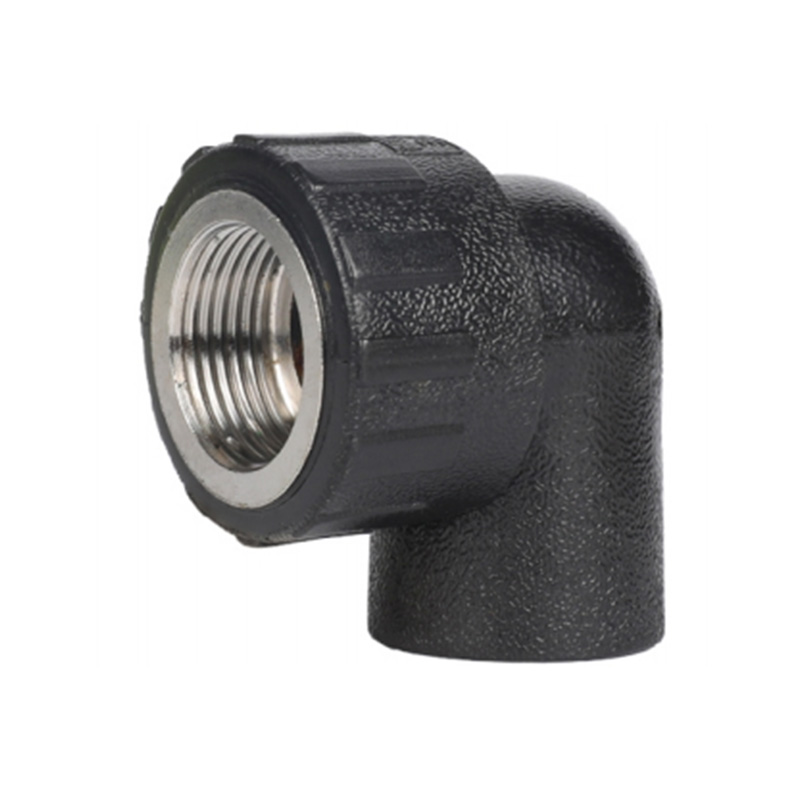
HDPE (High-Density Polyethylene) threaded fittings are widely used in water supply, drainage, gas, and chemical industries due to their excellent corrosion resistance, wear resistance, and toughness. Threaded fittings provide reliable sealing in pipeline systems, and their pressure resistance is a core indicator for safe operation. The thermoplastic nature of HDPE means its mechanical properties vary significantly with temperature. Understanding how pressure resistance changes with temperature is essential for design, installation, and maintenance.
Temperature Effects on HDPE Mechanical Properties
HDPE is a thermoplastic polymer. As temperature rises, molecular chain mobility increases, material stiffness decreases, and pressure resistance declines. At low temperatures, molecular chain movement is limited, resulting in higher rigidity and pressure strength, although impact toughness may slightly decrease. At higher temperatures, the material softens, and the maximum allowable working pressure of threaded fittings is reduced.
Pressure Resistance at High Temperatures
At elevated temperatures, such as 50°C, 60°C, or higher, molecular activity increases, and the load-bearing capacity of HDPE threaded fittings decreases. Design pressure must be adjusted using temperature correction factors to ensure system safety. Prolonged high-temperature exposure may lead to thread loosening, sealing ring failure, or local deformation, reducing pressure resistance. Both instantaneous and long-term operating pressures must be carefully controlled to avoid exceeding safe limits at elevated temperatures.
Pressure Resistance at Low Temperatures
At low temperatures, such as 0°C or even -20°C, HDPE threaded fittings become more rigid, and short-term pressure resistance increases. However, impact toughness decreases, making fittings more prone to brittle fracture under external loads or sudden impacts. Low-temperature pressure design must consider both static pressure and external mechanical forces to ensure safe operation in cold environments.
Design Pressure Correction for Temperature Variations
Manufacturers provide pressure derating charts for HDPE threaded fittings at different temperatures. Engineers should adjust nominal pressure based on medium temperature and environmental conditions. Typically, for every 10°C increase in temperature, allowable working pressure decreases by a specific percentage. For prolonged high-temperature applications, thicker-wall fittings or reduced working pressure are recommended to maintain long-term stability of the threaded connections.
Thread Sealing Performance and Temperature
Temperature changes affect not only pressure resistance but also thread sealing. High temperatures may cause thermal expansion, increasing torque requirements and potentially damaging thread profiles. Low temperatures may cause contraction, creating gaps that reduce sealing effectiveness. During installation and maintenance, torque should be carefully controlled to ensure optimal sealing under varying temperature conditions.
Temperature Impact on Pipeline System Safety
During long-term operation, temperature fluctuations subject HDPE threaded fittings to varying instantaneous and sustained pressures. High temperatures reduce pressure resistance, requiring monitoring of pressure surges to avoid localized overpressure. Low temperatures increase material brittleness, necessitating protection against external impact. Effective temperature management and pressure control are key to maintaining safe operation of HDPE pipeline systems.
KEEP IN TOUCH

About Us
Zhejiang Fengfeng Pipe Industry Co., Ltd. uses efficient single screw injection molding machines for high productivity and low energy use.
Products link
Contact
-

+86-19858193396
+86-13735359894 -

+86-0574-63555288
-

-

No. 21, Market Road, Diankou Town, Zhuji City, Shaoxing City, Zhejiang Province, China