


 English
 中文简体
 русский
Industry news
 Home / News / Industry news / Are Poly Pipe and HDPE the Same? How These Polyethylene Pipe Terms Differ
Are Poly Pipe and HDPE the Same? How These Polyethylene Pipe Terms Differ
 2026.11.27
 Industry news
Poly pipe and HDPE are not the same term, even though a large share of the pipe sold under both names comes off the same extrusion line. "Poly pipe" is a trade shorthand for polyethylene pipe, and in some markets it has stretched to mean any plastic pipe. HDPE names one specific material: high-density polyethylene with a density of 0.941 g/cm³ or above under ASTM D3350, or a PE 63, PE 80 or PE 100 compound under ISO 4427. Every HDPE pipe is a poly pipe. Not every poly pipe is HDPE.
Read the three cases before you read the rest
- If the line item says "poly pipe" for irrigation, it usually means a black coiled polyethylene pipe, most often MDPE or PE 80, sold by outside diameter and pressure class.
- If the drawing says "HDPE", it names the material but still leaves the grade and the SDR open, so the pressure rating is not yet fixed.
- If the drawing says "PE-RT II" or "PP-R", the word "poly" no longer points to HDPE at all, and the pipe will not behave the same under heat or under fusion.
The confusion is not academic. A purchase order that says "110 mm poly pipe" can be filled with a PE 80 SDR 26 coil rated near PN 6, or with a PE 100 SDR 11 coil rated at PN 16. Both are polyethylene. Both are, strictly speaking, poly pipe. Only one of them will survive the working pressure of the line it is going into. That is why the term matters at the specification stage and matters far less once the material, grade, SDR and jointing method are written down.
Where the Word Poly Pipe Comes From and Why It Sticks
The phrase entered the trade from irrigation. In Australia, New Zealand and parts of the United States, polyethylene tube replaced galvanised steel and asbestos cement on farms from the 1960s onward, and crews referred to it simply as "poly" because the material name was long and the pipe was obvious. The habit hardened into a product category. Today a rural merchant will sell you "1 inch poly pipe" and mean a low-pressure coiled polyethylene line for stock water or spray lines, often with a blue or green stripe.
In the United Kingdom and parts of Europe, the same words drifted in a different direction. "Poly pipe" there often describes small-bore plastic plumbing pipe, which may be PEX, polybutylene or a PP-R system rather than polyethylene at all. That is the first place where the two terms split: in one market "poly" means polyethylene by default, in another it means plastic by default.
HDPE avoided the drift because it is a chemical description rather than a trade nickname. When an engineer writes HDPE on a drawing, the material family is locked. What is not locked is the grade, the dimension ratio, the colour, the certification and the jointing method, and those four omissions cause most of the disputes that reach a factory floor. A supplier who receives a request for "HDPE pipe" without a grade can legitimately quote PE 63, PE 80 or PE 100, and the price difference between those three compounds on the same diameter is significant.
There is also a legal layer. In several jurisdictions, polyethylene pipe for potable water must carry certification to a recognised standard, for example ISO 4427, EN 12201 or AS/NZS 4130. The certificate is issued for a specific compound and a specific pressure class. A generic "poly pipe" description cannot be certified, because there is nothing specific to test against. That single fact usually settles the argument about whether the two terms are interchangeable.
The Polyethylene Family: HDPE Is a Density Class, Not a Product Name
Polyethylene is a chain of ethylene monomers, and the way those chains branch decides almost everything about the finished pipe. Fewer branches mean tighter packing, higher crystallinity, greater stiffness and better resistance to slow crack growth. More branches mean a softer, more flexible material that is easier to coil but creeps under sustained load.
HDPE sits at the dense end of that scale. It is not a single formula. Two HDPE compounds from two suppliers can differ in melt flow rate, in comonomer type, in antioxidant package and in resistance to chlorine dioxide, while both still satisfy the density definition of high density.
| Grade | Density (g/cm³) | What it is normally sold as | Typical field use |
|---|---|---|---|
| LDPE | 0.910 - 0.925 | Soft tubing, thin film liner | Low-pressure drainage, temporary lines |
| LLDPE | 0.915 - 0.925 | Flexible irrigation tube | Micro-irrigation, lateral movement |
| MDPE | 0.926 - 0.940 | Coiled yellow or black gas and water pipe | Service connections, rural water, small gas mains |
| HDPE | 0.941 - 0.965 | PE 63, PE 80 and PE 100 pressure pipe | Water mains, gas networks, mining slurry, drainage, aquaculture |
| PE-RT II | 0.930 - 0.945 | Raised-temperature pipe for heating and hot water | Underfloor heating, district heating, hot water service |
Note the last row. PE-RT II sits inside the polyethylene family and can look almost identical to a black HDPE pressure pipe on a rack. It is not the same product. Raised-temperature polyethylene is designed to hold pressure at 70 °C and above for decades, and its molecular structure is engineered for that condition. Substituting it for a cold-water HDPE line wastes money, and substituting HDPE for a PE-RT II heating line creates a predictable failure.
Minimum required strength (MRS) by polyethylene grade, in MPa
PE 63
6.3
PE 80
8.0
PE 100
10.0
The chart is the reason a price comparison between two "HDPE pipes" of the same diameter can be meaningless. A PE 63 pipe and a PE 100 pipe of the same outside diameter use different wall thicknesses to reach the same pressure class, and the PE 100 version usually wins on material weight per metre. But someone has to state the grade before that comparison exists.
PE 63, PE 80 and PE 100: Why "HDPE" Alone Does Not Fix a Pressure Rating
ISO 12162 classifies polyethylene compounds by minimum required strength, the stress the material is expected to withstand for 50 years at 20 °C with a defined survival probability. PE 63, PE 80 and PE 100 are all high-density polyethylene. The distinguishing number is not density, it is long-term hydrostatic strength, and that is the number that decides wall thickness.
PE 100 dominates new water and gas networks in most markets because it allows a thinner wall for the same pressure, which means more flow for the same outside diameter and less material per metre. PE 80 still holds a large share in irrigation, in markets where local standards lag, and in applications where a slightly softer, more forgiving pipe is an advantage during installation. PE 63 has largely retreated to low-pressure drainage and non-critical agricultural lines.
| Compound | SDR | Wall thickness trend | Nominal pressure (water, 20 °C) |
|---|---|---|---|
| PE 100 | SDR 11 | Thick wall | PN 16 |
| PE 100 | SDR 17 | Medium wall | PN 10 |
| PE 100 | SDR 26 | Thin wall | PN 6 |
| PE 80 | SDR 11 | Thick wall | PN 12.5 |
| PE 80 | SDR 17 | Medium wall | PN 8 |
| PE 80 | SDR 21 | Thin wall | PN 6 |
Two buyers can order the same 160 mm outside diameter pipe and receive products rated at PN 6 and PN 16. Both are HDPE. Both are poly pipe. The difference is entirely in the wall thickness, and the wall thickness is set by the combination of compound grade and SDR. This is the single most common gap in a specification written in trade language.
The formula behind the table
Nominal pressure is calculated as two times the minimum required strength, divided by the design coefficient, divided by the dimension ratio minus one. For water at 20 °C the design coefficient is commonly 1.25. For gas service under ISO 4437 the coefficient is at least 2.0, which is why a gas pipe of the same diameter and SDR carries a much lower nominal pressure than a water pipe.
Temperature changes the answer as well. Polyethylene softens as it warms, and every standard provides derating factors above 20 °C. A pipe rated PN 16 at 20 °C may only be rated around PN 10 at 40 °C. If the line carries warm water, the nominal pressure on the coil label is not the pressure the pipe will hold in service.
SDR and Wall Thickness: The Number That Gets Left Off the Order
SDR stands for standard dimension ratio, and it is simply the outside diameter divided by the wall thickness. A 315 mm pipe with an SDR of 17 has a wall of roughly 18.5 mm. Because the ratio is dimensionless, the same SDR means the same pressure class across the whole size range, which is why engineers specify SDR rather than millimetres of wall.
The practical consequence is that "poly pipe, 200 mm" is an incomplete line item in three separate ways. It does not state the outside diameter standard (metric PE pipe is measured by outside diameter, and a 200 mm nominal size is not 200 mm inside), it does not state the SDR, and it does not state the compound grade. Add the jointing method and you have the full picture.
| SDR | Wall to diameter ratio | Nominal pressure | Typical position in a network |
|---|---|---|---|
| SDR 7.4 | Very thick wall | PN 25 | High-head rising mains, pump discharge |
| SDR 9 | Thick wall | PN 20 | High-pressure industrial lines |
| SDR 11 | Thick wall | PN 16 | Pressurised distribution mains |
| SDR 17 | Medium wall | PN 10 | General distribution, gravity-fed lines |
| SDR 26 | Thin wall | PN 6 | Low-pressure irrigation, non-critical transfer |
Thin walls are not a defect. An SDR 26 pipe is perfectly correct for a low-pressure transfer line, and buying SDR 11 for that duty wastes money and reduces the bore. The error only appears when the duty is unknown at the time of purchase and the pipe is chosen on price per metre alone.
Six Site Contexts Where the Two Terms Behave Differently
Farm and irrigation supply
Here "poly pipe" is the ordinary word and "HDPE" sounds like paperwork. Most of the coil sold is MDPE or PE 80 in low pressure classes, joined with compression fittings or socket fusion in the smaller sizes. The risk is substituting a thin-wall coil into a line that was designed for a higher head.
Municipal potable water
Specifications switch to the standard number, for example ISO 4427 or EN 12201, plus PE 100 and an SDR. The word "poly" disappears because the pipe must be traceable to a certified compound. Potable contact certification is separate from pressure certification and must be requested explicitly.
Gas distribution
Gas pipe is HDPE in almost every reference, usually yellow or orange, and the design coefficient is far more conservative. A gas line of the same diameter and SDR as a water line carries roughly half the nominal pressure, so cross-quoting between the two is a serious error rather than a small one.
Mining and slurry
Slurry lines are described as HDPE because the abrasion resistance of the material is the reason it was chosen over steel. Grade selection leans toward PE 100 with a thick wall, and joints are almost always butt fusion to keep the bore smooth through elbows and tees.
Building drainage and siphonic roofs
The pipe is HDPE, but the fittings carry the engineering. Siphonic roof drainage depends on full-bore flow and precise internal geometry, so the system is bought as a matched set of pipe, bends, branches and anchors rather than as a length of poly pipe.
Aquaculture and floating structures
Fish cage brackets, floating platforms and wave breakwater parts use HDPE for UV resistance and buoyancy, not for pressure containment. Nobody calls a cage bracket poly pipe, although the material family is the same.
The pattern is consistent. "Poly pipe" is a buying word, used by people who need a length of black pipe delivered to a site. "HDPE" is a specifying word, used by people who need a material that can be certified, welded and pressure-tested. Both are correct in their own context, and the errors happen when a document written in one language is fulfilled in the other.
Jointing Methods That Reveal What You Are Actually Holding
The way a pipe is joined is often the fastest way to identify it. Polyethylene cannot be solvent welded. There is no glue that will soften an HDPE surface and create a molecular bond, so any pipe joined with a tin of cement and a brush is PVC, CPVC or ABS, not polyethylene. This is the divide that catches people who move from drainage work into water mains.
Polyethylene is joined thermally or mechanically. The four methods below cover the vast majority of site work, and each one imposes different requirements on the pipe itself.
| Method | Typical size range | Heating condition | What it demands from the pipe |
|---|---|---|---|
| Socket fusion | 20 mm to 125 mm | Heating tool around 260 °C | Matched outside diameter and a clean, square cut end |
| Butt fusion | 63 mm and above | Heating plate around 200 to 220 °C | Identical wall thickness on both sides and correct facing |
| Electrofusion | 20 mm to 800 mm and beyond | Resistance wire inside the fitting | Accurate scraping, marking and a power supply with stable voltage |
| Mechanical and compression | Small bore and repair work | No heat | Correct insert and a pipe surface free of deep scoring |
Butt fusion is where the wall thickness becomes visible. Two pipes of the same outside diameter but different SDR cannot be fused reliably, because the heating plate contact and the bead formation are designed around equal wall sections. A transition between pressure classes needs a reducer or an electrofusion fitting rated for both, not an improvised joint on site.
Socket fusion is the method most often used in small and medium diameter distribution, and it depends on a controlled heating cycle rather than on operator judgement. Heating time, changeover time and cooling time are all functions of diameter and wall thickness, and there is a practical guide to the timing and the tooling in this review of the connection types available for HDPE pipe. Shortening the cooling time to save an hour on a shift is one of the few ways to create a joint that passes a pressure test today and fails within a season.
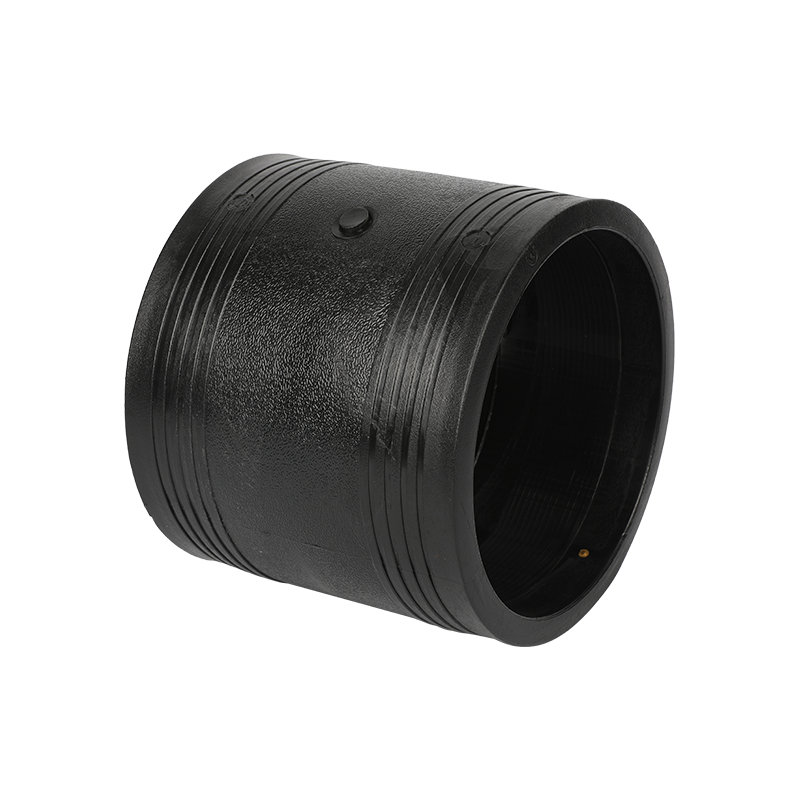 HDPE Electrofusion Equal Coupler, SDR11 and SDR17Electrofusion equal coupler for joining equal-diameter HDPE pipes, available in SDR11 sizes 50–630 mm and SDR17 sizes 315–1200 mm for reliable sealed joints.View Product →
Compatibility Traps: Where a Wrong Assumption Becomes a Leak
Most failures traced back to the poly pipe versus HDPE question are not material failures. They are assumption failures, and a small number of them account for a large share of the complaints that reach a manufacturer.
Solvent weld on polyethylene
It does not work and it never has. If a crew arrives with PVC cement for a black pipe, the pipe is not HDPE or the crew is in the wrong place. The full explanation of why the two systems do not bond is set out in this note on using PVC fittings on HDPE pipe.
Mixing PE 80 and PE 100 in one fused joint
The two compounds melt at similar temperatures but have different long-term strengths. A joint made between them is not stronger than the weaker side, and most standards and project specifications require matching grade within a fusion joint.
Confusing PE-RT II with HDPE by appearance
Both can be black and both can be coiled. Only one is rated for continuous hot water. Check the print line on the pipe, not the colour.
Ignoring the difference between outside diameter and nominal size
Metric polyethylene pipe is specified by outside diameter. A nominal 4 inch pipe is not a 110 mm pipe, although the two are close enough to be confused at a glance. Fittings sized for one will not seal reliably on the other.
Accepting recycled content without documentation
Pressure pipe made from reprocessed material can look correct and still fail hydrostatic testing. Ask for the compound certificate, not only the dimensional report.
There is a second compatibility layer that has nothing to do with the pipe. Electrofusion fittings from one supplier may be calibrated for a different welding parameter set than the control box on site, and the fitting will report a fault or, worse, complete the cycle without melting correctly. Where a project mixes suppliers, the fusion parameters need to be confirmed in writing before the first joint is made.
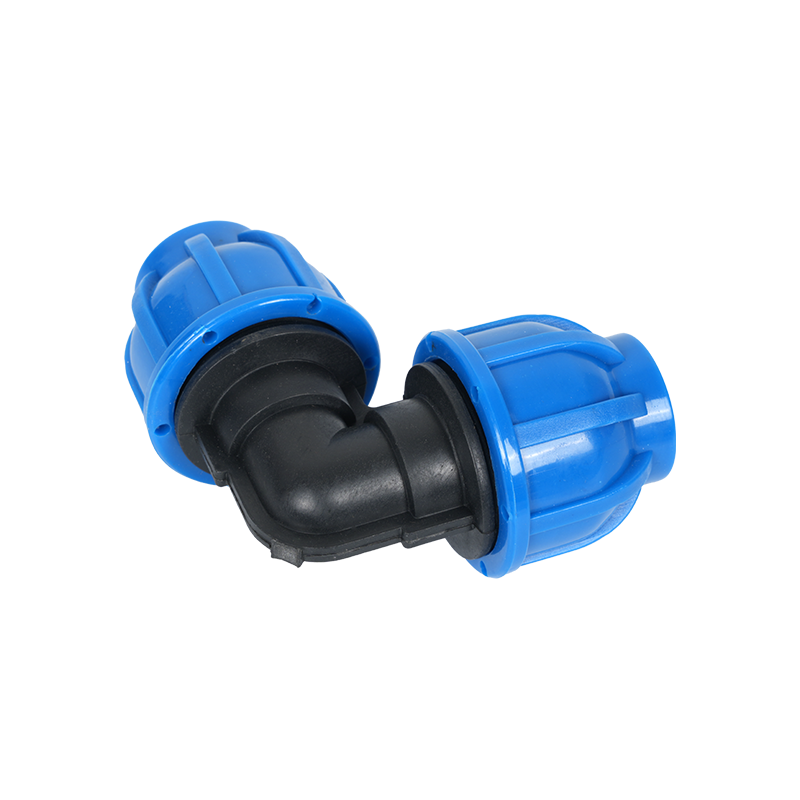 PE and PP Compression 90° ElbowCompression elbow for PE and PP piping changes flow direction by 90° without heat or welding, useful where jointing method and installed cost are being compared.View Product →
Cost, Service Life and the Comparison That Actually Matters
Price per metre is the least useful comparison between two poly pipe products, because the pipe is a small part of the installed cost. Trenching, bedding, backfill, jointing labour, pressure testing and reinstatement usually outweigh the material by a wide margin in buried work. A thinner wall that saves a few percent on the pipe invoice and adds a second excavator day is not a saving.
Service life is the second half of the calculation. Polyethylene pressure pipe is routinely rated on a 50 year basis at 20 °C, derived from long-term hydrostatic testing and extrapolated under the relevant standard. Actual service life depends on the operating temperature, the internal pressure profile, the chemical environment and, above all, on the quality of the joints. A network of sound pipe with two poor fusion joints has the service life of the joints.
Where HDPE wins clearly
- Pressure containment in buried water and gas mains
- Abrasion resistance in slurry and tailings lines
- Flexibility in ground subject to settlement or seismic movement
- Long continuous lengths with fewer joints
Where the generic term is better left alone
- Hot water and heating circuits, where PE-RT II is the correct family
- Indoor plumbing with compression or push-fit systems, often PEX or PP-R
- Drainage lines that will be solvent welded
- Any duty where the pressure class has not been stated
For a buyer, the practical conclusion is that the two words should never be the only thing on a purchase order. "Poly pipe" tells the supplier what family of product you are thinking about. "HDPE, PE 100, SDR 17, 160 mm outside diameter, ISO 4427, butt fusion ends, 12 m lengths" tells the supplier what to make.
How to Write a Poly Pipe Line Item That Cannot Be Misread
A complete specification answers eight questions. Each one corresponds to a decision that otherwise gets made by the supplier, the installer or, in the worst case, by the pressure test.
- Material family and grade. HDPE PE 100, not simply HDPE. If the duty is hot water, state PE-RT II and the temperature and pressure conditions.
- Product standard. ISO 4427 for water, ISO 4437 for gas, EN 12201 where the European scheme applies, or the national standard of the destination market.
- Outside diameter and tolerance class. State the nominal outside diameter and the standard being used, so that the tolerance band is defined.
- SDR or nominal pressure. One of the two is enough if the grade is also stated, but including both removes ambiguity.
- Colour and marking. Water, gas, reclaimed water and drainage each have customary colours in most markets, and the print line should carry grade, size, SDR and standard.
- Delivery form. Coils for small diameters, straight lengths usually 6 m, 11.8 m or 12 m for larger sizes, with the coil or bundle weight stated so that site handling equipment can be planned.
- End condition and jointing method. Plain ends, bevelled ends, or factory-prepared spigots. State whether the network will be butt fused, socket fused or electrofused.
- Documentation. Compound certificate, dimensional inspection report, hydrostatic test report, potable water contact approval if applicable, and the packing list.
Fittings deserve the same treatment and usually do not get it. A fusion fitting carries the same grade as the pipe it joins, and for pressure work the fitting standard is separate from the pipe standard. When the fittings are ordered from a different source than the pipe, ask for the fusion parameters from both suppliers and compare them before the first joint.
The same logic applies to tooling. A butt fusion machine sized for 315 mm will not close correctly on a 90 mm pipe without the right inserts, and an electrofusion control unit must match the fitting voltage and resistance range. In a project where several subcontractors work in parallel, mismatched tooling is a more frequent cause of failed joints than mismatched material.
Frequently Asked Questions
Are poly pipe and HDPE pipe the same?
No, but they overlap. Poly pipe is an informal name for polyethylene pipe and is sometimes used for any plastic pipe. HDPE is one specific polyethylene material. In irrigation and rural water supply, the pipe sold as poly pipe is very often HDPE or MDPE, which is why the two names get used for the same coil on the same pallet. On a specification document they mean different levels of detail: one describes a product category, the other describes a material.
Is PE pipe the same as HDPE pipe?
PE pipe is the broader term. Polyethylene includes low, linear low, medium and high density grades, and the pressure pipe family also includes PE 63, PE 80 and PE 100 compounds. All HDPE pressure pipe is PE pipe, but not all PE pipe is high density. A soft black irrigation tube and a PN 16 water main are both polyethylene and behave very differently.
How do I tell whether a black pipe is HDPE or something else?
Read the print line along the pipe wall. A compliant pressure pipe normally carries the material grade, the outside diameter, the SDR or pressure class and the standard it meets. If there is no print, check the jointing history: polyethylene is never solvent welded, so a glued joint means PVC. Pipe with a permanent set from a tight coil, a slightly waxy surface and a high ring stiffness is likely HDPE.
Can HDPE pipe be used for hot water?
Standard HDPE pressure pipe is rated for cold water service, and its pressure capability falls as temperature rises. For continuous hot water and heating circuits the appropriate product is PE-RT II, which uses a different molecular structure to hold pressure at elevated temperature. A short-term warm flush is a different case from continuous service at 70 °C.
Why does the same diameter come in different pressure ratings?
Because the wall thickness differs. The outside diameter is fixed so that fittings are interchangeable, and the wall is chosen to reach the pressure class. That is why SDR matters: SDR 11 and SDR 26 pipe of the same outside diameter are both correct products for different duties, and the pressure difference between them is roughly a factor of two and a half.
Can PE 80 fittings be used on PE 100 pipe?
For fusion joints, the safest approach is to match the grade on both sides. A joint between different grades does not gain strength from the stronger component, and many project specifications and standards require matching material within a fused connection. Mechanical transition fittings are a separate case and are rated by pressure, not by polyethylene grade.
What does the stripe on the pipe mean?
Stripes identify service. Blue commonly marks potable water, yellow or orange marks gas, and other colours mark reclaimed water, irrigation or drainage depending on the market. The stripe is a site identification aid and is not a pressure rating, so it should never be used to infer the duty of an unmarked coil.
Does poly pipe need a pressure test before backfilling?
Yes. Buried polyethylene networks are normally pressure tested and inspected at the joints before backfill, because a failed fusion joint is far cheaper to find while the trench is open. Test pressure, hold time and allowable pressure drop are usually defined by the project specification or the applicable installation standard, and the test should not be run immediately after fusion while the joints are still cooling.
How long does HDPE pipe last?
Pressure pipe is typically rated on a 50 year basis at 20 °C, established by long-term hydrostatic testing and extrapolation under the governing standard. Real service life depends on temperature, pressure fluctuations, internal chemistry and joint quality. Networks that fail early usually fail at joints or at mechanical fittings rather than in the pipe wall.
What should I state first when asking for a quotation?
The application, the fluid, the working pressure, the temperature and the diameter. Everything else follows from those five facts. A supplier who receives only a diameter has to guess the grade and the SDR, and the guess will usually be the lowest cost combination that satisfies the description.
KEEP IN TOUCH

About Us
Zhejiang Fengfeng Pipe Industry Co., Ltd. uses efficient single screw injection molding machines for high productivity and low energy use.
Products link
Contact
-

+86-19858193396
+86-13735359894 -

+86-0574-63555288
-

-

No. 21, Market Road, Diankou Town, Zhuji City, Shaoxing City, Zhejiang Province, China